Historically St. Pete: The incredible story of downtown St. Pete’s 99-year-old YMCA building
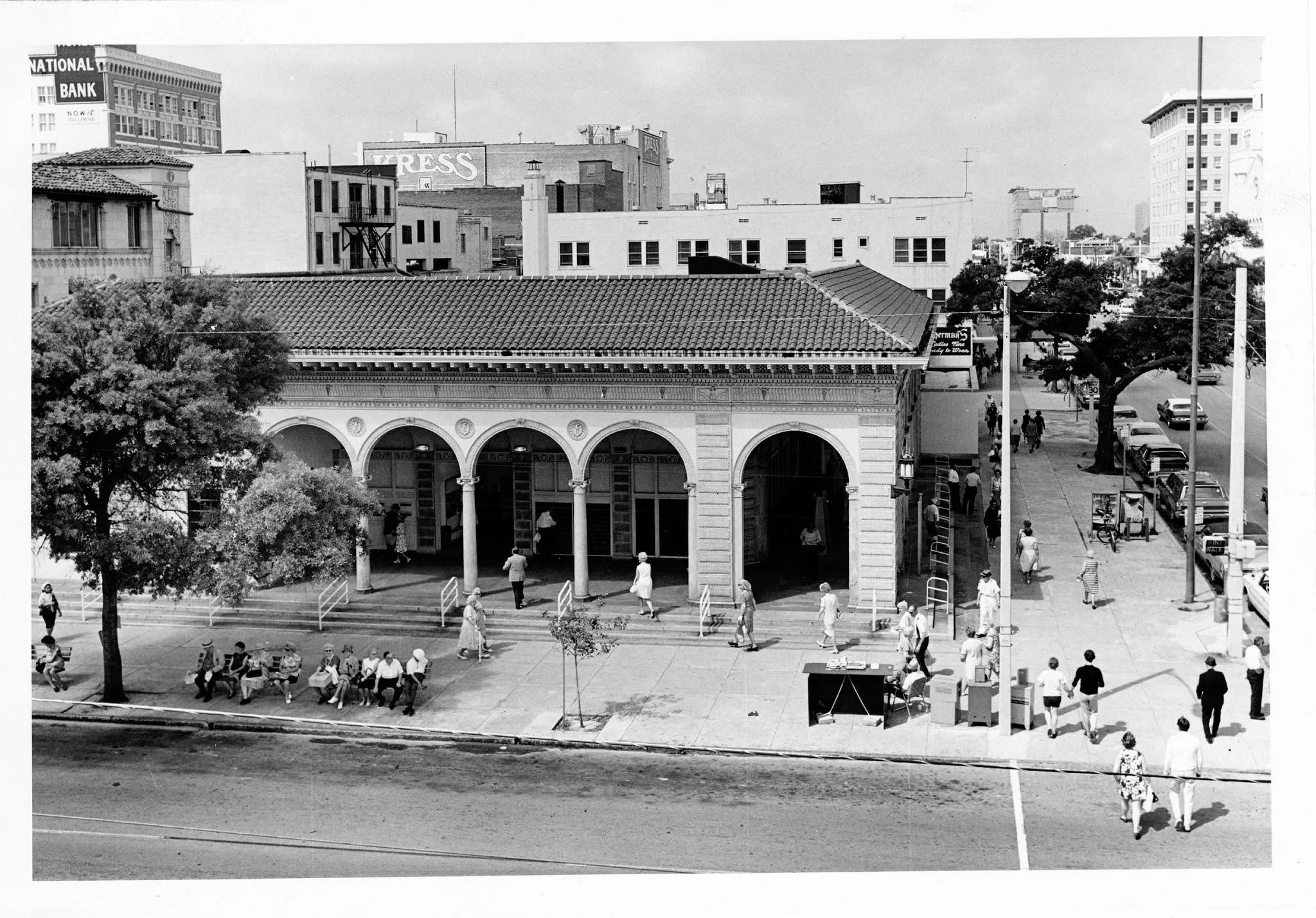
/The historic YMCA building in downtown St. Pete opened in 1927 and still stands today, ca. 1948-1953 | St. Petersburg Museum of History
At St. Pete Rising, we are constantly providing comprehensive coverage on everything new and coming soon to the Sunshine City, but we think it’s also important to take a look back at our city's rich history.
Historically St. Pete, a monthly column on St. Pete Rising written by Executive Director of the St. Petersburg Museum of History Rui Farias, covers everything from the legend of underground mobster tunnels to the buildings and people that created the Sunshine City.
Follow us each month as we explore how these projects shaped St. Pete into the city we know and love today.
This month, we explore the history of the 99-year-old YMCA building at 116 Fifth Street South and its nearly 75-year run as one of the city’s most popular community centers.
The historic YMCA building in downtown ST. pete as of July 2026 | St. Pete Rising
In a city nearly surrounded by water, there was one place on Fifth Street South where, for decades, thousands of St. Petersburg children dunked their heads underwater for the first time during swim lessons.
At least until an older cousin decided the next lesson would take place off a dock in Big Bayou, where it was sink or swim.
It took seven years, but on June 20th, 1927, the St. Petersburg YMCA officially opened its doors.
Formed in 1920, the city’s chapter of the Young Men’s Christian Association went to work raising funds to build a home on the corner of Fifth Street and Second Avenue South in downtown St. Pete.
Reflecting the community’s commitment to creating a center for recreation, education, and fellowship, $550,000 was raised, allowing for the construction of the city’s first publicly funded civic building.
A dance hosted in the YMCA’s gymnasium, date unknown | St. Petersburg Museum of History
The timing couldn’t have been more perfect. Fundraising began during the height of the city’s 1920s boom.
By the time construction was complete, St. Petersburg was about to enter a land and housing bust it wouldn’t see again for 90 years.
The beloved downtown building was designed in the popular Mediterranean Revival style by University of Minnesota professor Clarence H. Johnson, who teamed up with local architect Archie G. Parish.
Parish also designed Christ United Methodist Church, Mound Park Hospital, Jordan Park Housing Project, and the First Church of Christ, Scientist, now the Palladium Theater.
Edward S. Moore & Sons was brought on to build the four-story YMCA — six stories if you count the tower and basement.
It was constructed with arched windows and doorways, wreathed columns, ornamental iron railings, a changing roofline with barrel tiles, and interior tiles imported from Seville, Spain.
Three ads that ran in the St. Petersburg Times in February 1925 promoting the proposed YMCA building on 5th Avenue South | St. Petersburg Times
Built across Fifth Street from the newly completed Florida Power Building, the YMCA was an architectural beauty from the moment it opened.
As striking as its exterior was — and remains — it was the activities and amenities within its walls that made the building the city’s most popular recreational facility for decades.
The YMCA housed a full-size gymnasium that accommodated basketball, judo, boxing, gymnastics, wrestling, volleyball, and badminton. It also featured locker rooms, a weightlifting area, and an indoor running track.
Beneath these facilities, in the basement, was one of the largest indoor swimming pools in the city.
It also provided reading rooms, dining facilities, and 54 dormitory rooms for men.
Team athletics were also a big part of the YMCA. In 1956, the St. Pete Y gymnastics team won the national championship in New Orleans.
Many St. Pete children learned how to swim at the YMCA’s basement swimming pool, one of the largest indoor swimming pools in the city | St. Petersburg Museum of History
By 1957, the St. Pete YMCA wanted to expand the scope of services it provided to city families and created its first program for girls as part of its Family Y portfolio.
The YMCA also hired European-trained ballet instructors and started a Thursday Family Night program.
By the end of 1957, the YMCA on Fifth Street South was serving 4,000 people a week.
The YMCA served generations of residents before dormitory operations ended in 1989. In 2001, the organization relocated to the new YMCA on the corner of 32nd Street and 1st Avenue South.
Listed on the National Register of Historic Places in 1985 and designated a local landmark in 1991, the regal building at 116 Fifth Street South has been vacant for two decades.
Past legal battles over ownership deterred progress on the building. Current owners have floated ideas for a boutique hotel and wedding venue.
Before the era of 24-hour television, computers, and the internet, the historic YMCA played a central role in the lives of St. Petersburg families. Today, the building remains an important part of the city’s architectural heritage and a lasting symbol of its civic history.
A beautiful iron peacock sits atop the historic corner sign on the YMCA at 116 Fifth Street South | The Vintage Neon Project