St. Pete considers upgrading Pier Marketplace, replacing tents with permanent kiosks
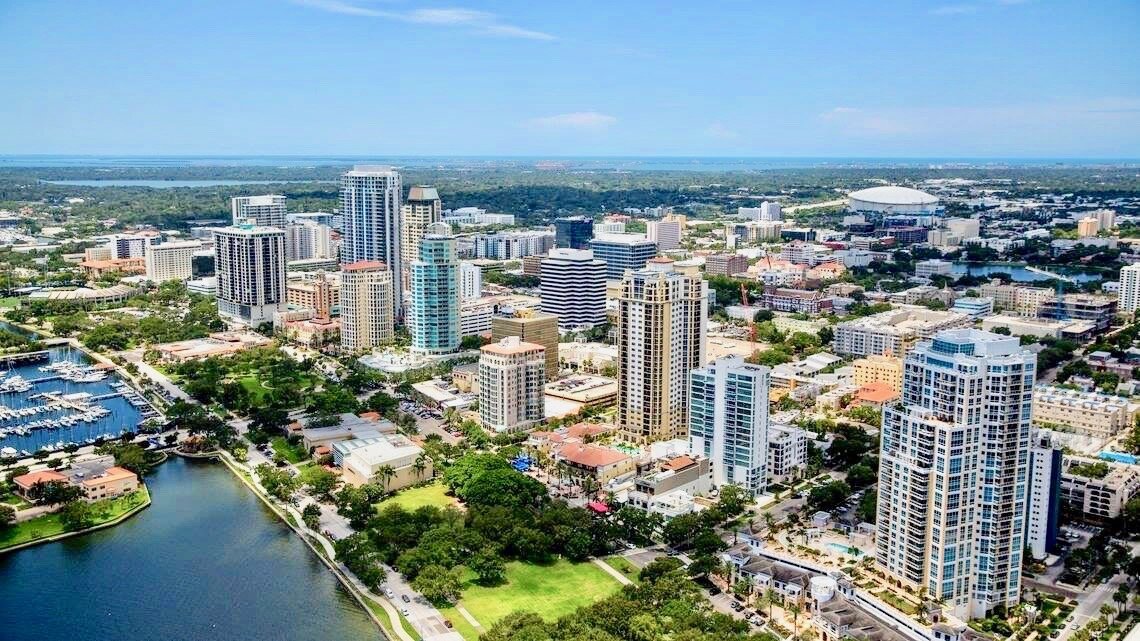
/The st. pete pier marketplace, located at 600 2nd Avenue northeast, is home to nearly 30 small businesses | st. pete pier
St. Pete Pier’s Marketplace, which sells everything from handcrafted goods and hot sauces to fresh flowers, may get a new look soon.
Operating Friday through Sunday, the Marketplace is home to 28 tenants: seven permanent kiosks and 21 vendors operating out of 10-by-10-foot tents. The kiosks are fixed, weatherproof structures that stay in place year-round, while the tents are temporary setups vendors must assemble and break down each weekend.
To improve the experience for vendors and create a unified design, the city is considering a plan to replace three tents with permanent kiosks each year, phasing out the tents over the next seven years.
"We've always wanted to have [more] kiosks," said Beth Herendeen, managing director of the City Development Administration, during this week's Workforce and Economic Development Committee meeting.
The temporary tents were never part of the vision of the 26-acre Pier District, which boasts modern amenities like a playground, splash pad, and landscaped paths.
tropico trading operates out of a kiosk, which are designed to endure harsh saltwater environments and intense sun exposure | st. pete pier
Herendeen explained that the additional kiosks have been included in the city's Capital Improvement Plan (CIP), a multi-year roadmap used to plan, prioritize, and fund major public infrastructure projects, facility upgrades, and large equipment purchases, since 2022. However, other needs were prioritized.
"This is important for the small businesses, and it's something that they've been requesting for a long time, and so have we," Herendeen continued.
Councilwoman Gina Driscoll introduced the request but was absent during the meeting.
Tenants operating out of tents must endure hardships such as blazing heat and exposure to the elements during storms.
Meanwhile, the existing permanent kiosks are built from High-Density Polyethylene (HDPE), a versatile plastic designed to withstand harsh saltwater environments and intense sun exposure, along with 316 pieces of stainless-steel hardware.
caribbean bakery island flavors and tings is one of the many tent vendors at the st. pete pier | st. pete pier
Sara O'Brien, a kiosk vendor with Wide Sky, which creates humorous St. Pete-centric shirts, sympathizes with tent users.
"It's rough. The solar panel roof provides some shade, but not enough protection from the sun or rain, and business slows down in the summer," said O'Brien, who founded the business in 2014 and has been at the Pier since 2022.
"The downfall is having to break down everything each weekend, and especially when storms roll in, while the kiosk vendors can just close up," Buddy Carter, owner of Buddy Ocean, said in a conversation with St. Pete Rising.
Carter started selling custom shirts, hats, tumblers, and art earlier this year at the Marketplace. Despite the environmental setbacks, he has found success at the Pier.
Buddy ocean, a local apparel company, has found success vending at the st. pete pier | st. pete pier
"I run a newer company, and I've had so much positive feedback from the St. Pete community that I decided to give this a run. I've learned so much from the other vendors and visitors. It's helped me become a better business," Carter said.
If the city were to move forward on the new kiosks, Creative Arts and Awning Works, which designed and installed the original units, would create kiosks in the same design, with a folding vinyl awning, decorative artwork, and electric wiring that would allow for the installation of air conditioning.
The three new kiosks would cost the city $208,730 to purchase each year. Vendors switching from tents to a new kiosk would pay the city $900 per month, a roughly $300 payment increase.
The city would recoup the cost of the kiosks over a six-and-a-half-year payback period.
"We do have a few vacancies at the Marketplace, and kiosks would be an easier sell than tents," Herendeen said, noting that the team was also exploring another option — shipping containers.
An example of the air-conditioned shipping containers that may replace the tents on st. pete pier | box pop
By comparison, three 10-by-10-foot containers, which would include air conditioning, electrical installation and conduit work, and exterior artwork, would cost the city $483,754.
The monthly shipping container lease would cost tenants $1,500.
"We did look at more options. We could get something less costly, but not as durable," Herendeen said, adding that the kiosks are the most financially feasible and aesthetically aligned option for the Pier.
During the meeting, committee members ultimately decided to keep the item on the referral list and try to identify a funding source. Once a funding source is identified, it may take a year for the first new kiosks to be installed.
Members also said they would like to see more vendor diversity. They suggested the one-year leases could offer more flexibility for struggling tenants, such as joint or shared leases, as well as more opportunities for the city to promote Marketplace businesses.