As downtown grows, St. Pete adds a new tool to help artists keep their space
/Florida CraftArt is a nonprofit located in downtown ST. Pete that supports over 250 artists by providing opportunities to exhibit and sell their work in its gallery | Florida CraftArt
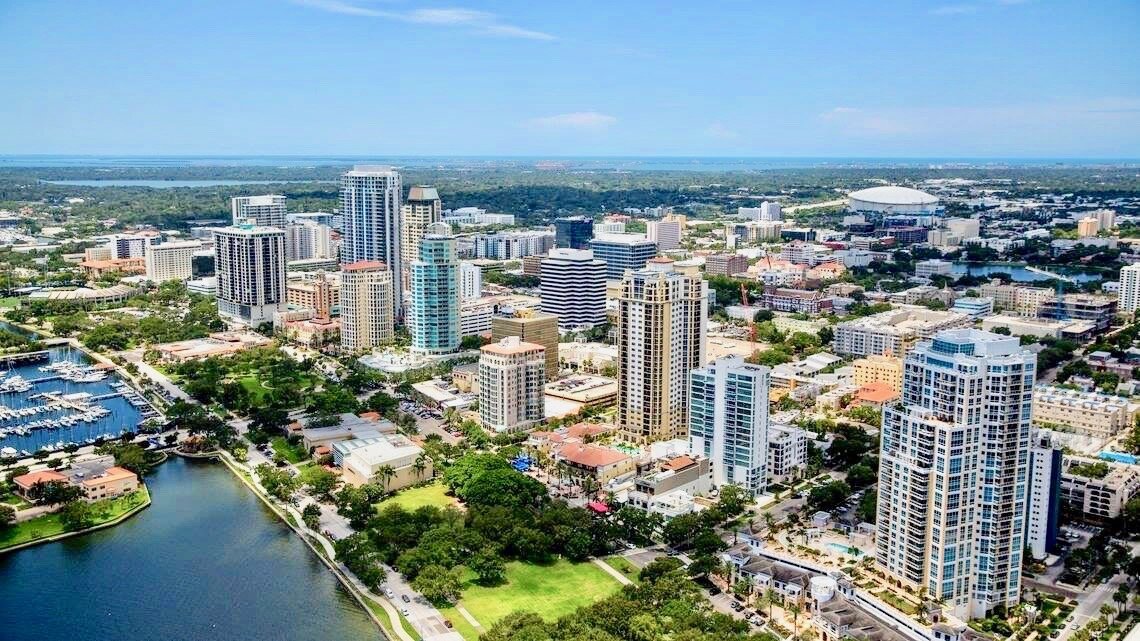
As St. Petersburg adds apartments, condos, and offices, the City is trying a new approach to help ensure the artists and galleries that helped shape downtown are not priced out of it.
City Council unanimously approved an arts funding development bonus on August 27th, creating a new way for developers to support local artists and arts organizations while pursuing additional building space for their projects.
For local arts advocates, the vote brought the City one step closer to creating a dependable source of funding for artists and arts organizations.
“The holy grail for the arts community in St. Pete has been to find a sustainable funding source to support the arts,” said Paul Carter, a downtown resident and member of the City’s Arts Advisory Committee.
The policy is not a change that will allow developers to build more densely than they could before. Instead, it adds another option to the City’s existing selection of floor area ratio, or FAR, bonuses.
FAR is a zoning measurement that determines how much total building space can be constructed on a site relative to its land area. In certain zoning districts, such as downtown, the City already allows developers to earn FAR bonuses by providing public benefits that support community priorities.
Existing FAR bonus options include: building workforce housing, preserving historic buildings, adding affordable commercial space, funding streetscape improvements, providing public art, creating ground-level open space, and screening parking garages.
Now, developers can also contribute to the City’s arts funding development bonus fund in exchange for bonus floor area.
The City intends to use the money to help artists and arts organizations acquire or maintain studios, galleries, and other physical spaces.
“This is something that was brought to me originally as an idea from the Warehouse Arts District,” Councilmember Gina Driscoll said before the vote. “I do hope that today is not the end, but just simply the first big step toward creating a new opportunity for our local artists.”
Local artist Allie Case has over 15 years of experience in ceramics and is a former K-5 art teacher who turned her passion for teaching and creating pottery into a full-time business at Sugar Cream Clay at 2939 Central Avenue in the Grand Central District | City of St. Pete
The idea grew from concerns shared by local arts advocates as the cost of doing business downtown has climbed. In its planning analysis, the City documented a steady loss of arts-related spaces in and around downtown.
Downtown had about 15 art galleries in 2014, according to City materials. By October 2025, that number had fallen to seven. Staff also identified 21 art spaces that have closed, moved, or otherwise left downtown since 2002, with rent increases and redevelopment among the contributing factors.
The City’s analysis found that redevelopment of older spaces and rising commercial rents have pushed some artists out of downtown and, in some cases, out of St. Pete altogether. That finding was important because it established the legal connection between new development and the fund’s intended use.
The money will not function as an unrestricted arts grant fund. Instead, it must be used to address the loss of physical space for artists and arts organizations.
While final guidelines have not been created, the City expects the program to help creative professionals acquire or maintain workspace.
The developer’s contribution would equal at least one-quarter of 1% of a project’s total construction cost for each additional half-step of FAR that a developer receives. A developer seeking the maximum arts bonus could contribute at least 0.5% of a project’s construction cost in exchange for up to 1.0 additional FAR.
The new option will be available in the Downtown Center (DC) zoning districts; the EC-2 employment-center district in the Innovation District, including the Orlando Health Bayfront Health Hospital and Johns Hopkins All Children’s Hospital campuses; the RC-3 retail-center district, which includes Echelon City Center in north St. Pete; the SunRunner bus rapid transit overlay; and the SunRunner Target Employment Center (TEC) overlay along 22nd Street South in the Warehouse Arts District.
Local Asian American muralist Cheryl Weber, known as Jujmo, painting concrete curbs on the Pinellas Trail in St. Pete | Jujmo
The approval follows more than a year of discussions by the City’s Economic and Workforce Development Committee, the Development Review Commission, City staff, the Warehouse Arts District Association, and other local arts advocates.
Celeste Davis, the City’s Director of Arts, Culture and Tourism, said the next step is to work with the people most affected by the issue.
“The plan is to reach out and to meet with those in the arts community that were impacted by the nexus to figure out what would be the best outcome,” Davis said. “It does have to have that connection.”
City staff will work with the St. Pete Arts Alliance, the Arts Advisory Committee, and local artists to shape the grant program and decide how it will be administered.
Councilmember Copley Gerdes said the arts funding bonus could establish a framework for future incentives tied to other community priorities.
“I really think this kind of lays the groundwork for future bonuses that could come, whether it be for educators, first responders, you name it, health care workers,” Gerdes said.
For Driscoll and the arts advocates who helped bring the proposal forward, the ordinance is only the beginning.
The eventual impact will depend on how often developers choose the bonus and how the City turns those contributions into space that helps St. Pete’s creative community remain part of its future.