City considers demolishing Rowdies' Al Lang Stadium for envisioned waterfront redevelopment
/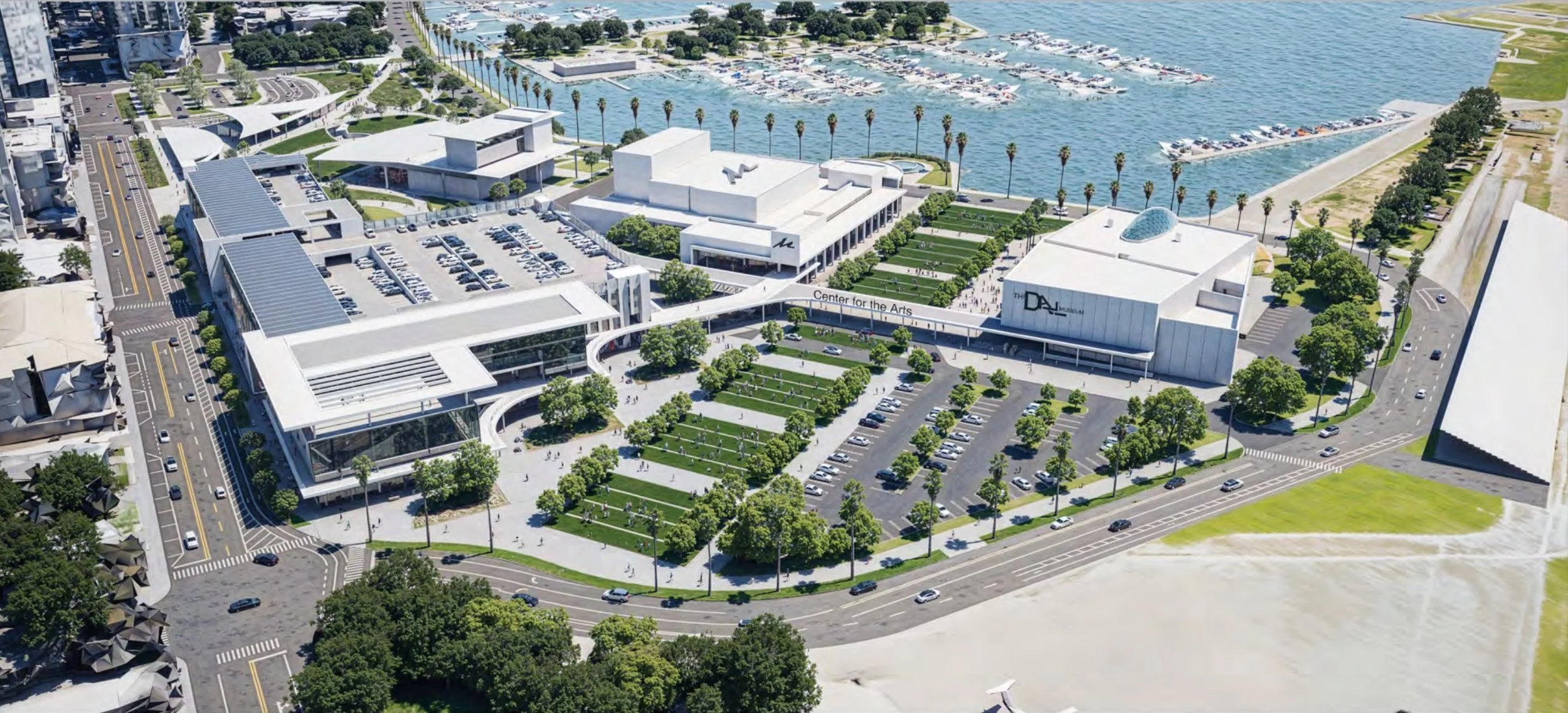
The City of St. Petersburg is exploring the possibility of demolishing Al Lang Stadium—home of the professional soccer team Tampa Bay Rowdies—and replacing it with an amphitheater and a highly activated waterfront park.
On Thursday morning, the St. Petersburg Economic and Workforce Development Committee reviewed initial plans and conceptual renderings for the proposed Center for the Arts District.
The district, located just south of the St. Pete Pier, would stretch from 1st Avenue South to 5th Avenue South and include the Mahaffey Theater, Salvador Dalí Museum, Al Lang Stadium, and the site of the Saturday Morning Market.
Architecture firm ASD | SKY presented the conceptual designs, which reflect a long-term vision for the area. Key components include expanded green space near the Dalí Museum and Mahaffey Theater, a new parking garage with at least 1,100 spaces, a 60,000-square-foot conference center, and 35,000 square feet of new retail space, among other features.
Read More



Golden Corral is returning to Pinellas County with plans for its first St. Pete restaurant inside the former Hooters at Tyrone Square Mall.
The popular American all-you-eat buffet chain will open at 2250 Tyrone Boulevard, according to plans submitted to the City of St. Petersburg. An opening date has not yet been announced.
The 8,105-square-foot restaurant will take over the building where Hooters operated for 15 years, from 2006 until late 2021. At the time, the chain cited changes in shopping habits and declining mall foot traffic in announcing the closure.
The new Golden Corral will be operated by franchisee Britt Guyer, who owns Golden Corral restaurants in Winter Haven and downtown Tampa. Guyer was not immediately available for comment.