Mayor Welch selects team to redevelop Historic Gas Plant District in downtown St. Pete
/A proposal by the Burg Bid, led by St. Pete-based Blake Investment Partners, has been selected to redevelop the Historic Gas Plant District in downtown St. Pete | Wannemacher Jensen Architects
St. Petersburg Mayor Ken Welch has selected The Burg Bid team, led by St. Pete-based Blake Investment Partners, to redevelop the Historic Gas Plant District.
The proposal envisions an estimated $8.1 billion mixed-use redevelopment featuring more than 3,600 affordable and workforce housing units, a new Woodson African American Museum of Florida, parks, hotels, office space, retail and workforce development facilities across the 58-acre site.
The announcement marks the city's first major redevelopment decision since the collapse of the previous redevelopment agreement between the Tampa Bay Rays and Hines in early 2025.
Welch announced the selection Wednesday following a months-long competitive process that drew nine unsolicited proposals from development teams across the country.
He also selected the Pinellas County Housing Authority to develop a seven-story, 94-unit affordable housing community on a 0.58-acre city-owned parcel at 1659 3rd Avenue South. The PCHA development team includes Atlantic Pacific Companies and Ascension Real Estate Partners.
The proposal targets lower-income seniors, with an emphasis on very-low income and with preference given to seniors who formerly resided in the Historic Gas Plant District.
The seven-story, 90-unit affordable senior housing building that the Pinellas County Housing Authority will develop at 1659 3rd Avenue South | Pinellas County Housing Authority
The Historic Gas Plant neighborhood was once a thriving, predominantly Black community just west of downtown that was home to hundreds of families, businesses, churches and civic organizations.
Much of the neighborhood was demolished beginning in the late 1970s to make way for Interstate 175 and the construction of Tropicana Field, displacing residents and leaving decades of unfulfilled redevelopment promises that have shaped discussions surrounding the site ever since.
"The historic Gas Plant District has held the promise of progress for St. Pete for decades," Welch said. "Today, we take an important step forward in turning that potential into real and tangible progress."
The announcement does not finalize a redevelopment agreement. Instead, it begins what city officials expect will be roughly a year of negotiations before detailed agreements return to the St. Petersburg City Council for approval.
Welch said commitments related to affordable housing, workforce development, minority business participation, the Woodson African American Museum of Florida and other community benefits must all be incorporated into binding agreements before construction can begin.
Site plan for Blake Investment Partner’s proposal to redevelop the 54-acre Historic Gas Plant neighborhood | Blake INvestment Partners
Welch said the selection was guided by what he has called the city's J-HOP priorities: jobs, housing, ownership and economic opportunity.
Before announcing the winning teams, Welch reflected on the history of the neighborhood that once occupied the site and the families displaced by the construction of Interstate 175 and Tropicana Field.
"We remember," Welch said. "And today we begin to answer the call for progress."
The Burg Bid proposal stood apart in both its financial offer and development commitments.
The team valued the property at $405 million, including a $275 million offer to purchase 58 acres of city-owned land and a $20 million deposit upon execution of a purchase agreement.
The proposal estimates the redevelopment will generate more than $8.1 billion in total investment and would rely primarily on private capital, with Community Redevelopment Area funding reserved for public infrastructure and park improvements.
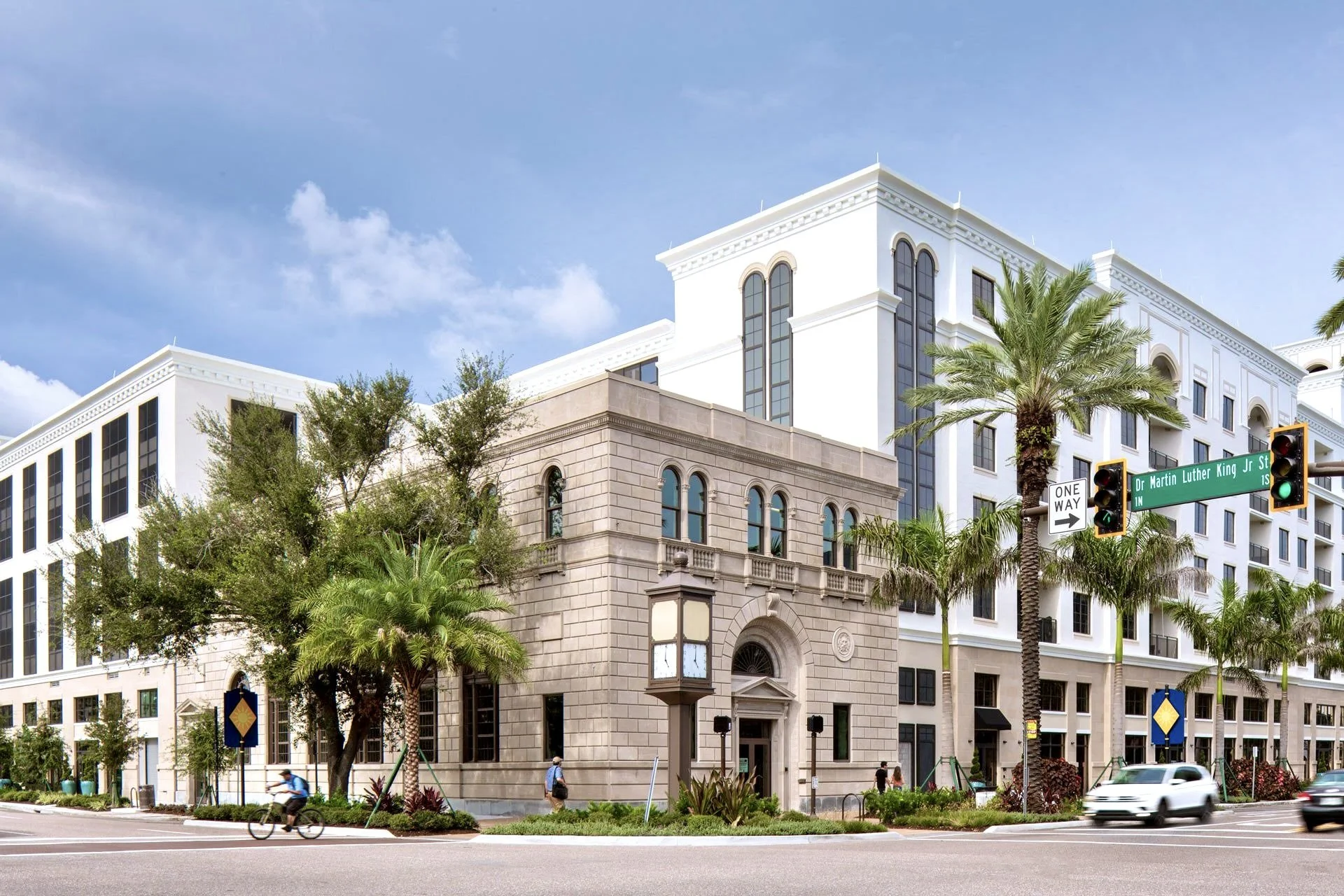
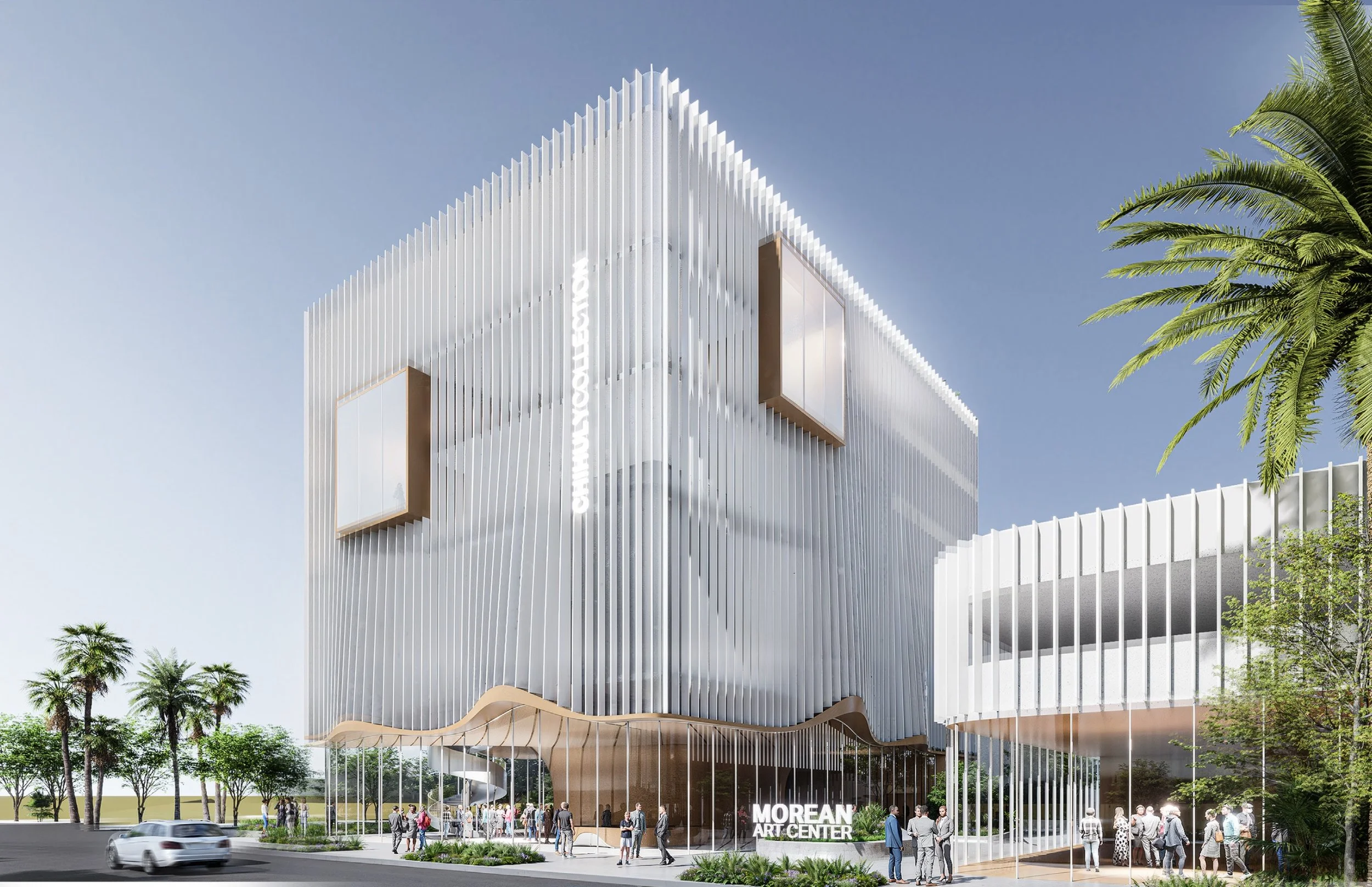
The proposal calls for a new home for the Woodson African American Museum of Florida | Wannemacher Jensen Architects
The proposal also includes the city's largest affordable and workforce housing commitment to date, calling for more than 3,600 income-restricted housing units over a 15-year buildout.
Approximately 1,800 units would be constructed within the Historic Gas Plant District, with another 1,800 developed at sites throughout St. Petersburg.
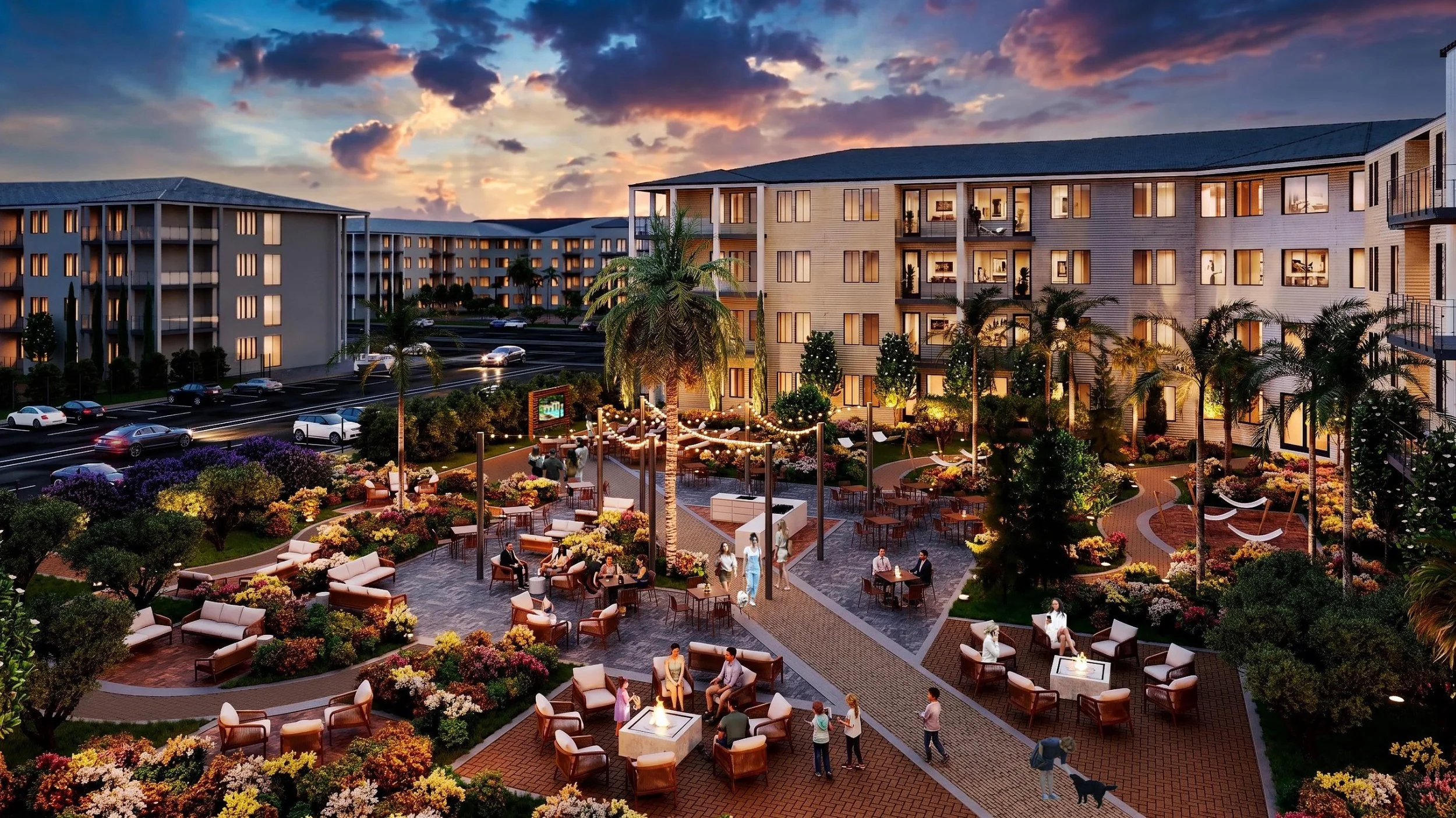
At the heart of the proposal is a 13-acre park in addition to office space, hotels, neighborhood retail, cultural institutions and workforce training facilities.
The design preserves the footprint of the original gas tanks within Samuel Davis Park while introducing the Legacy Link, a pedestrian corridor connecting City Hall with the Deuces and the Manhattan Casino through the Woodson African American Museum of Florida.
Developer Thompson Whitney Blake described the project as an opportunity to move beyond decades of planning.
At the heart of the proposal is a 13-acre park | Wannemacher Jensen Architects
"The site has been studied, evaluated, revisited for decades," Blake said. "We could have 10 more mayors, 10 more RFPs and 10 more processes, and you're not going to find a team that loves St. Pete more than the people standing right here."
Blake said the development team intentionally paired local leadership with national partners capable of delivering a project of this scale.
The team includes Related Group as co-developer, Elliott Investment Management as its institutional capital partner, along with Blue Sky Communities, Greystar, KAST Construction, Driftwood Hospitality, Gilbane, Skanska, and St. Pete-based Wannemacher Jensen Architects, among many others.
The proposal also establishes a Historic Gas Plant Visionary Panel, an independent advisory group made up of community organizations that would meet at least every 90 days throughout development.
Blake said the panel is intended to provide long-term accountability while giving residents an ongoing role in shaping the project as it moves forward.
Supporting Welch's emphasis on economic opportunity, the proposal also includes a workforce training and entrepreneurship hub known as the Collaboratorium.
The Museum of Public Art (MoPA) is a new institution planned for the Gas Plant District, directly across the Woodson African American Museum | Wannemacher Jensen Architects
The facility would bring together workforce development organizations, business incubators, CareerSource and economic development partners.
The proposal also sets a goal of awarding 41% of project contracts to women-, minority- and small business enterprises, representing approximately $3.3 billion in contracting opportunities over the life of the development.
During a question-and-answer session following the announcement, Welch also addressed the future of Tropicana Field.
He reiterated that the city intends to honor its commitment to provide the Tampa Bay Rays with a playable stadium through 2028.
If the Rays ultimately require a one- or two-year lease extension because of delays elsewhere, Welch said the city would be willing to discuss it if it aligns with redevelopment phasing.
"The old model of a new stadium further to the east is gone," Welch said. "We have to start thinking about the city of St. Pete."
Welch also defended the city's decision to repair Tropicana Field following hurricane damage, noting that much of the cost is expected to be reimbursed through FEMA and insurance.
Street-level activity planned for the Historic Gas Plant District | Zyscovich Architects
He said the stadium remains an important community asset that hosts graduations, community events and other gatherings beyond Major League Baseball.
The long-term plan remains demolition of Tropicana Field after the site is no longer needed, allowing redevelopment to proceed in phases.
Blake said construction of the Woodson African American Museum of Florida is expected to be among the earliest components of the project, with broader vertical development beginning as land becomes available.
The selection marks the beginning of what is expected to be roughly a year of negotiations between the city and The Burg Bid team.
The Community Benefits Advisory Council (CBAC) will hold two meetings in July. The first will allow residents to provide public comment on the proposal, while the second will consist of deliberations among CBAC members.
Following that process, detailed development agreements covering financing, project phasing, affordable housing commitments, community benefits and land sales will return to City Council for approval before redevelopment can move forward.
The Pinellas County Housing Authority's proposal will not go through the CBAC process because it consists entirely of affordable and workforce housing. However, the final agreement with the housing authority will still require City Council approval.
"When I ran in 2021, my promise was that I would bring back a plan to move this forward," Welch said. "I was in high school at Lakewood when this started. There's no way you can call this rushed. It's been four decades, and it's time to move forward."
The proposal envisions an estimated $8.1 billion mixed-use redevelopment featuring more than 3,600 affordable and workforce housing units, a new Woodson African American Museum of Florida, parks, hotels, office space, retail and workforce development facilities across the 58-acre site | Wannemacher Jensen Architects