St. Petersburg Catholic High School charts $64 million campus expansion
/
St. Petersburg Catholic High School is preparing for the largest campus expansion in its nearly 70-year history.
On Wednesday, the St. Petersburg Development Review Commission approved a long-term master plan that will add new academic, athletic, and administrative buildings while modernizing existing facilities and campus infrastructure.
Over the past several years, enrollment has grown from approximately 285 students to about 550 as the school expanded its academic offerings.
To support those needs and address aging infrastructure, the college preparatory school at 6363 9th Avenue North is planning a multi-phase, $64 million campus expansion and modernization.
Wednesday’s approval allows St. Petersburg Catholic to construct 163,133 square feet of new academic, athletic, and administrative facilities, along with additional athletic fields, across 11 phases.
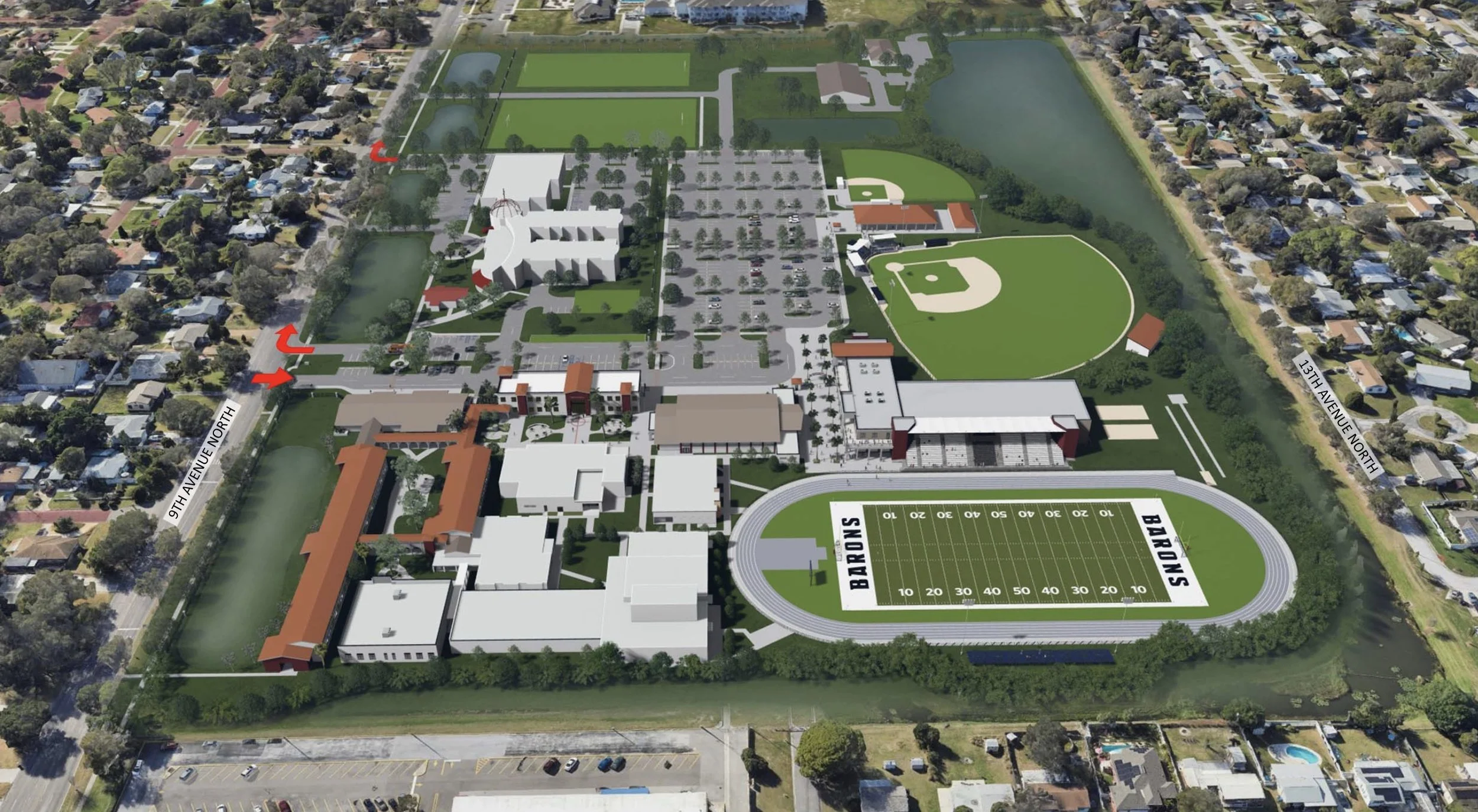
St. Petersburg Catholic High School is located on a 40-acre campus at 6363 9th Avenue North in west St. Pete | SPCHS
The master plan evolved from a campus feasibility study completed in 2018 and later updated in 2022.
Each phase is tied to private fundraising and is expected to move forward over several years.
“We’ve always had a strong Catholic identity and want to ensure that we continue to raise our academic successes and help students receive the best college and career opportunities after they leave,” SPCHS President Ross Bubolz said in a conversation with St. Pete Rising.
The 40-acre campus originally opened in 1957 as Bishop Barry High School for boys.
In 1973, Bishop Barry High School and the nearby Notre Dame Academy for girls merged to become St. Petersburg Catholic High School.
Over the years, the institution has absorbed the histories and legacies of several local Catholic schools that served generations of students.
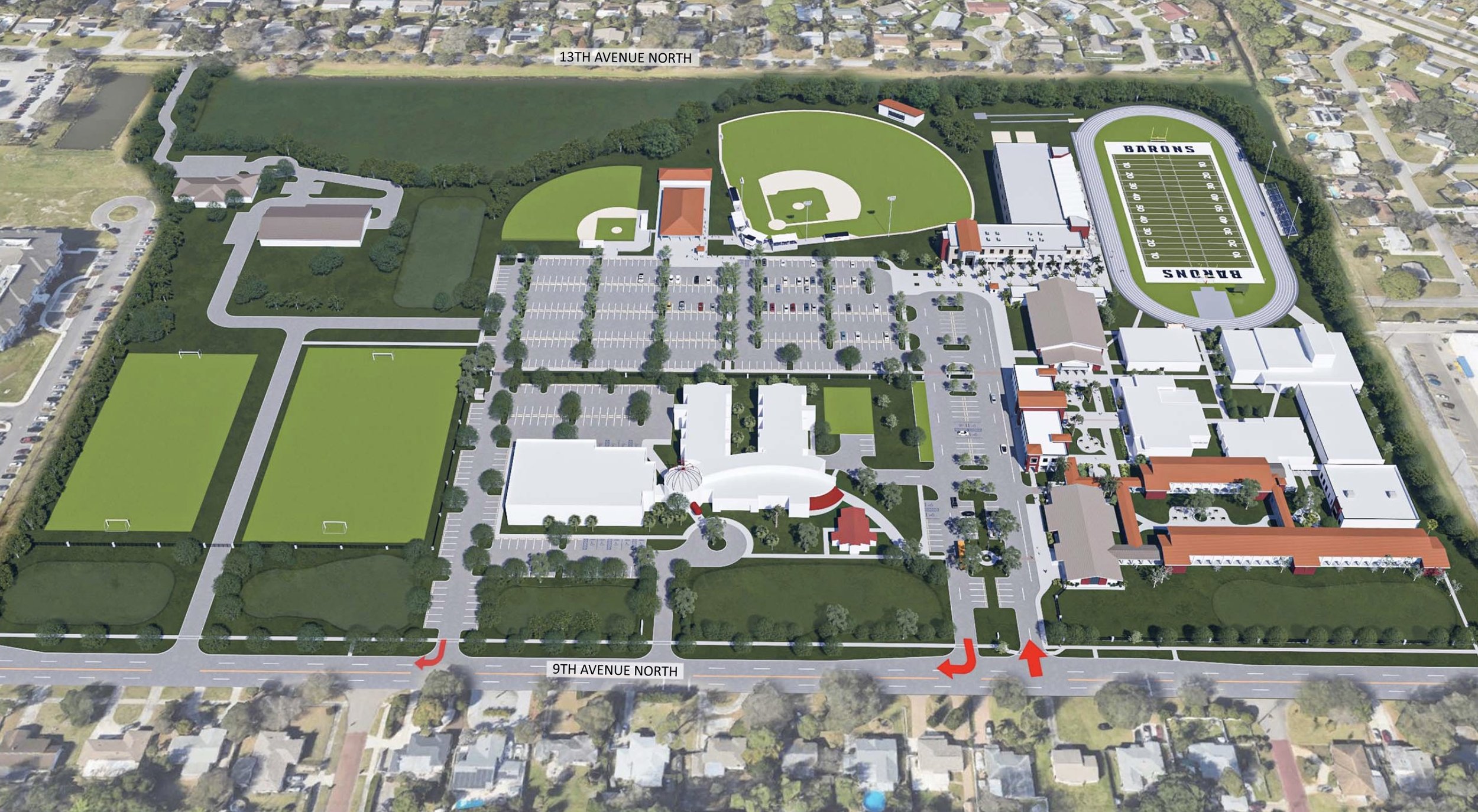
Site plan for the St. Petersburg Catholic High School master plan | SPCHS
Bubolz, who joined the school as principal in 2017 before becoming president in 2024, said the campus has steadily evolved over the past several years.
Earlier projects included upgrading classrooms with new HVAC systems, replacing windows and doors for improved security, and renovating the Msgr. Patrick Trainor Learning Commons into a modern student hub featuring flexible study areas, engineering and robotics space, conference rooms, and a 60-person chapel.
Construction is already underway on the first phase of the master plan: the new Center for Scientific Discovery.
Designed by St. Pete-based ARC3 Architecture, the facility will provide dedicated biology, chemistry, physics, and biomedical science laboratories through the school's Project Lead The Way curriculum, a nationally recognized STEM education program.
construction phases for the St. Petersburg Catholic High School master plan | SPCHS
Despite the enrollment growth in recent years, Bubolz said the expansion is focused on improving the student experience rather than significantly increasing enrollment.
“We run on a 90-minute block schedule and currently share the labs,” Bubolz said. “The new building will allow each discipline to have their own labs.”
St. Petersburg Catholic also places a strong emphasis on college readiness through its academic offerings, including 19 Advanced Placement courses and the AP Capstone Diploma Program, a two-year curriculum centered on research, critical thinking, and collaboration.
In addition to the new Center for Scientific Discovery, the first phase also includes a new pastoral residence, expanded parking with approximately 220 additional spaces, improved campus traffic circulation, and stormwater infrastructure upgrades.
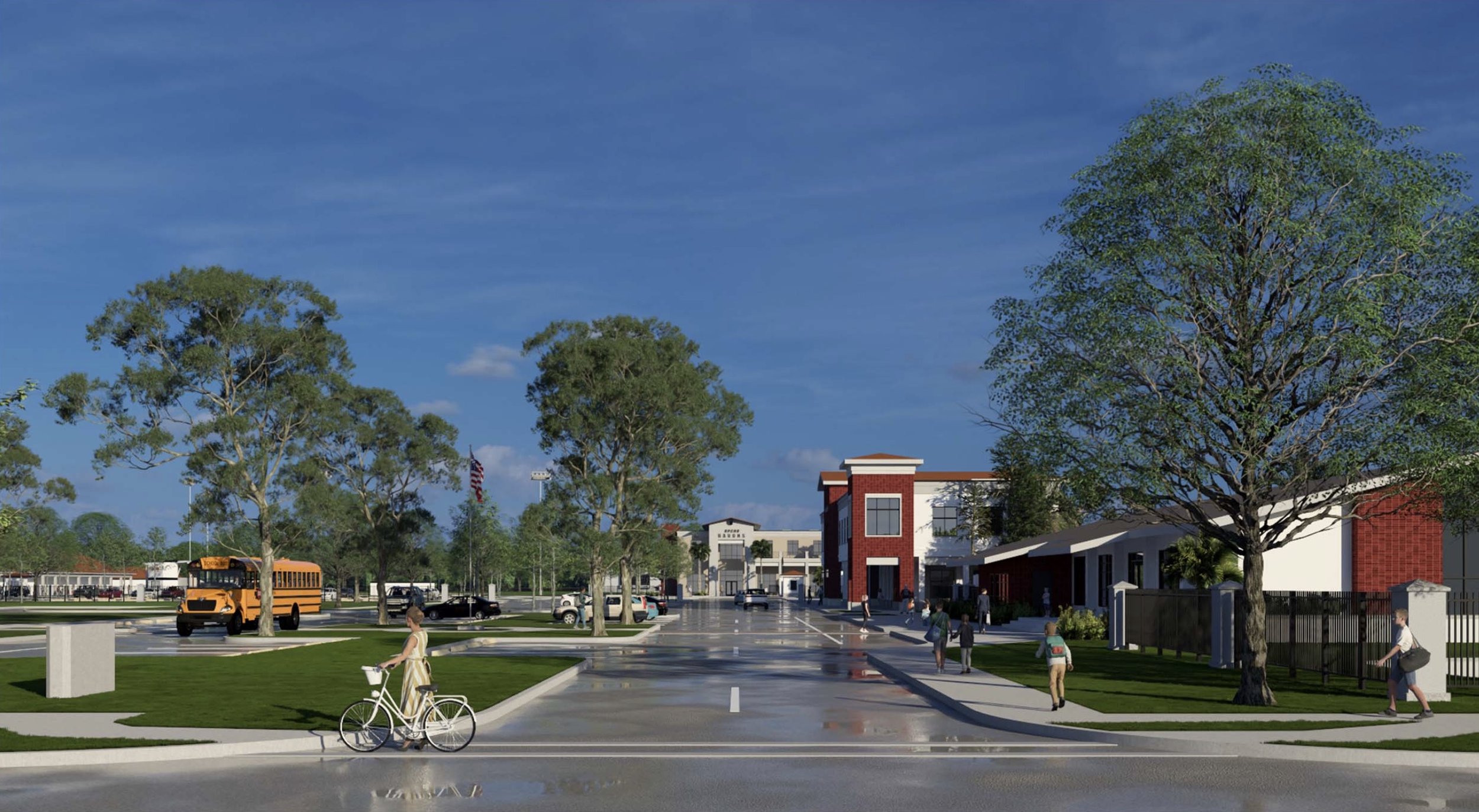
“We know we need additional parking and a better flow to stack more vehicles onto the campus and alleviate some of the congestion on 9th Avenue for better safety and to respect our neighbors,” Bubolz said.
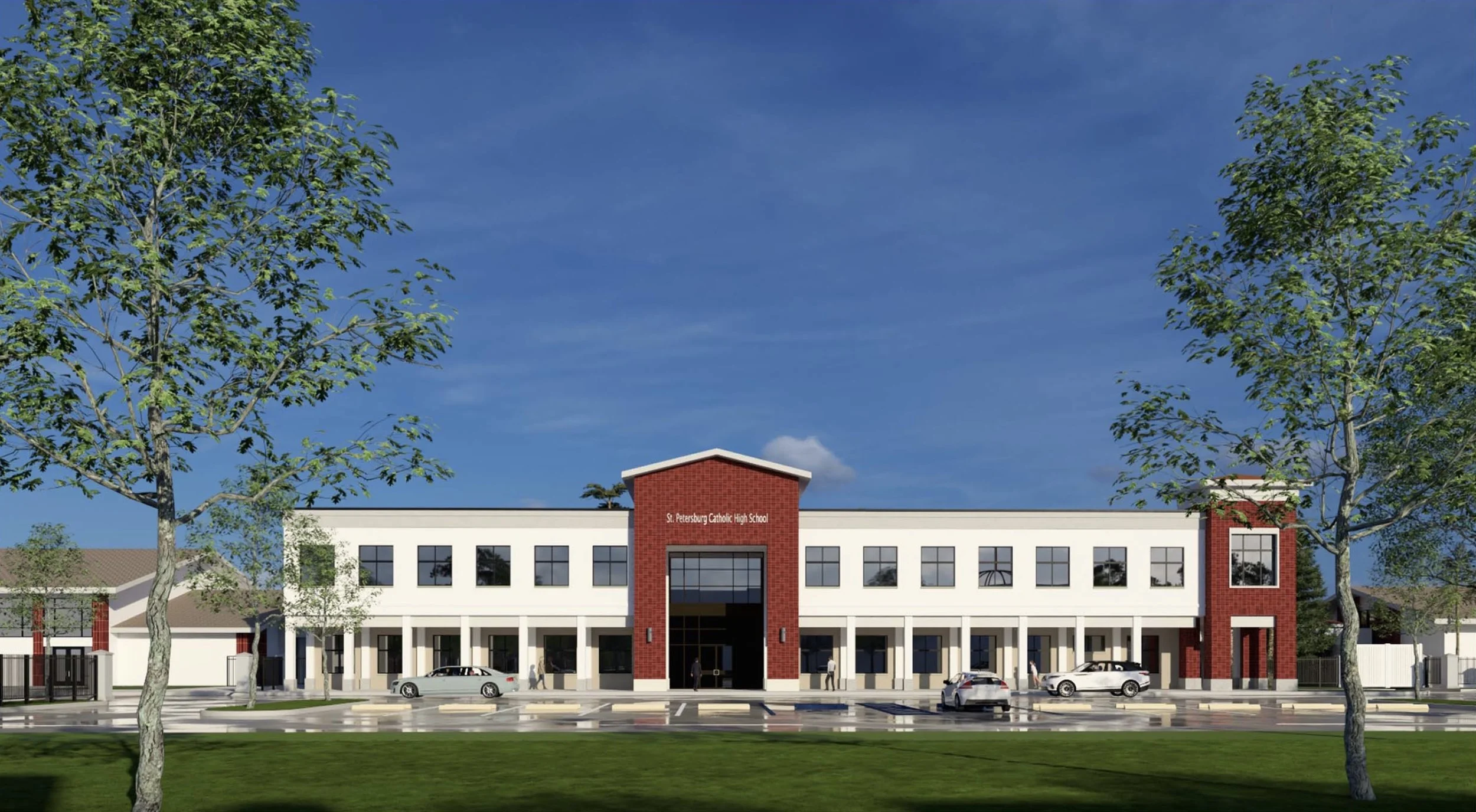
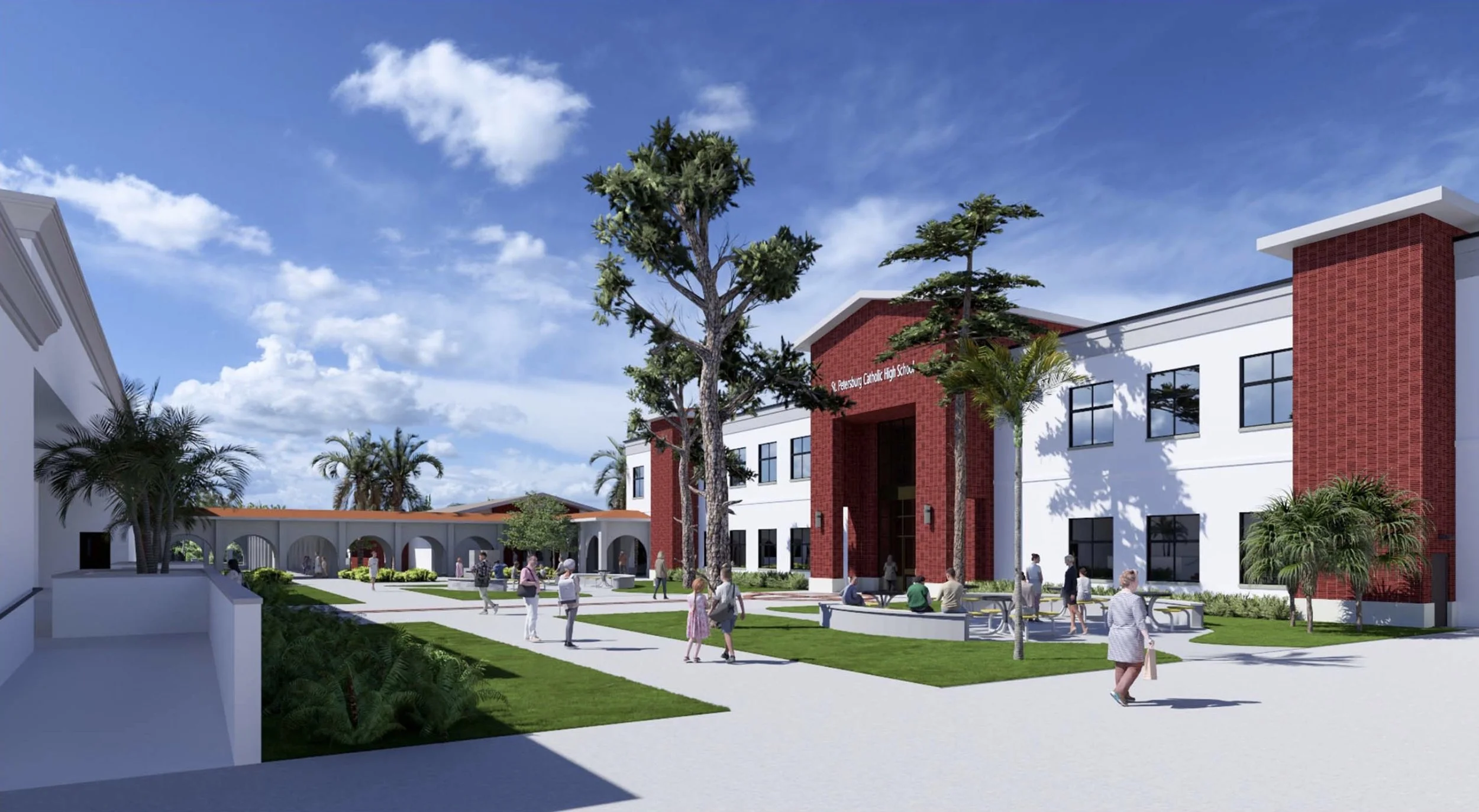
Rendering of the proposed admin building at St. Petersburg Catholic High School | SPCHS
Another early phase includes replacing the existing administration building.
A new two-story, 25,000-square-foot administration building will be relocated closer to the campus entrance, allowing the current building to be demolished to expand the campus retention pond while creating space for a new freshman dining area.
“A couple of years ago, 9th Avenue completely flooded; cars were stalled out. We want to create more retention space and have a better front entrance to the school,” Bubolz said.
Future phases shift their focus to athletics.
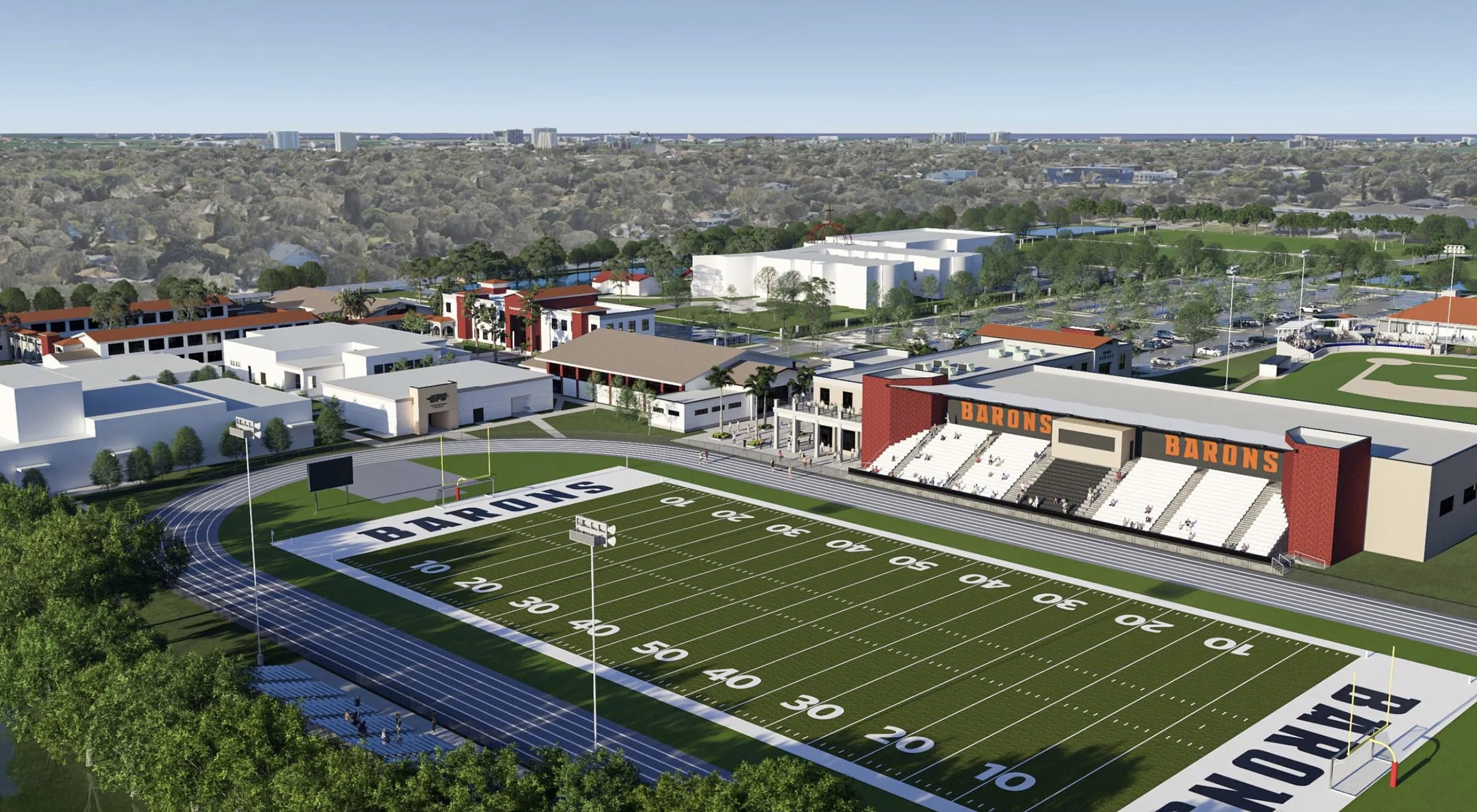
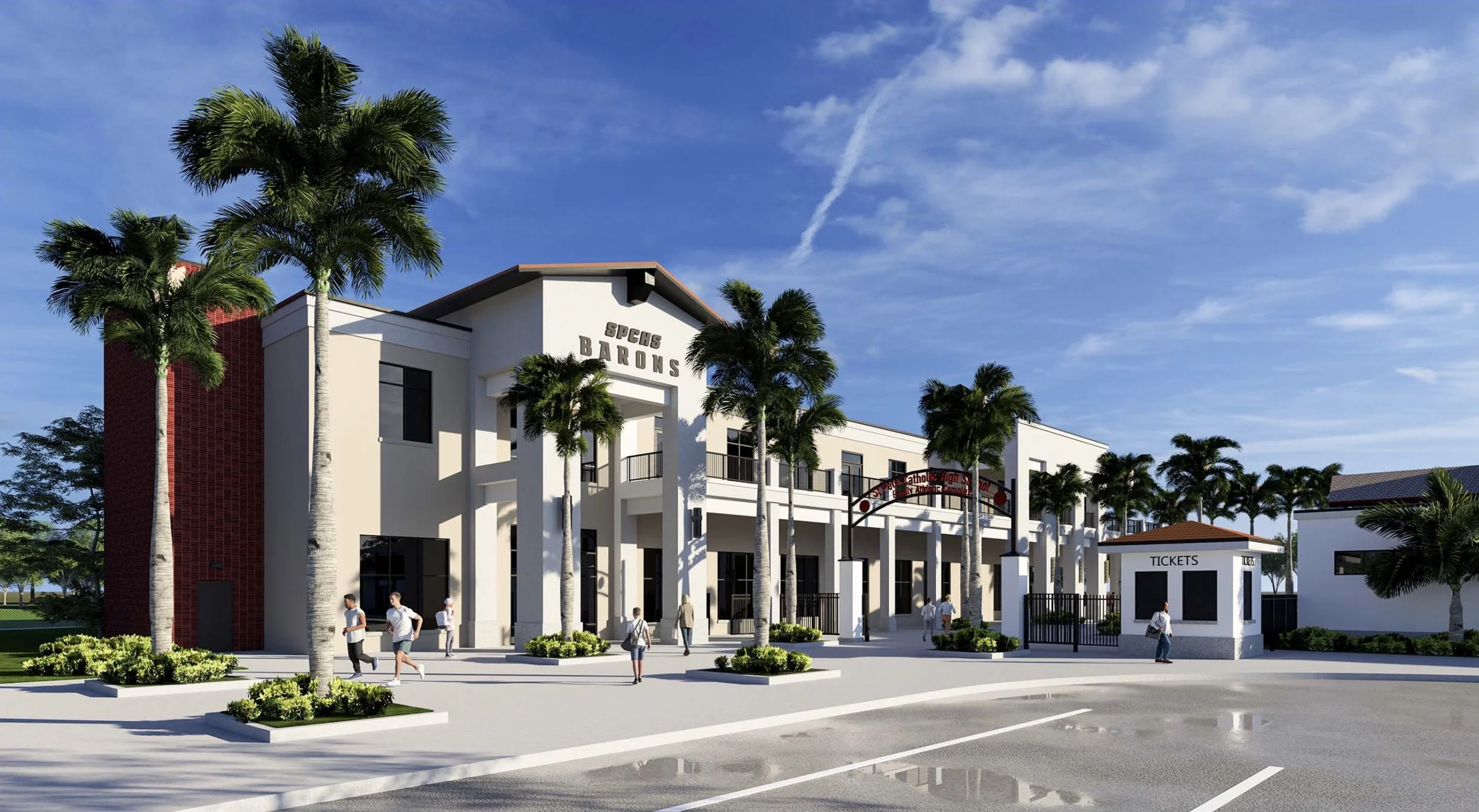
The next major project, expected within the next four to six years pending fundraising, is an approximately 80,000-square-foot athletic center featuring a new gymnasium, coaches' offices, wrestling and cheer practice space, beach volleyball courts, conference rooms, and balconies overlooking the football field and track.
“Athletics has historically been the least supported, with administrators focused on prioritizing academics, but we’ve recognized that school spirit is largely aligned with athletics and we want to make sure we are getting kids excited and creating great memories,” Bubolz said.
Rendering of a proposed 80,000-square-foot athletic center featuring a new gymnasium | SPCHS
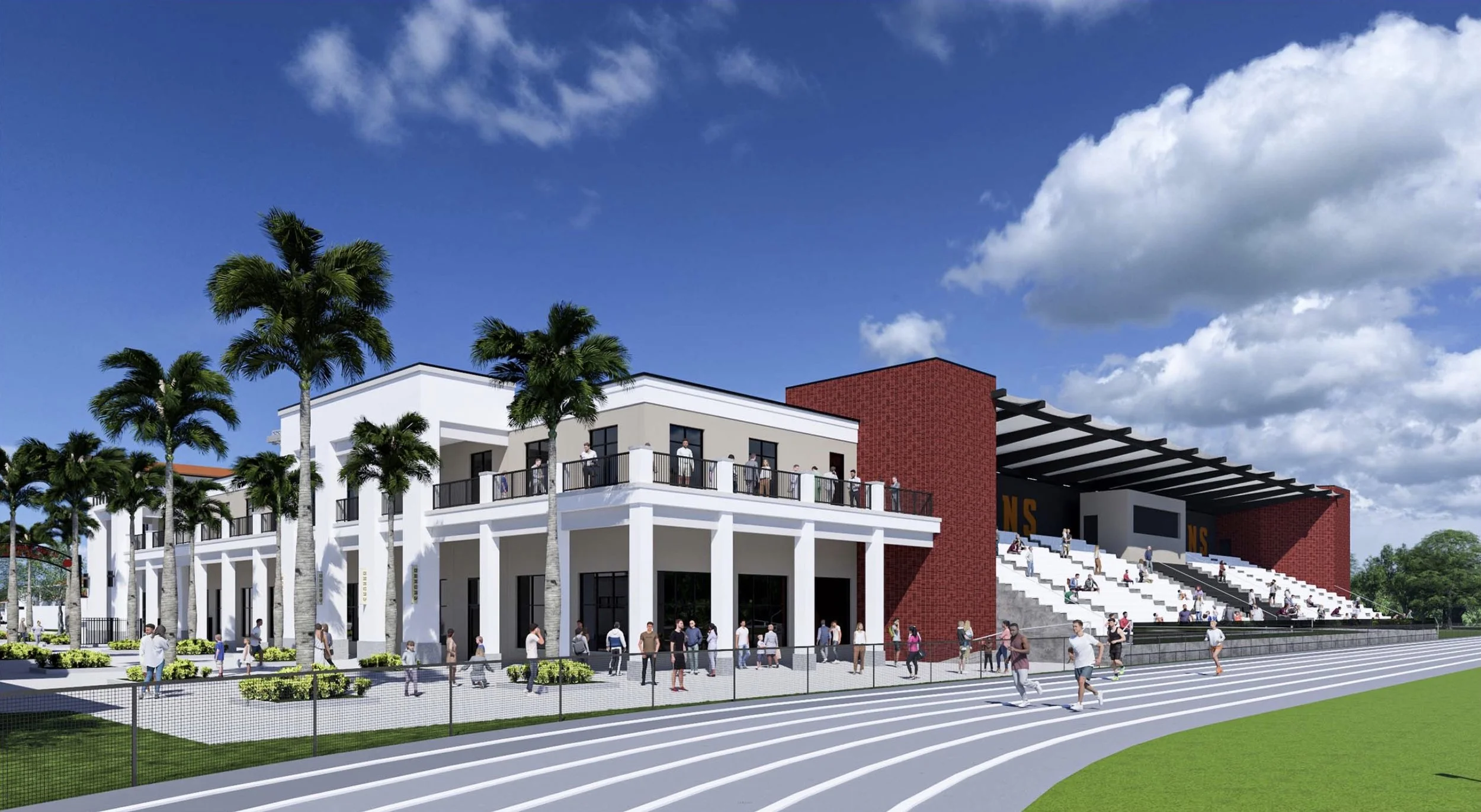
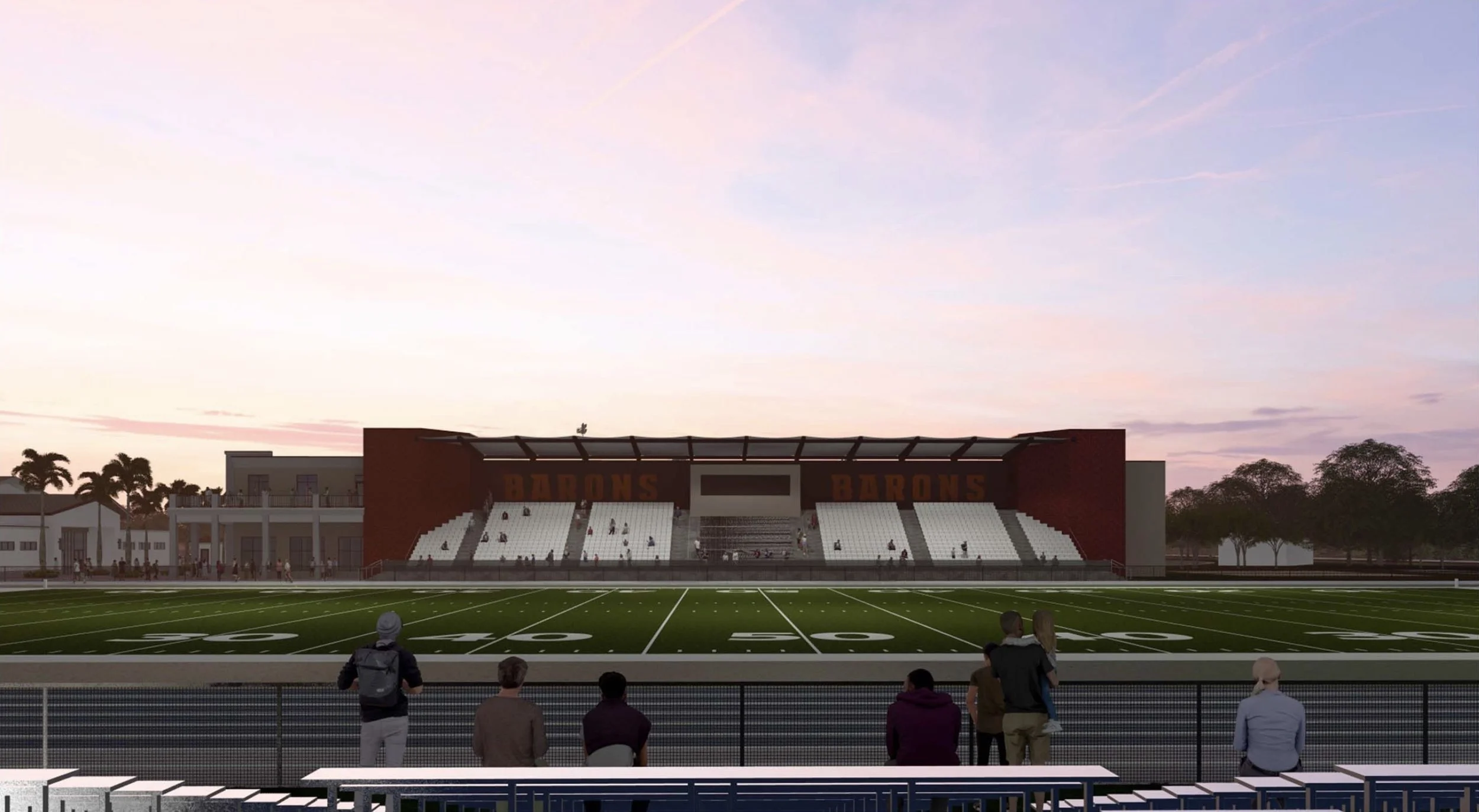
Additional athletic improvements envisioned in future phases include covered grandstands designed to provide shade while helping reduce noise, new concessions and restrooms, batting cages, relocated baseball and softball facilities, upgraded track improvements, and new sand volleyball courts.
The school has already invested significantly in athletics in recent years, adding perimeter fencing around the track and football field, renovating the concession area, improving Joe Paul Stadium, modernizing boys' and girls' locker rooms, and constructing an additional locker room for visiting teams.
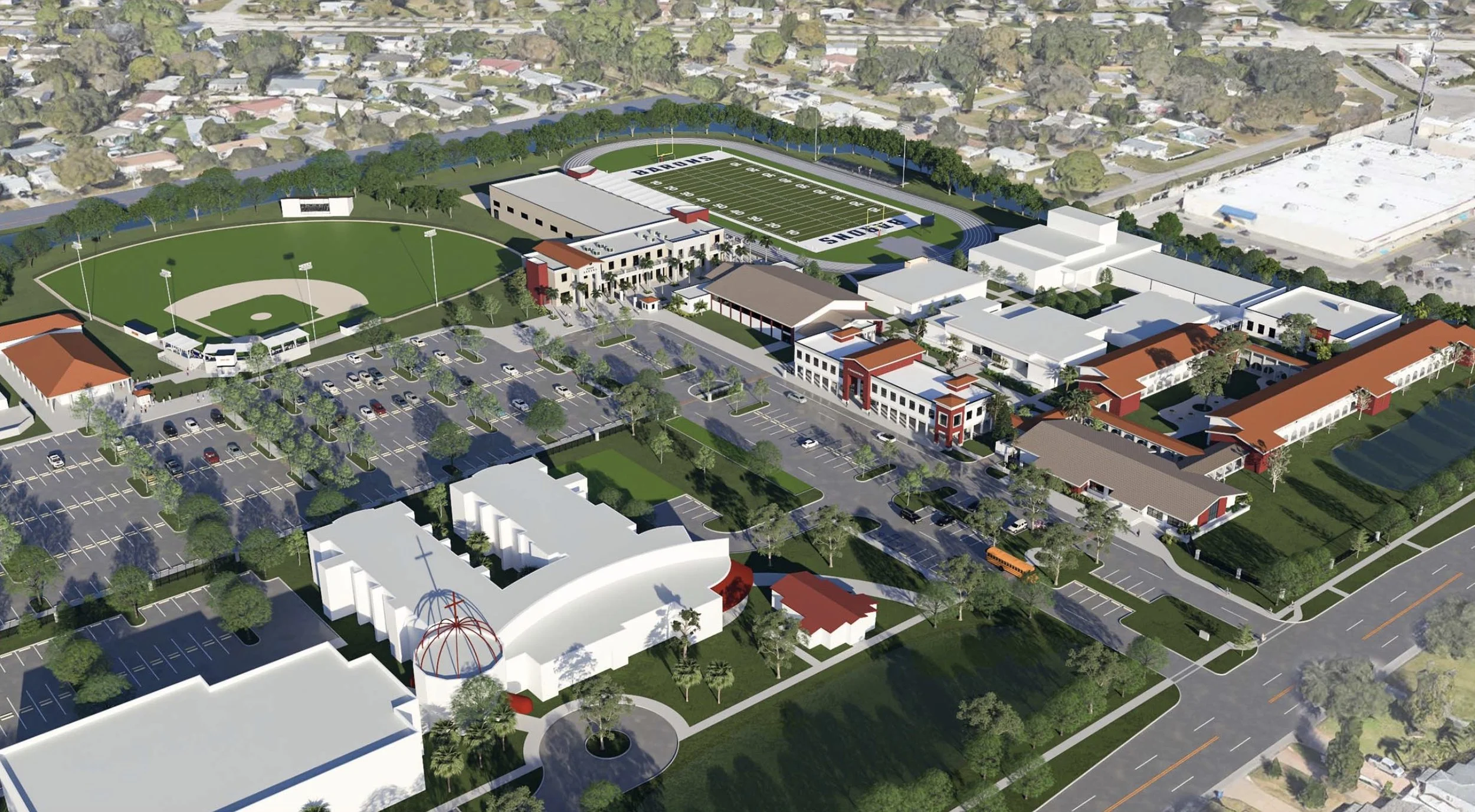
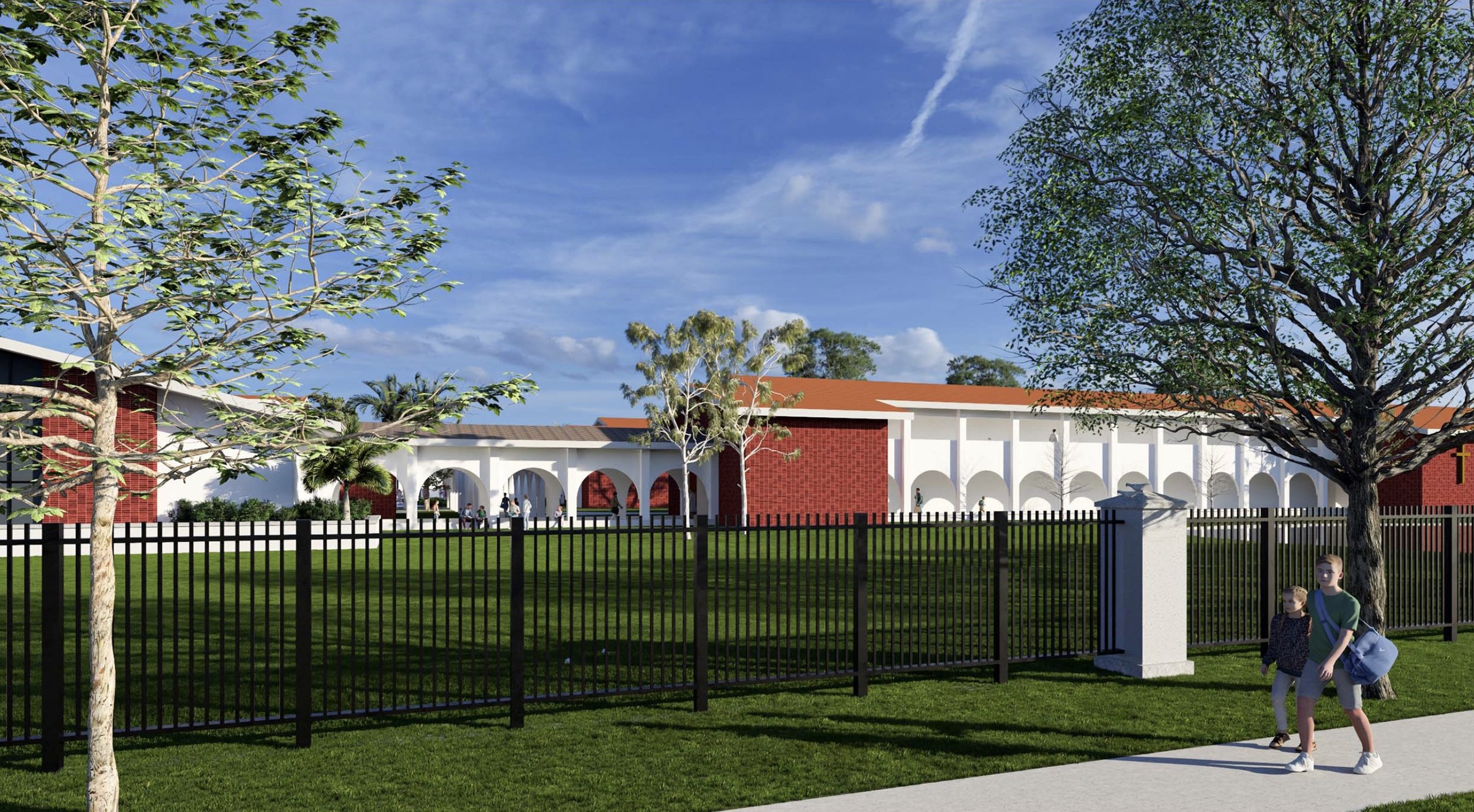
Although the campus will gain several new buildings, the architecture is intended to complement its mid-century character.
New structures will incorporate brick masonry and stucco finishes that reflect existing buildings such as Bishop Barry Hall and Notre Dame Hall.
During Wednesday's DRC meeting, ARC3 Architecture President Eddie Mastalerz said the new buildings are intentionally oriented inward to strengthen campus security while limiting views into student activity areas from neighboring commercial properties.
The development team also includes Hennessy Construction Services, led by SPCHS alumnus and president Mark Stalker, along with engineering firm George F. Young.
Rendering of proposed covered grandstands designed to provide shade while helping reduce noise | SPCHS
The Center for Scientific Discovery and the renovation of the St. Paul Theology Center represent approximately $4.9 million in fully funded improvements.
The remaining phases will be financed through future capital campaigns and private donations, with fundraising priorities determined as each phase moves forward.
Bubolz said the phased approach will allow the campus to continue evolving while remaining fully operational throughout construction, ensuring future generations of students benefit from facilities that match the school's academic mission.