Proposed 21-story luxury apartment tower in downtown St. Pete advances after City Council denies appeal
/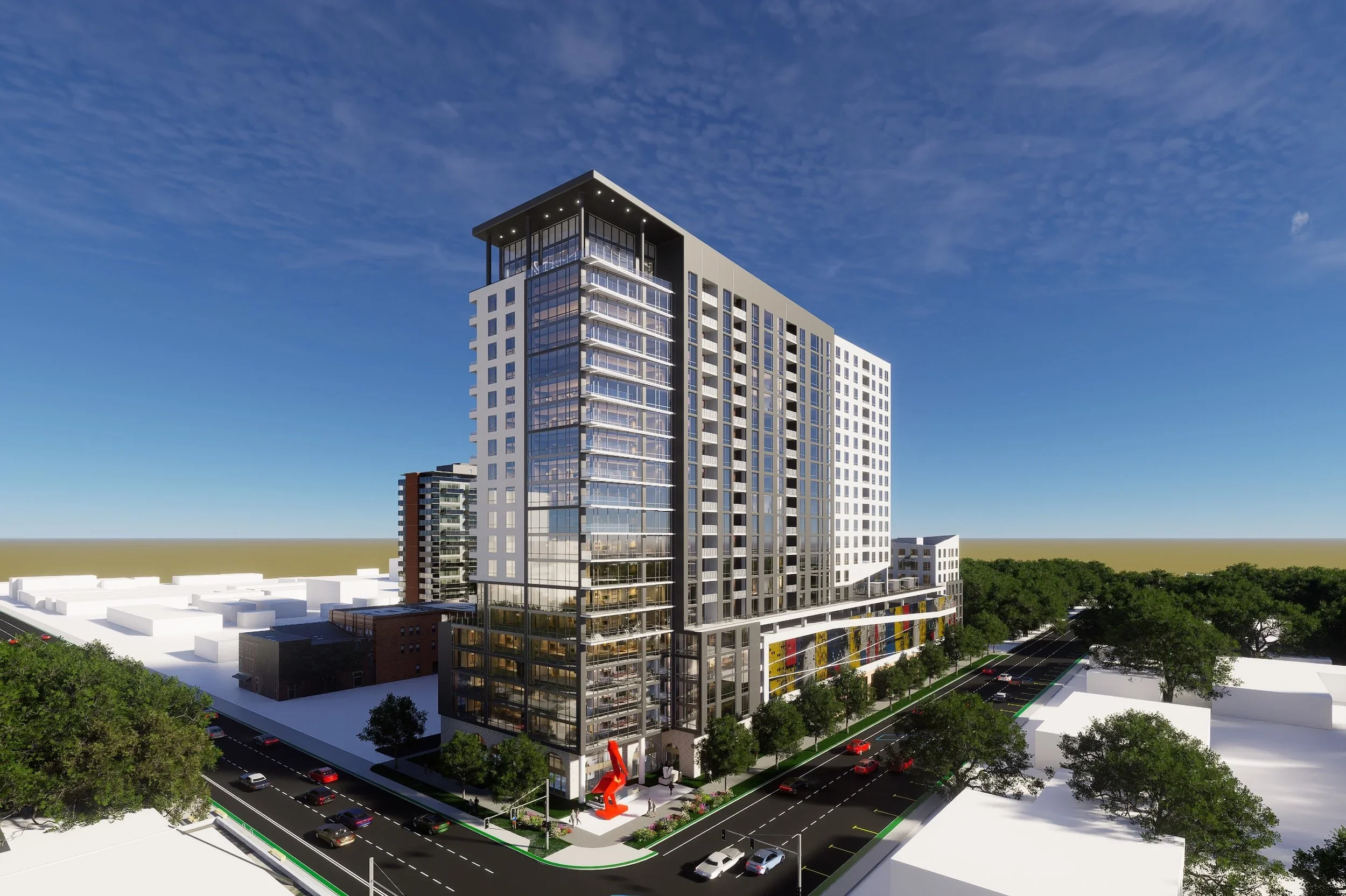
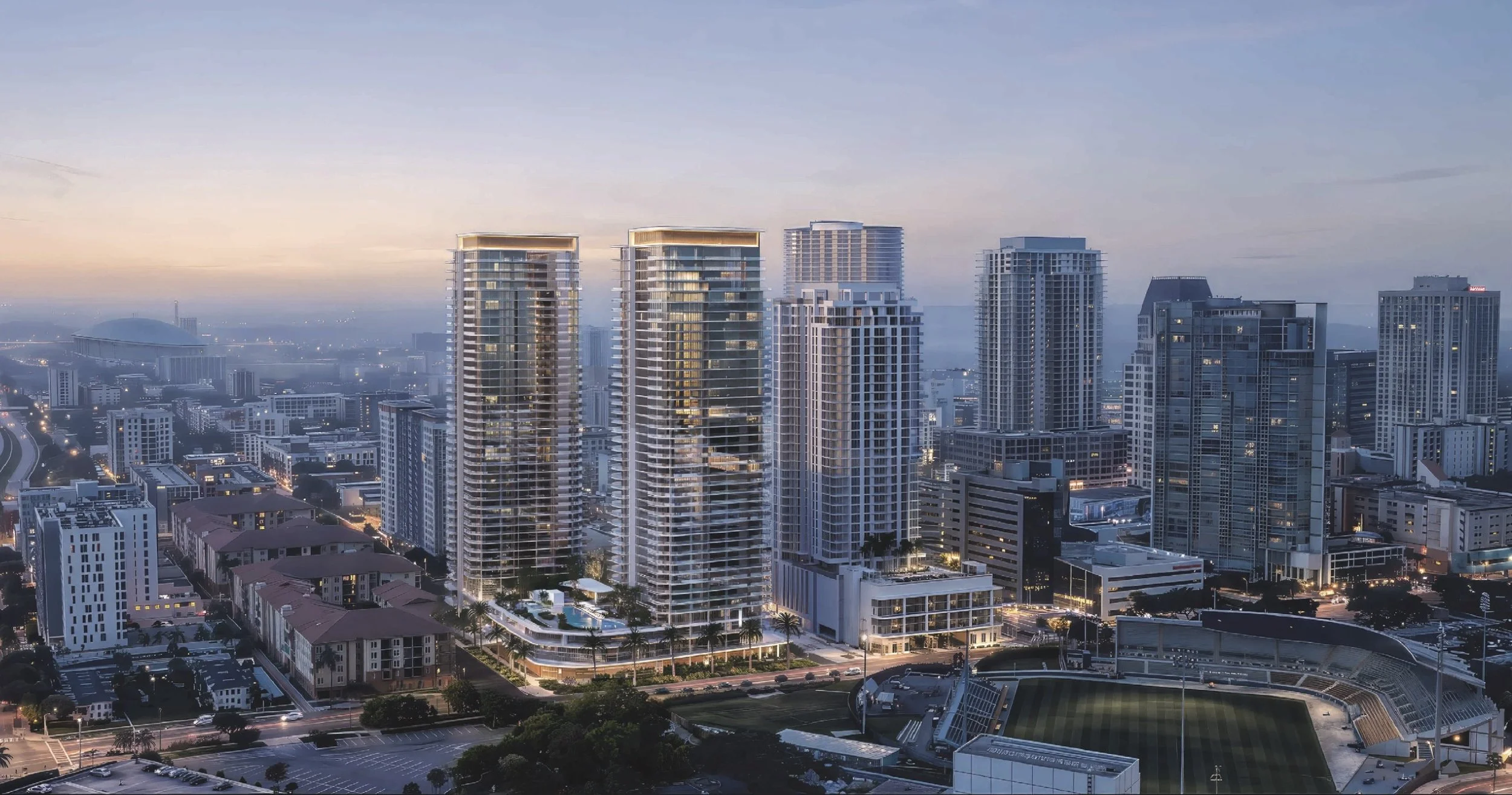
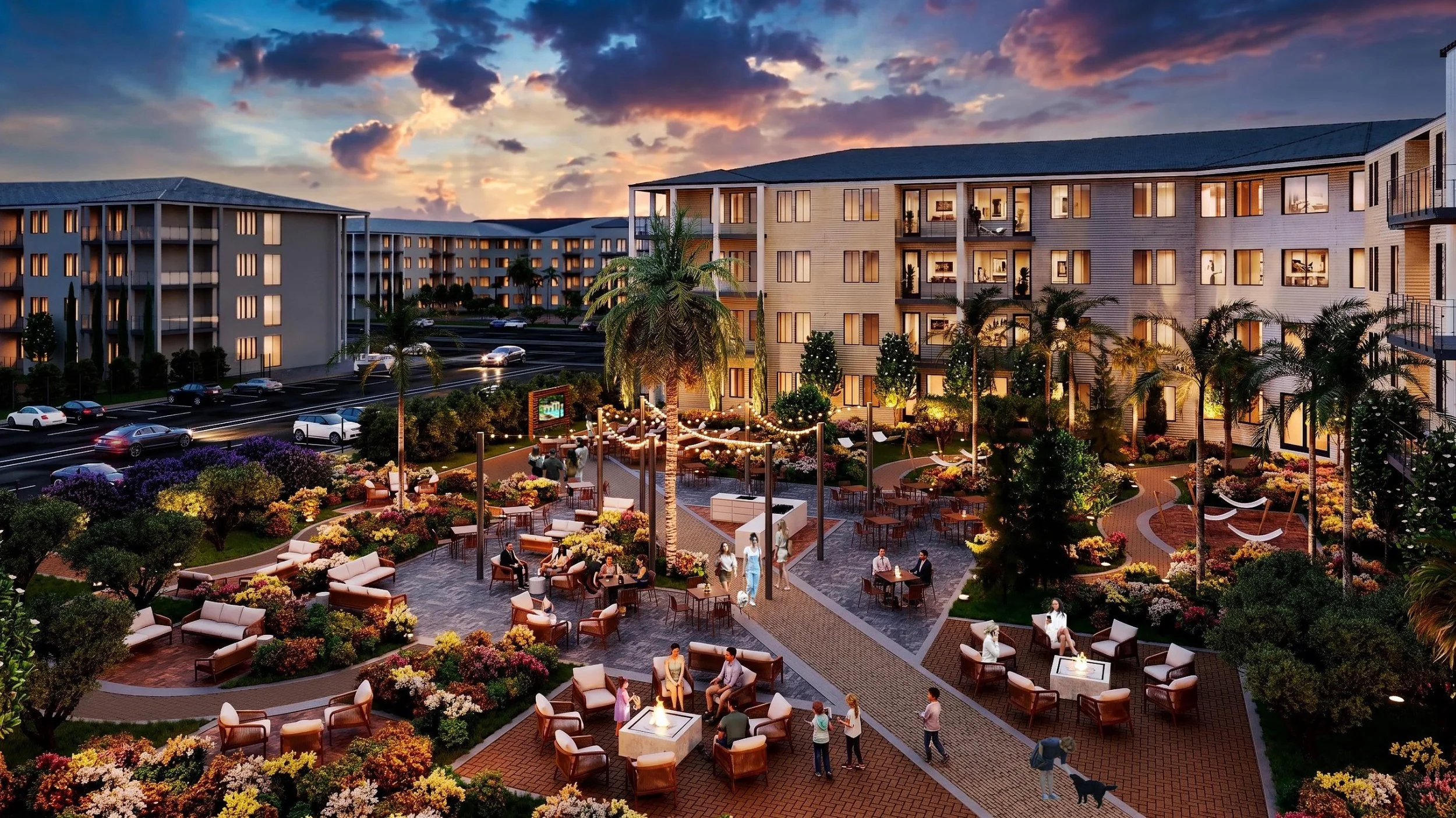
The pelican will offer 370 apartments, 3,819 square feet of retail space, and a 485-space parking garage | Baker Barrios
A controversial 21-story apartment tower planned for downtown St. Pete will move forward after the City Council voted Thursday to deny an appeal challenging its approval.
The $134 million project, known as The Pelican, has been proposed by St. Pete-based Stadler Development and would replace seven existing apartment buildings on a 1.3-acre site near the Hollander Hotel and Trinity Lutheran Church along 5th Avenue North between 4th and 5th Streets.
Plans call for a 370-unit residential tower with 3,819 square feet of ground-floor commercial space and a 485-space parking garage.
The appeal was filed by local historic preservation advocacy group Preserve the ‘Burg following a January approval by the city’s Development Review Commission.
Under city procedures, the burden was on the group to demonstrate that the project failed to comply with the city’s Land Development Regulations.
During Thursday’s hearing, Preserve the ‘Burg argued that the project’s height of 212 feet, scale, and overall intensity are incompatible with the surrounding neighborhood.
A street-level view of the pelican, a 21-story apartment tower proposed for downtown st. pete | Baker Barrios
Preserve the Burg Executive Director Manny Leto and Advocacy Co-Chair Bill Hermann, joined by others, also highlighted how the site is located within the Downtown St. Petersburg National Register Historic District, bounded by 5th Avenue North, Beach Drive, Central Avenue, and 9th Street North.
However, those buildings are not individually designated as historic landmarks, meaning they are not protected from demolition under current regulations.
Representing the developer, Trenam Law land use attorney Don Mastry countered that the project complies with all applicable city codes, including those governing height, density, and compatibility.
“The worst thing a city can do is have laws and not follow it,” said Mastry. “The opponents want the buildings to receive the same [local landmark status] protection without going through the designation process.”
He emphasized that multiple city departments and review bodies had already determined the project met the city’s requirements.
Several members of City Council voiced discomfort with the scale of the project and its potential impact on existing residents.
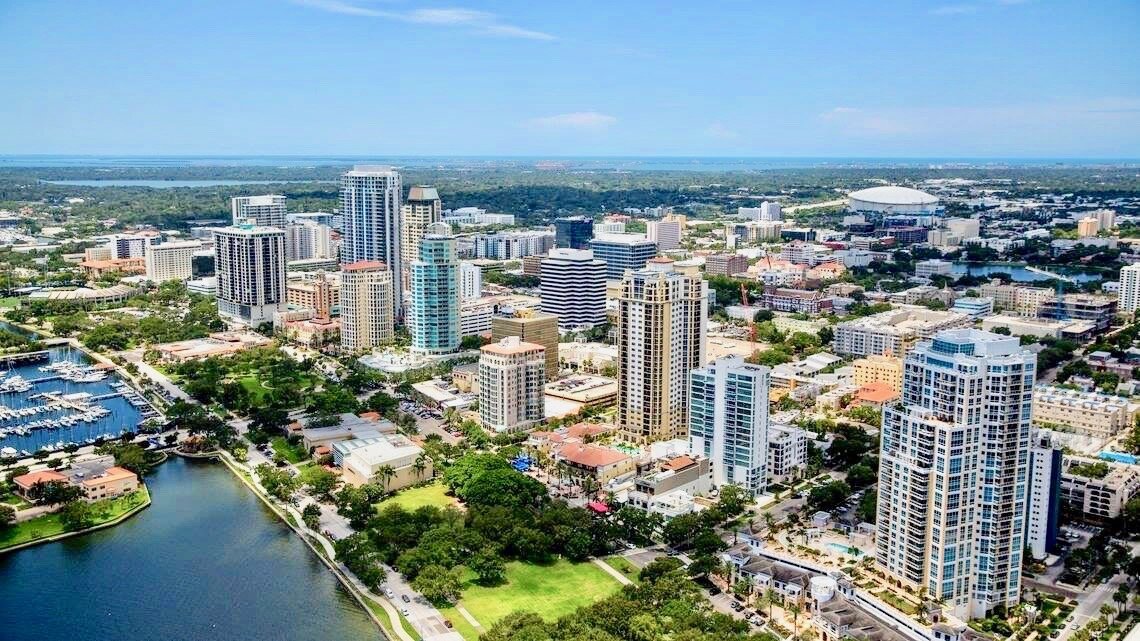
The Pelican is planned for a 1.3-acre site along 5th Avenue North between 4th and 5th Streets, near Hollander Hotel and Trinity Lutheran Church | Google Maps
“I haven’t heard a resident say they appreciate this development,” said Councilmember Deborah Figgs-Sanders. “A developer can build anywhere; those people who will be displaced cannot just live anywhere.”
Others acknowledged that while the project may raise concerns, the council’s role is to apply existing code.
Councilmember Lisset Hanewicz said the project meets the criteria, though she noted the code could be interpreted in different ways.
The Pelican is designed at a 7.0 floor area ratio (FAR), the highest level permitted under DC-2 zoning, but only with the use of bonuses. The city’s land development regulations state that in DC-2, a base FAR is 3.0 is allowed by right, increases up to 5.0 go through a streamlined review process, and anything above 5.0 up to 7.0 requires a public hearing.
To reach 7.0 FAR, the developer is applying a combination of prescribed FAR bonuses, including contributions to the city’s Housing Capital Improvements Projects fund, the use of transfer of development rights, and incentives tied to workforce housing, sustainability, and streetscape improvements.
The pelican, a 21-story luxury apartment tower proposed for downtown St. Pete | Baker Barrios
Councilmember Gina Driscoll pointed out that without those bonuses, the building would be significantly smaller, and emphasized that council approval is required for the increased intensity.
“That’s why you are here,” Driscoll said. “They [your client] were hoodwinked and made to believe this was a slam dunk, and it is not.”
After four hours of discussion, Driscoll made a motion to approve the appeal just after 9:00 p.m. The motion required five votes to pass but received only four.
Driscoll, Figgs-Sanders, Hanewicz, and Richie Floyd voted in favor of the appeal, while Copley Gerdes, Corey Givens, and Mike Harting voted to uphold the project’s approval. Brandi Gabbard was absent.
The vote fell one short of the supermajority required, allowing the Development Review Commission’s original approval to stand.
once constructed, the pelican would share a city block with the Hollander Hotel and Trinity Lutheran Church | Baker Barrios
During the public comment portion of the meeting, many residents described the building as “grotesque” and part of the “high-rise disease” taking over the city. Some mentioned an increase in traffic could present more safety issues for one-way streets like 5th Avenue North.
While a large number of residents opposed the project, several supporters also attended, including former City Council member Robert Blackmon.
Blackmon said Preserve the Burg “deserves more funding,” arguing the focus should be on proactively investing in properties they want to protect before they deteriorate, rather than scrambling to appeal projects at the last minute.
Christie Bruner, VP of Advocacy at the St. Petersburg Chamber of Commerce, and Jason Mathis, CEO of the St. Petersburg Downtown Partnership, also spoke in favor of the project, highlighting how it would contribute to the local economy and activate the streetscape.
With the appeal denied, the project can proceed, though a final appeal could still be filed within 30 days.