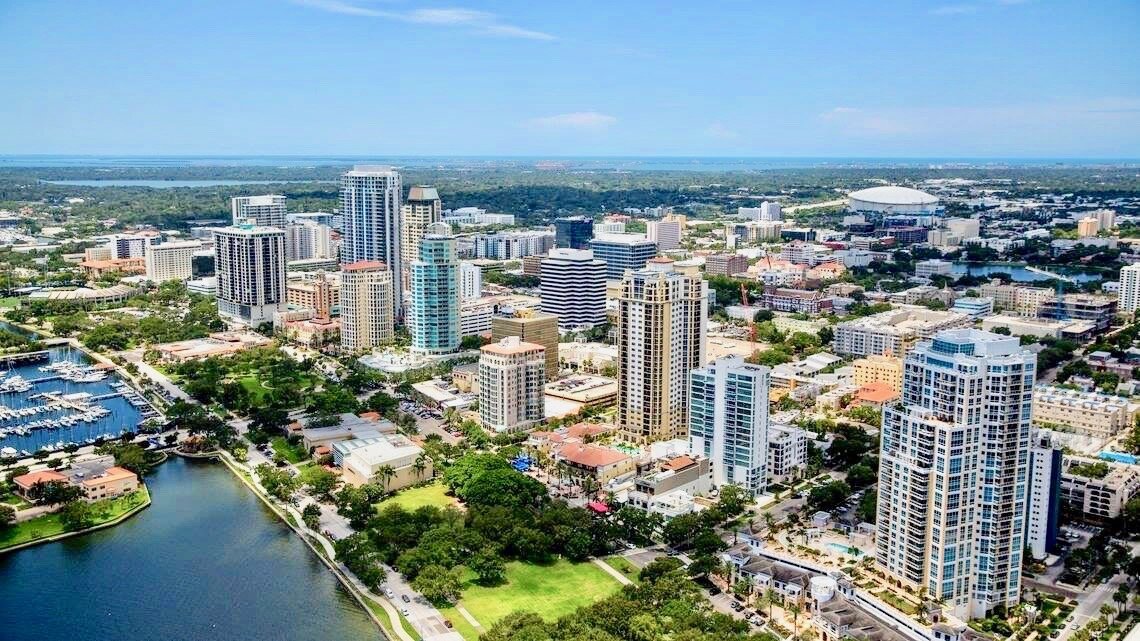
Public Q&A offers clearer look at competing visions for the redevelopment of the 86-acre Gas Plant District in downtown St. Pete
/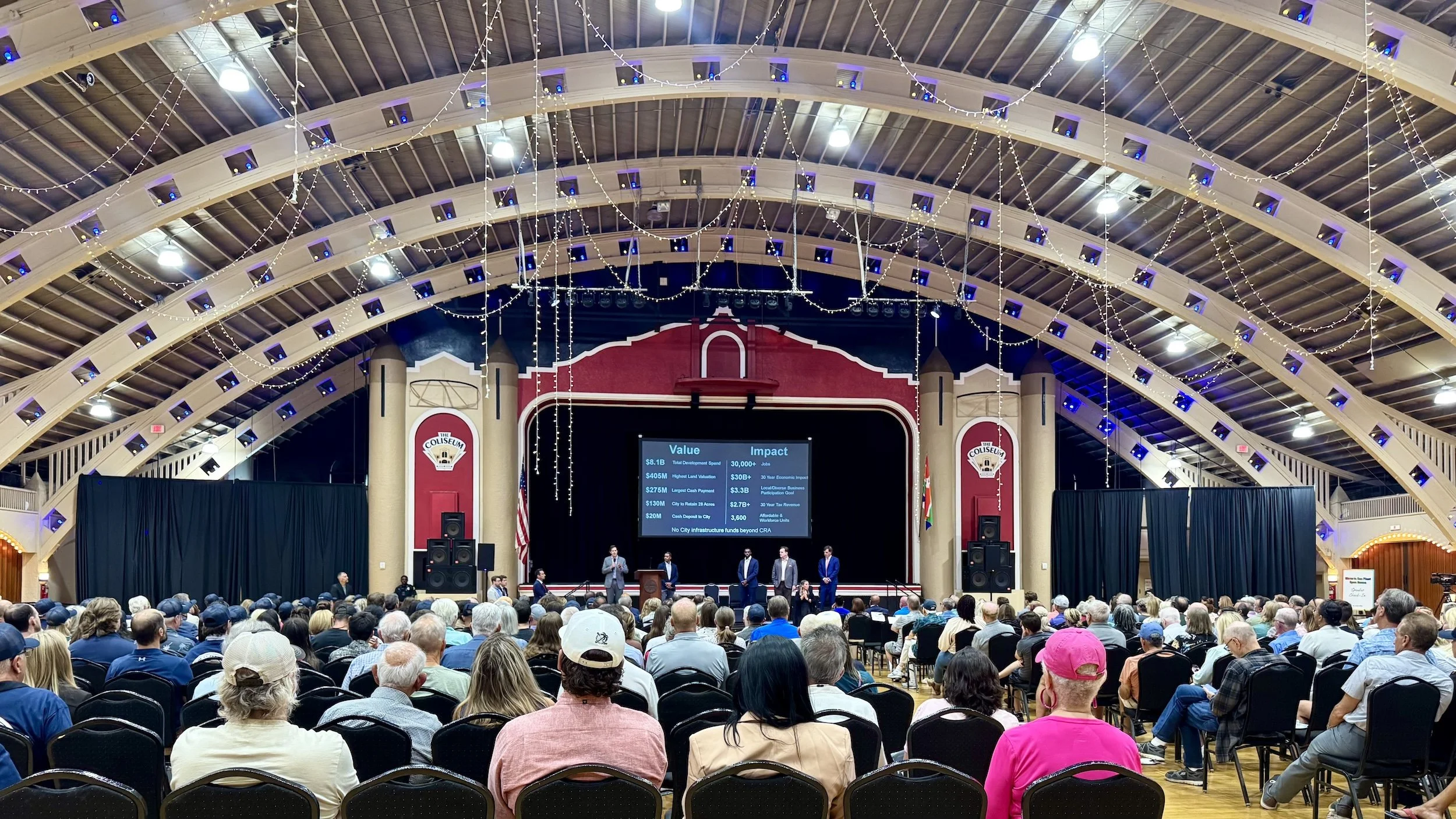
Last Thursday, hundreds of residents gathered at the Coliseum to hear from the four groups vying to redevelop the Historic Gas Plant District in downtown St. Pete | St. Pete Rising
Developers vying to redevelop the 86-acre Historic Gas Plant District in downtown St. Pete made their first public pitch last Thursday at the Coliseum, as the City of St. Petersburg hosted an open house featuring presentations from the four shortlisted teams: ARK Ellison Horus, The Burg Bid, Foundation Vision Partners, and the Pinellas County Housing Authority.
Each group walked through its vision for the site before taking questions from attendees, offering a more direct look at how their proposals could take shape.
Much of what was presented has already been detailed in the teams’ formal submissions, which have been covered previously.
The more revealing portion of the event came during the Q&A, where developers addressed topics ranging from affordability and economic opportunity to phasing, infrastructure, and long-term community impact.
Mayor Ken Welch is expected to select one or more teams to move forward with in June, even as the St. Petersburg City Council recently voted 6-2 to pause the process.
The entire two hour event can be seen on YouTube. The City is requesting resident’s feedback on the presentations here.
Below is the Q&A session, which has been edited for clarity and length.
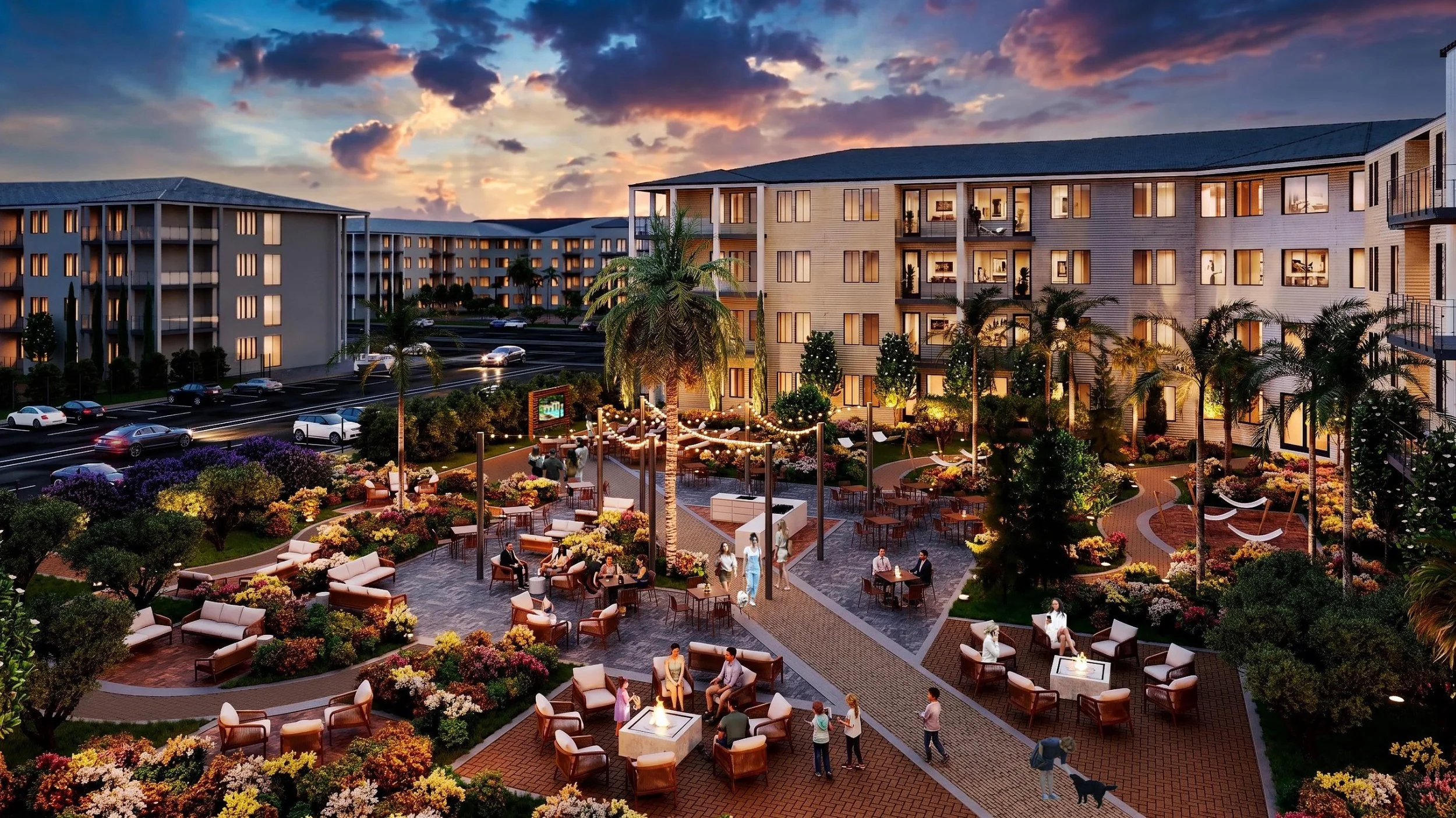
A rendering from the ARK Ellison Horus proposal to redevelop the Historic Gas Plant Site | ARK Ellison Horus
Question: How much funding are you asking from the city, county, state, and other public entities for your project in both cash and non-cash investments, including land donations, infrastructure support, grants, tax abatements, etc.?
ARK Ellison Horus
We are asking for $120 million from the city to seed the infrastructure.
What that money returns back to the city is about $400 million of public infrastructure that will be retained by the city. So there is a good return on that money.
We are also talking to the Florida Department of Transportation (FDOT), who is partnering with us to help fund the Unity Bridge over the I-175 spur.
The Burg Bid
In our proposal, we are only asking for direct infrastructure funding from the Community Redevelopment Area (CRA) that already exists.
What the infrastructure budget comes out to, we’ll determine that publicly and ask for it from the CRA. That is the only public funding we’re asking for.
Foundation Vision Partners
Our proposal is different than the others in that we are not asking for any money for ourselves or for our proposal.
What we anticipate is that the city, in the first phase, which is all the land east of Booker Creek, will invest approximately $70 million of its own money into its own land.
So there is no capital or funding given to Foundation Vision Partners. It is money the city invests in itself such that when those parcels are developed, the infrastructure is put in place, and ultimately sold, the city reaps all of the benefits of those land sales.
Pinellas County Housing Authority
When we build affordable housing, we do it with a combination of U.S. Department of Housing and Urban Development (HUD) loans, project-based vouchers, bonds, and tax credits.
We’re asking for a ground lease for this property.
Usually there’s a local government contribution, we know that mostly as Penny for Pinellas.
We won’t know what that contribution is until we sort through all the other funding sources.
A rendering from the Foundation Vision Partners proposal to redevelop the Historic Gas Plant Site | Foundation Vision Partners
Question: How many affordable and workforce housing units has your team delivered in St. Pete and Pinellas County? Is your team guaranteeing to build affordable and workforce housing, or will there be an opt-out clause? And what percentage is affordable versus workforce housing?
Pinellas County Housing Authority
We have a mission to provide quality, affordable housing and improve the lives of residents.
We do not build anything except quality, affordable housing. So there is no opt-out. There’s just success. And everybody’s invited to the ribbon cutting.
Foundation Vision Partners
The number of units built, the set-asides, and any opt-out clauses will be determined by the people sitting in this room.
As part of the master plan, both today and in future phases, the city and the community will make those determinations.
Because as part of our plan, when the city sells parcels in the future, it can dictate and change the use case for each parcel based on community needs at that time.
The Burg Bid
My name is Shawn Wilson. I’m the president of Blue Sky Communities and we are your hometown affordable housing developer based in St. Petersburg.
We have already built several affordable housing developments in the city totaling about 589 units.
Recently, we completed two phases of Skyway Lofts on 34th Street at 38th and 39th Avenue. We have Bear Creek Commons near Gulfport.
We also have roots going back three generations to the 1960s. In 1971, my partner and his father developed Rio Vista, which is about 300 units on 4th Street and 72nd/74th Avenue.
We have more than a 50-year, three-generation commitment to affordable housing.
ARK Ellison Horus
Based on our proposal, the total number of homes that are being built is 3,701 units. Of that, 863 are affordable (30%–80% AMI), 618 are senior affordable, and 444 are workforce (80%–120% AMI). The rest, about 1,700, are market-rate.
In percentage terms, about 40% are strictly affordable, and about 52% including workforce.
All units will be built on-site, none are off-site.
A rendering from the The Burg Bid proposal to redevelop the Historic Gas Plant Site | The Burg Bid
Question: How does your plan ensure that local small businesses will have real access to the development, both during construction and as long-term tenants?
Foundation Vision Partners
Because the city owns the land, the procurement process goes through the CCNA process. That is one of the most inclusive processes you can find from a legislative standpoint.
It absolutely has to include small, local, minority-owned businesses.
Because the city can sell parcels as small as 0.6 acres up to 16 acres or more, it allows scalability for small businesses to participate.
There’s also less burden on bonding and insurance for smaller developers.
We also have the ability to start people working sooner and scale workforce development across all phases.
Pinellas County Housing Authority
Has anybody here tried to hire a contractor lately?
Not only are they going to be involved, we need more people to show up and work. There is not a surplus of people building right now. Everybody's struggling with contractors.
So if you're living here locally and you want to work, we've got projects going. We're accepting applications today. We'd be happy to have you.
The Burg Bid
One thing we didn't mention. Our team alone already supplies hundreds of jobs in this region.
We want multiple opportunities for micro retail, market spaces similar to the Pier.
We’re bringing in partners, and this will be one of the largest access-to-capital opportunities in Tampa Bay.
We have a community investment fund with a matching program so locals can invest.
We also have a massive first phase, that includes housing, office, retail, parking, which supports job growth from the beginning.
We’re committing $3.3 billion in Women and Minority Business Enterpris (WMBE) work, along with mentorship programs to ensure local participation.
ARK Ellison Horus
That was the premise of our team coming together—small business encouragement and minority participation.
We estimate about $7 billion in construction, with about 40% going toward small and minority businesses.
We’ve partnered with Job Corps and other workforce programs.
We’re targeting 15% of retail for small businesses, those starting with food trucks or small shops.
A rendering from the ARK Ellison Horus proposal to redevelop the Historic Gas Plant Site | ARK Ellison Horus
Question: What percentage of your development is office space, and how will you create high-paying jobs?
The Burg Bid
We have 1.4 million square feet of office space out of a total of about 11.7 million total space.
To bring high-wage jobs to this community, we include this office space in every single phase of our development.
That allows us to plan long-term for companies that want to enter this market and provide access to space to meet them where they are. When they want to be here, we will have space for them to enter.
When we talked about the high-paid jobs, the partnership of the group that you have here today, you heard a lot of large numbers. This group is dedicated to being that flywheel that is creating innovation, that is creating access to capital in a way that Tampa Bay has not seen before.
We have already brought the team that is going to support that. We already have the capital in hand. We are not asking for money. We are ready to go. We are ready to bring those jobs here.
ARK Ellison Horus
14% of our development, as originally proposed, is office.
Innovation creates jobs. In the last nine months at Spark Labs, we've brought in over 45 companies, startups, and that has translated into over 75 jobs.
So there's a direct correlation to innovation as a long-term flywheel to create high-paying jobs and strong economic value that is sustainable.
These companies are choosing to be here. They're innovating here. We're benefiting as small business owners, as residents in this community, from the benefits of these innovations.
And the companies are hiring. They're working with our local universities. These individuals are staying here.
That's the flywheel that we're actively seeing at Spark Labs and that we'll be able to magnify by an order of about 10 times in our proposal.
Foundation Vision Partners
In our proposal, we do the horizontal development. We de-risk the vertical development component for all three of the groups standing up here.
And we would fully anticipate that whether it's the collaboratorium, whether it's the innovation lab, whether it's senior housing, that once we do our work, that all of the great ideas you're hearing from the other competitors tonight would be incorporated in the development that happens.
That those ideas are really impactful and important for our community.
Like Blake, I've spent a lot of time as an entrepreneur in the city creating jobs, and it's the most meaningful thing that we do as residents of St. Pete.
So under our proposal, the job creation ideas from both Blake and the ARK plan, which are really, really good ideas, can be implemented once we finish our horizontal infrastructure work.
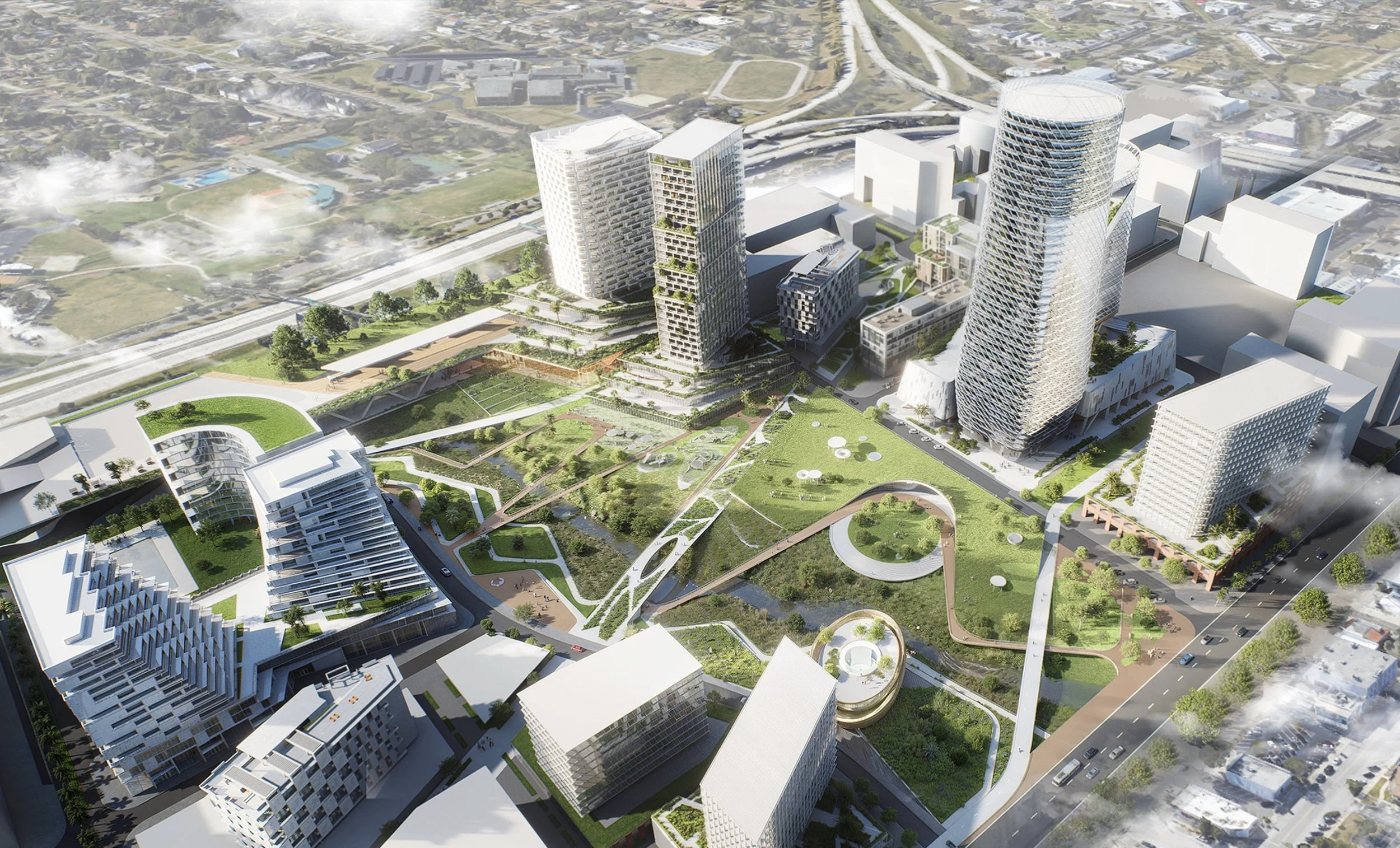
A rendering from the The Burg Bid proposal to redevelop the Historic Gas Plant Site | The Burg Bid
Question: How does your plan connect to surrounding neighborhoods? Specifically, how does your design promote healthy, active, and safe connectivity?
Pinellas County Housing Authority
We selected our site strategically. It's about to be connected to the Pinellas Trail. It's got access to downtown, got access to transportation.
It's built with our partner, Evara Healthcare, who's going to have a health clinic on site.
So we took health and connectivity and put it at the top of our list.
Downtown St. Pete of the future is not going to be the downtown we see today. As it grows, our project is going to be connected to the entire neighborhood.
And let's not discount, I think it was 40 years ago, people were asked to leave or told to leave. And our project is specifically designed to welcome them home.
Foundation Vision Partners
You're not seeing pretty pictures with massive buildings or massive public parks because you haven't been part of the process to date within our plan.
When we talk about horizontal infrastructure, it's kind of a stale word, but it basically means what is the public realm experience that we all want?
We have a very robust idea about how to do community engagement first so that we're thinking about cohesion between the existing communities today and what will come next on this site.
We expect every single group up here, you all out in the community, to be part of that future, developing together.
Because connection and cohesion is one of the most important things that we can do to create vibrant, mixed-use experiences that are flexible enough over time.
Because remember, this is a 20, 30, 40, 50-year project that we're talking about.
As your needs shift, doing the horizontal infrastructure first allows us flexibility to create the connections we know we need today and the ones we don’t yet know we’ll need in the future.
ARK Ellison Horus
Leading up to our proposal, we spent probably eight months talking about how to make sure that this community touches all of its neighbors.
So we felt it was very important to connect to the south, north, east, and west.
To the south, we connect to Campbell Park with the Unity Bridge. We're doing a Main Street program down 16th and MLK, pulling Campbell Park into the Gas Plant District.
To the north, we are connecting into the Rails and Trails program, CSX into the EDGE District and Grand Central.
To the west, we're connecting to the Warehouse Arts District and inviting them in.
And to the east, we're connecting to the Innovation District, which ARK is already part of.
So we were very intentional in making sure the Gas Plant District connects to the city. There is no backdoor.
The Burg Bid
What you saw presented here was what we proposed in October. But since then, we have been going to the community asking for input, advice, criticism, and it has transformed significantly.
In the 30 days that we were reviewing this, we really took into account our history of knowing this city.
What we started with was: what is at the heart of the project? Let’s get the public space right. Let’s get the The Woodson African American Museum of Florida in the center of the site.
Some plans have shown the Woodson outside the site. We want it at the heart.
We’re going to have the Legacy Link connecting to Methodist Town, connecting underneath the interstate to the Deuces, to Manhattan Casino, and down 16th Street.
Everything you see in our plan is funded. We want to be careful not to show things that require outside funding that isn’t secured.
We are intentional about reconnecting historic bridges and connections.
We will continue to create those connections throughout the project and beyond.
A rendering from the Foundation Vision Partners proposal to redevelop the Historic Gas Plant Site | Foundation Vision Partners
Question: How are you incorporating resiliency into your plans? Will there be resilient green infrastructure and nature-based solutions such as restoring Booker Creek? Will your energy infrastructure include solar, geothermal, or LEED-certified buildings?
ARK Ellison Horus
In our plan and in all of our projects, sustainability is a significant driver in the decisions that we make, both horizontally and vertically.
Sustainability for our project goes far beyond the environment. We'll be looking at sustainability of health and wellness. How we sustain our health for our families and children.
We’ll also be looking at economic sustainability. How we leverage education to create upward mobility and income growth.
So sustainability is very important to us, and it means more than just environmental sustainability.
The Burg Bid
Sustainability is not just a word for us, neither is resiliency. It’s a way of life. We’ve baked this into our plan.
We have an urban canopy with eight-inch oak trees to reduce heat. We have a 13-acre park along Booker Creek for stormwater management and flood mitigation. We have green roofs. We have an event center that doubles as an evacuation shelter with generator power. We’re also aligned with the city’s St. Pete Agile Resiliency (SPAR) program.
Foundation Vision Partners
Sustainability and resiliency are important, but in our proposal, they are shaped by your voice.
With our horizontal infrastructure approach, the community and city can mandate sustainability features over time.
Renderings can show green roofs and solar panels, but those often get value-engineered out.
Our approach ensures those decisions are enforced through the development process.
Pinellas County Housing Authority
Everything we build is affordable. That means everything we use, including concrete, lumber, glass, costs the same as everyone else, but we have to figure out how to do it cheaper.
So we have to reduce utility costs, which means energy efficiency and water savings.
We always build to green standards.
We design for durability. We don’t want to rebuild for 50 years.