Historically St. Pete: The remarkable history of the 100-year-old Vinoy Hotel that nearly never was
/The Vinoy nearing completion in downtown ST. Pete in 1925 | St. Petersburg MUseum of History
At St. Pete Rising, we are constantly providing comprehensive coverage on everything new and coming soon to the Sunshine City, but we think it’s also important to take a look back at our city's rich history.
Historically St. Pete, a monthly column on St. Pete Rising written by Executive Director of the St. Petersburg Museum of History Rui Farias, covers everything from the legend of underground mobster tunnels to the buildings and people that created the Sunshine City.
Follow us each month as we explore how these projects shaped St. Pete into the city we know and love today.
This month we celebrate the 100th anniversary of the opening of The Vinoy, which debuted on New Year’s Eve 1925. What began with a party, a bet, and a game of golf became a 375-room hotel completed in just under 10 months.
Forty days after the start of construction, first-floor load-bearing columns were in place, and the columns for the second floor and ballroom were ready to be filled with concrete and steel | St. Petersburg Museum of History
It was a rush job and a madhouse, and the amazing thing was that the contractors pulled a miracle out of chaos and completed one of the finest hotels in the state.
Those were the words of Karl P. Abbott, the first General Manager of the Vinoy Park Hotel, describing the magic that turned orange groves, swamp land, and part of Tampa Bay into the finest luxury hotel on Florida’s west coast.
As the Vinoy, St. Petersburg’s crown jewel at 501 5th Avenue NE, prepares to celebrate its centennial on New Year’s Eve, we look at how the city’s most improbable hotel became a symbol of luxury and elegance.
The idea for the Vinoy Park Hotel as it was called in 1925, is a thing of local legend, but unlike St. Pete folklore that includes the coin-flip that named our city, the Vinoy myth is based on truth.
It happened at the winter residence of Aymer Vinoy Laughner located on Beach Drive NE, which still stands today as a Bed & Breakfast across from the Vinoy.
The story has different versions, but we know Laughner was entertaining Hall of Fame golfer Walter Hagen.
AYMER VINOY LAUGHNER (LEFT), WHOSE MIDDLE NAME IS THAT OF THE Vinoy HOTEL; P. 0. LAUGHNER, HIS FATHER, WHO IS ASSOCIATED WITH HIM AND E. M. ELLIOTT IN THE PROJECT; and JAMES P. WILLIAMSON, FORMER OWNER OF THE PROPERTY. PHOTOGRAPH WAS TAKEN IN THE PALM GARDEN ON THE PROPERTY | St. Petersburg Museum of History
After dinner, Hagen wagered that he could hit a golf ball off the front porch using Laughner’s pocket watch as a tee—without scratching the crystal.
After hitting three balls off the watch, Hagen picked it up and not a scratch was present.
The result of the wager was Laughner purchasing the swamp land from James Williamson for $170,000, writing and signing the sales contract on the back of a brown paper bag.
Laughner financed the $3 million construction of the Vinoy by selling stock in the hotel.
1920s famed architect Henry S. Taylor signed on to design the elaborate hotel, and builder George A. Miller was contracted to make the dream a reality.
The task before them was gargantuan. Construction began in February 1925, and the planned grand opening was 10 months later on New Year’s Eve, 1925.
To complicate matters more, St. Petersburg was undergoing the largest boom in its history.
A stock offer for the Vinoy in the ST. Petersburg Times in 1925 | St. Petersburg Museum of History
Not only were other hotels rising throughout downtown and on the west side at a rapid pace, the city’s new Million Dollar Pier was also under construction.
Building materials and laborers were scarce, and let’s not forget that water still stood where a good part of the hotel was to be built.
After months of dredging and filling, obtaining financing, reworking architectural designs, and obtaining building permits, construction began.
Miller oversaw the hundreds of laborers, including many from Europe, who worked around the clock.
Forty days after the start of construction, first-floor load-bearing columns were in place, and the columns for the second floor and ballroom were ready to be filled with concrete and steel.
Along with the concrete, the walls of the hotel were made from clay tile blocks. This allowed the hotel to promote itself as “fireproof,” a valuable sales tool in 1920s Florida.
A sign in front of the hotel construction advertised a heated swimming pool, coconut grove tea garden, night club and casino, and amusements | St. Petersburg Museum of History
Even with an embargo of building materials entering Florida via rail, construction continued.
By mid-May, the upper-level floors had been poured, and most of the lower floors outer walls formed with clay tile blocks.
The tower was rising and the ballroom’s bowed truss system was put into place.
Abbott is hired as GM in July, and he is tasked with hiring staff and creating the amenities that will attract the Great Gatsby crowd to St. Petersburg.
Abbott had five months to complete, equip, and furnish the hotel. This included landscaping the gardens, as well as negotiating with the International Silver Company and the Onondaga Pottery Company to manufacture China and silver ware specifically for the Vinoy.
Nearing completion, it became evident that the Vinoy would live up to the hype. The hotel featured Moorish arches, tile-lined cupolas, elegant Georgian-styled ballrooms, leaded glass windows, carved beam ceilings, crystal chandeliers and 375 lavishly decorated rooms.
Along with the concrete, the walls of the hotel were made from clay tile blocks. This allowed the hotel to promote itself as “fireproof,” a valuable sales tool in 1920s Florida | St. Petersburg Museum of History
Guests could also enjoy a magnificent water-front porch, tennis courts, pools, shuffleboard, and its own golf course.
However, as opening day approached, the headaches worsened. Two days before opening day, there was still no refrigeration. Ten tons of ice was stacked in the hallways and in storerooms.
The dormitory to house the seasonal workers was not completed. They camped out wherever they could.
December 31, 1925 arrived. The Vinoy was scheduled to open for dinner at 7:00 p.m., followed by a New Year’s Eve celebration.
At 5:30 p.m., workers were still laying Oriental Rugs, painting walls on numerous floors, and wiring lighting throughout the hotel.
At 6:55 p.m., every light in every room was turned on, and the doors opened.
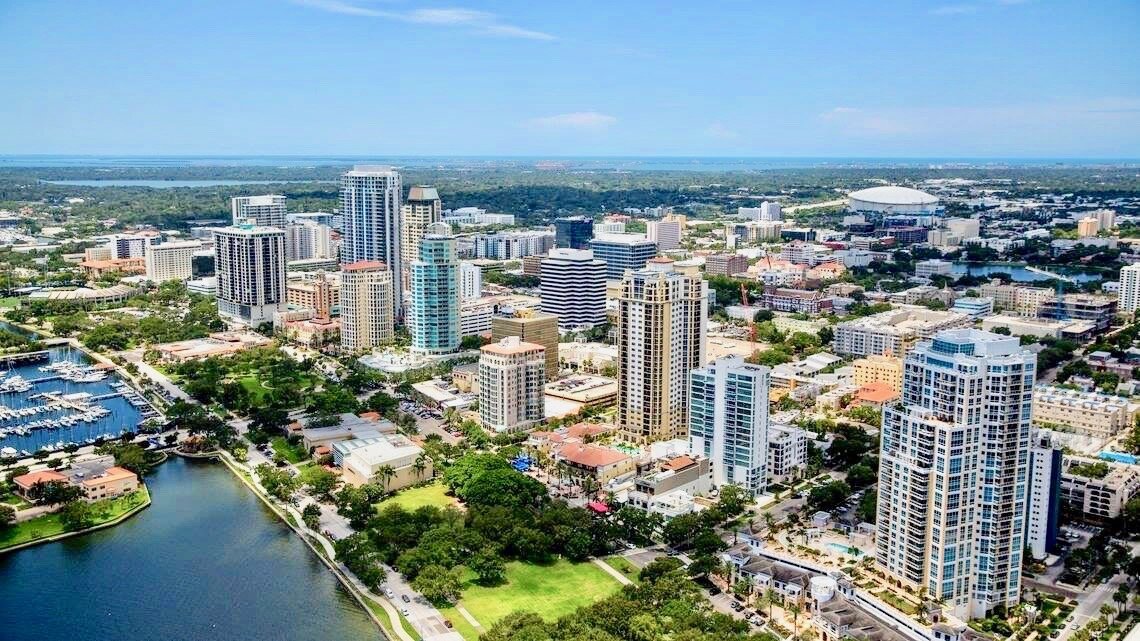
Today, the hotel is considered St. Petersburg’s crown jewel renowned for its timeless elegance and premier amenities like golf, spa, and fine dining | The Vinoy
Crowds formed up and down the city’s downtown waterfront to view the brilliance of the Vinoy Park Hotel—the biggest and most expensive hotel ever built in St. Petersburg.
The Paul Whiteman Orchestra, which included Tommy and Jimmy Dorsey, as well as Bing Crosby, entertained the special opening-day guests, and the hotel’s legend began.
For the next 50 years, except during World War II, the Vinoy opened each December and closed in April, hosting foreign dignitaries, U.S. Presidents, Major League baseball teams, Hollywood celebrities, and winter visitors from across the country.