
New I-275 express lanes and shared-use path open on Howard Frankland Bridge
/
Motorists now have a quicker way to travel between St. Pete and Tampa.
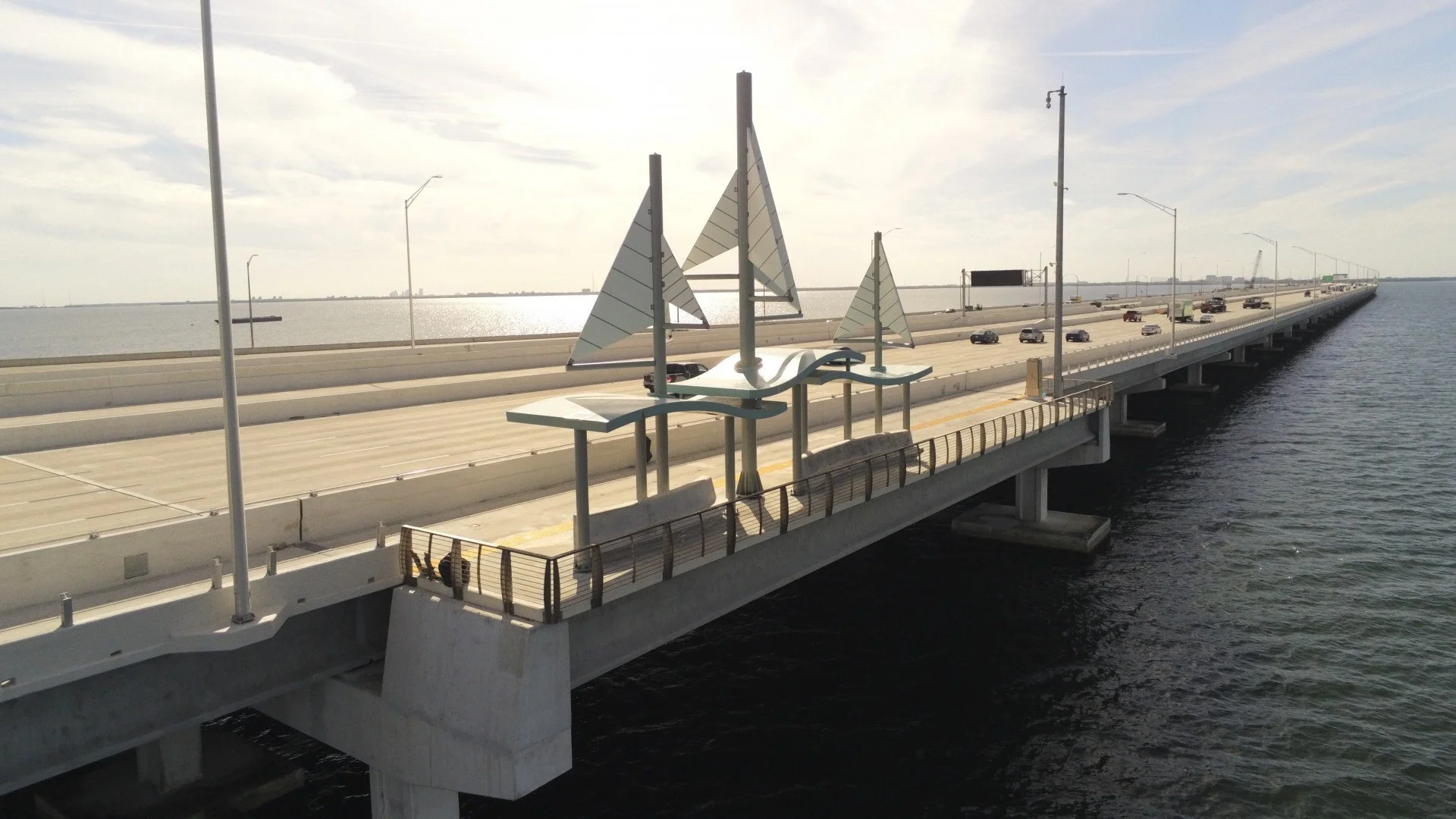
In the early morning hours of Wednesday, May 27th, the Florida Department of Transportation (FDOT) opened the new northbound I-275 express lanes on the Howard Frankland Bridge, along with a new pedestrian and bicycle trail.
The express lanes and trail are major components of the $972.5 million bridge replacement and improvement project, which began in 2020.
The new express lanes extend from 4th Street North in St. Petersburg to just north of the bridge in Tampa.
Running in the median of I-275, the lanes are separated from general traffic by barrier walls and flexible delineator poles.
FDOT contractors are expected to open the southbound express lanes over the next several nights, weather permitting.
The express lanes are currently toll-free during the ongoing testing phase. Once testing is complete, tolls will be collected electronically 24/7 through SunPass or other Florida-compatible transponders. Cash and TOLL-BY-PLATE will not be accepted.
Read More










Plans have been revealed for two 44-story condominium towers at the site of the Hilton St. Petersburg Bayfront, in what would be one of the largest condo developments ever proposed for downtown St. Pete.
Delray Beach-based Kolter Urban recently circulated a site plan application to neighborhood and business associations outlining a $325 million redevelopment of the hotel property at 333 1st Street South.
If built as proposed, the towers would rise up to 509 feet. Only two existing or planned towers in St. Petersburg would be taller: the 515-foot Residences at 400 Central and the 539-foot Waldorf Astoria Residences planned at 150 2nd Avenue South.
The two new towers, which have been designed by 10 Design, would tie for the city’s third-tallest buildings, ahead of the 450-foot Art House and ONE St. Petersburg towers and the 408-foot Saltaire.
The proposal calls for 325 condo units, 17,988 square feet of commercial space, and a 519-space parking garage.
Kolter would also make 207 spaces in the adjacent Saltaire garage available to residents, for a total of 726 parking spaces.