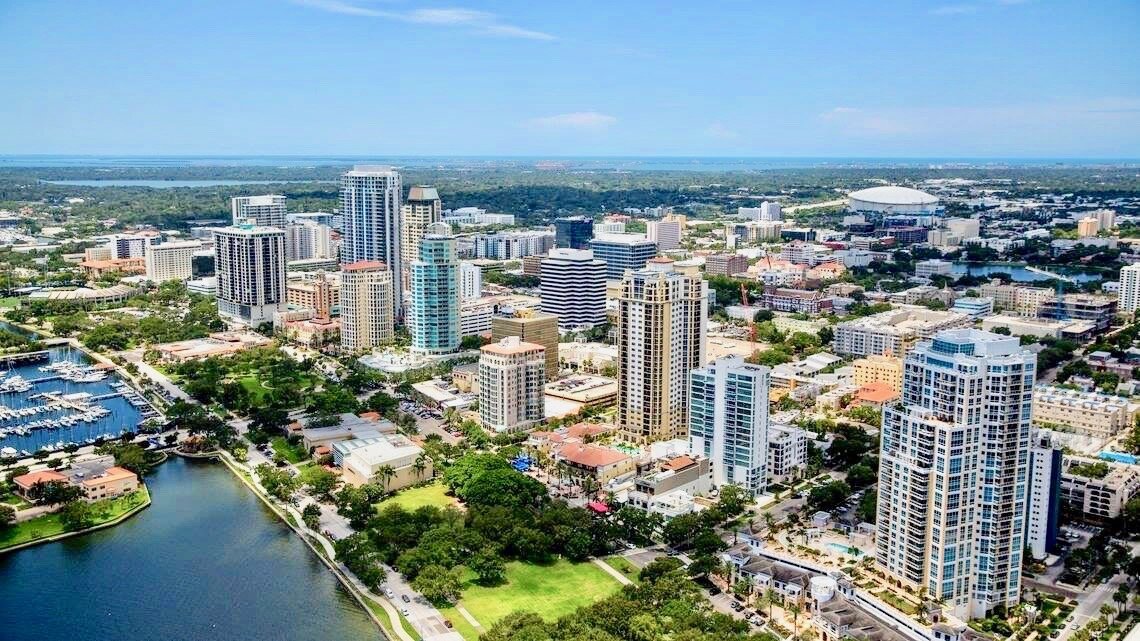
Inside the nine proposals vying to redevelop the 86-acre Historic Gas Plant District in downtown St. Pete
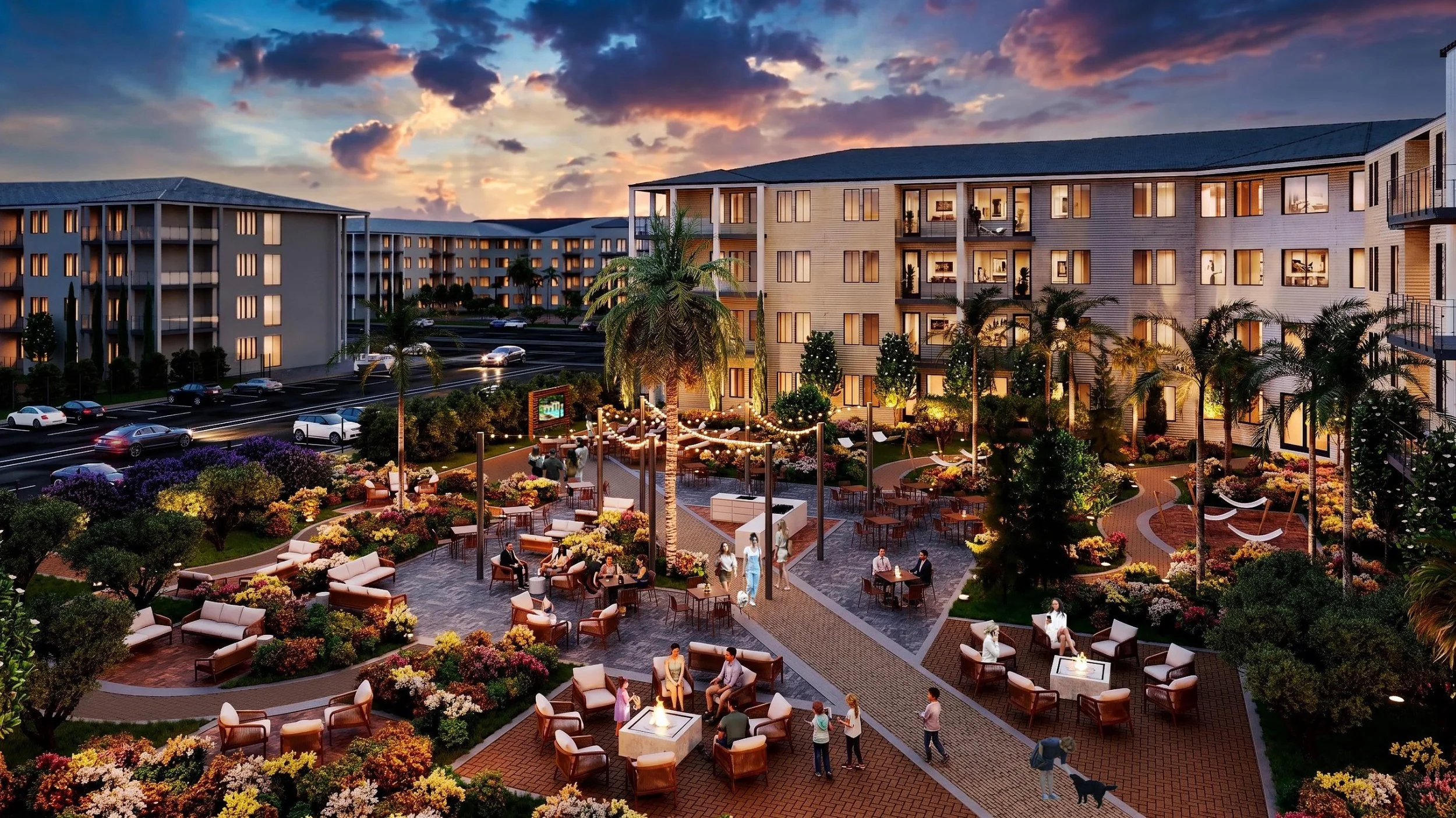
/A vision of the Historic Gas Plant District from The Burg Bid, led by Blake Investment Partners and Related Group | The Burg Bid LLC
The City of St. Pete has received eight additional submissions in response to its Request for Alternate Proposals for the redevelopment of the Historic Gas Plant District in downtown St. Pete, expanding the field to a total of nine submissions when combined with the original unsolicited proposal from ARK Ellison Horus.
The alternate proposals were submitted by a wide-ranging mix of private developers, nonprofit organizations, housing-focused entities, and community-led groups.
The nine proposals were submitted by the following teams, listed in alphabetical order:
ARK Ellison Horus
Foundation Vision Partners
Freedom Communities Company
Logical Sites Inc
Pinellas County Housing Authority
Reparations Land Trust and Development Authority
Tempo Novus
The Burg Bid LLC
The Tampa Bay Boom Inc.
City staff are expected to conduct a review of the submissions, a process which could take months, according to Mayor Ken Welch.
Here is a breakdown of each proposal:
A vision of the Historic Gas Plant District from Ark Ellison Horus | Ark Ellison Horus
ARK Ellison Horus
Submitted in October of last year by ARK Ellison Horus, LLC, a locally led team formed by ARK Invest, Ellison Development, and Horus Construction, with Baker Barrios as master plan architect, this unsolicited proposal calls for a master-planned, four-phase redevelopment of roughly 95.5 acres (the original 86-acre Gas Plant site plus adjacent areas) with a total investment of approximately $6.8 billion.
The full buildout proposes:
Residential: 3,701 units
1,776 market-rate
863 affordable (30–80% AMI)
444 workforce (80–120% AMI)
618 affordable senior units
Office: 1.2+ million square feet of Class A space
Incubation & R&D: 500,000 square feet
Academic & research: 750,000 square feet
Retail: 218,500 square feet
Hospitality: 1,543 hotel rooms
Parks, open space & civic uses: Approximately 42 acres, including:
50,000-square-foot Woodson African American Museum of Florida
200,000-square-foot Innovation Hall
80,000-square-foot music venue
Signature elevated park spanning I-175
The plan is phased over nearly two decades, requests $120 million in city funding for infrastructure, and is explicitly designed to proceed with or without a Rays stadium, positioning innovation, housing, and culture as the primary economic drivers.
A vision of the Historic Gas Plant District from Foundation Vision Partners | Foundation Vision Partners
Foundation Vision Partners
Submitted by Foundation Vision Partners, led by Will Conroy (Backstreets Capital), Alex Schapira (former Hines development partner), and Anddrikk Frazier (Best Source Consulting), in partnership with Gensler and Stantec, this proposal does not seek to act as a vertical master developer but instead proposes a master plan–first, infrastructure-first strategy with the City retaining full ownership of the entire 86-acre Historic Gas Plant District.
Foundation Vision Partners would deliver the community-driven master plan and build horizontal infrastructure, after which the City would sell development-ready parcels block by block to multiple developers.
The submission includes a theoretical full buildout scenario (explicitly noted as community- and City-determined):
Residential: 4,700+ mixed-income units
Office & medical: 825,000+ square feet
Retail & restaurant: 450,000 square feet
Civic & cultural: 200,000 square feet
Entertainment: 150,000 square feet
Parks & open space: 20+ acres
Hospitality: 600+ hotel rooms
District anchor: Potential stadium or convention facility
No parcel-level phasing, unit mix, or vertical development commitments are proposed, as the plan is intentionally structured to preserve long-term City control and flexibility rather than lock in a single redevelopment program.
The Sanctuary St. Pete, an affordable-housing–anchored mixed-use project, from Freedom Communities Company | Freedom Communities Company
Freedom Communities Company
Submitted by Freedom Communities Company, LLC, founded by Sarellyn Hamatani, this proposal seeks site control of approximately 1 to 1.5 acres within the Historic Gas Plant District to develop The Sanctuary St. Pete, a phased, affordable-housing–anchored mixed-use project.
Phase 1 proposes 100 residential units, including 80 affordable units and 20 workforce units, with ground-floor mixed-use space, including a grocery-serving retail component, and community amenities.
Future phases, subject to City approval, could add senior housing, additional workforce housing, and expanded mixed-use, but no additional unit counts or square footage are specified.
The seven-story concept includes community spaces, walkable public areas, and a two-year rental-to-homeownership pathway, with an estimated Phase I cost of around $300,000 per unit.
No office or hotel program is proposed, and the submission is limited to a small, initial portion of the overall Gas Plant site rather than a district-wide redevelopment plan.
Logical Sites Inc
Submitted by Logical Sites, Inc. & Partners, led by Thomas Rask, this proposal intentionally does not include a site plan, unit counts, square footage, or a defined buildout program for the Historic Gas Plant District, citing legal and process concerns with the City’s current solicitation.
The concept outlines a “100% affordable housing” starting scenario, prioritizing workforce housing, senior housing, and housing for intellectually and physically disabled residents, with the stated goal of delivering substantially more housing units than the ARK Ellison Horus proposal, though no numbers are provided.
The plan allows the City to optionally layer in office space, retail, a convention center, hotel rooms, the Woodson African American Museum of Florida, and additional park space, with the explicit caveat that adding any of these uses would reduce the total housing count.
Financing is described at a high level as a mix of debt, equity, and public incentives, but no capital stack, phasing, or parcel-level development breakdown is included, making this a framework proposal rather than a quantified redevelopment plan.
An 80-unit affordable apartment building proposed for 1659 3rd Avenue South in downtown St. Pete | Pinellas County Housing Authority
Pinellas County Housing Authority
Submitted by the Pinellas County Housing Authority (PCHA) in partnership with Ascension Real Estate Partners and STORYN Studio for Architecture, this is the same seven-story affordable senior housing project the city reviewed and St. Pete Rising reported on in October for the city-owned parking lot at 1659 3rd Avenue South, immediately south of Tropicana Field.
The offer proposes 80 affordable senior apartments, averaging around 700 square feet, targeted to lower-income and very-low-income seniors, with a preference for former residents of the Historic Gas Plant District.
The seven-story mid-rise includes ground-level and rooftop community spaces, 12 surface parking spaces (code compliant), and direct access to the Pinellas Trail, with the land conveyed fee simple to PCHA for $1 to ensure long-term affordability through the Housing Voucher Program.
Reparations Land Trust and Development Authority (RLTADA)
Submitted by the Reparations Land Trust and Development Authority, affiliated with the International People’s Democratic Uhuru Movement, this proposal does not present a redevelopment program or site plan for the Historic Gas Plant District.
Instead, it calls for the 86-acre Gas Plant site to be transferred to a newly created quasi-governmental authority as a form of reparations for the displacement of a historic Black community.
The RLTADA would have broad powers to own, buy, sell, develop, and seize land (including via eminent domain) within a designated Community Empowerment Corridor on the Southside, including the Gas Plant site, and to control future development outcomes.
The proposal does not specify residential unit counts, square footage of office, retail, hotel, or civic uses, nor any phasing or financing plan for redevelopment of the site itself. Its focus is on governance structure, land control, creation of a Black Contractor Consortium, and long-term economic empowerment objectives rather than a defined physical development proposal.
Tempo Novus
Submitted by Tempo Novus, led by co-founders Roy Alston and Sean Hampseys, in partnership with DPZ CoDesign as lead urban planner, this proposal deliberately does not present a master plan or fixed development program for the Historic Gas Plant District.
Instead, it proposes a framework-based redevelopment approach capped at 3–4 story buildings, with human-scale, mixed-income residential development, neighborhood-serving commercial space, and civic uses to be defined through a future community-led design process and approved in phase-gated increments by the City.
The submission does not specify the number of residential units, square footage of office, retail, hotel, or civic space, nor a full site buildout scenario.
Tempo Novus proposes a financing and delivery structure built around complex capital stacks (including LIHTC, NMTC, Opportunity Zone equity, TIF, and philanthropic capital), enforceable community benefit agreements, and city-controlled phase approvals, with the developer absorbing predevelopment risk.
The focus of the proposal is governance, financing structure, and development process rather than a quantified site plan.
A vision of the Historic Gas Plant District from The Burg Bid, led by Blake Investment Partners and Related Group | The Burg Bid LLC
The Burg Bid LLC
Submitted by The Burg Bid, LLC and led by Blake Investment Partners in partnership with the Related Group, Elliott Investment Management, Blue Sky Communities, Greystar, Driftwood Hospitality, and Stadler Development, this proposal outlines an $8.1 billion, phased mixed-use redevelopment of the Historic Gas Plant District anchored by a 13-acre central park and a new Woodson African American Museum of Florida.
The plan proposes 3,600+ income-restricted housing units citywide, with 1,800 units built on the Gas Plant site and the remainder developed elsewhere in St. Petersburg over a roughly 15-year buildout.
The district would also include market-rate rental and condominium housing, Class A office space (including micro-office), ground-floor retail and food-and-beverage space, multiple hotels, and a range of civic and cultural uses, including a Museum Row, workforce training and small-business center (“The Collaboratorium”), a Discovery Center, and large public event spaces.
The team proposes purchasing 58 acres for $275 million (valuing the full site at $405 million), funding the project largely with private capital, and developing the site in three major phases with housing, office, retail, and hotels included in each phase.
A 17,000-seat arena proposed for the downtown St. Pete waterfront by The Tampa Bay Boom| Tampa Bay Boom
The Tampa Bay Boom Inc
Submitted by The Tampa Bay Boom, Inc., led by Dr. R. Brian Ligon, this proposal centers on a sports-anchored, mixed-use redevelopment tied to fee-simple acquisition of the Historic Gas Plant site and a parallel effort to acquire ownership of the Tampa Bay Rays (subject to MLB and local approvals).
The plan envisions a phased buildout organized around a renovated or replaced Tropicana Field and an adjacent entertainment district, supported by a national team including HOK, Populous, AECOM, JE Dunn, and JLL.
The team also hopes to develop an NBA team called Tampa Bay Boom, a WNBA team called Tampa Bay Angels, and an NBA G League team called Tampa Bay Palms.
In addition to the Historic Gas Plant District, the proposal outlines a plan to build a 17,000-seat multi-purpose arena on the parking lot currently serving Al Lang Stadium on Bayshore Drive.
Housing is described as mixed-income with an affordable and workforce component, though no unit counts are specified. The model emphasizes unified ownership of land, district development, and the team to reduce execution risk, with private capital prioritized and public participation largely limited to infrastructure and public-purpose improvements.