Locally led team pitches master plan first approach for Historic Gas Plant District in downtown St. Pete
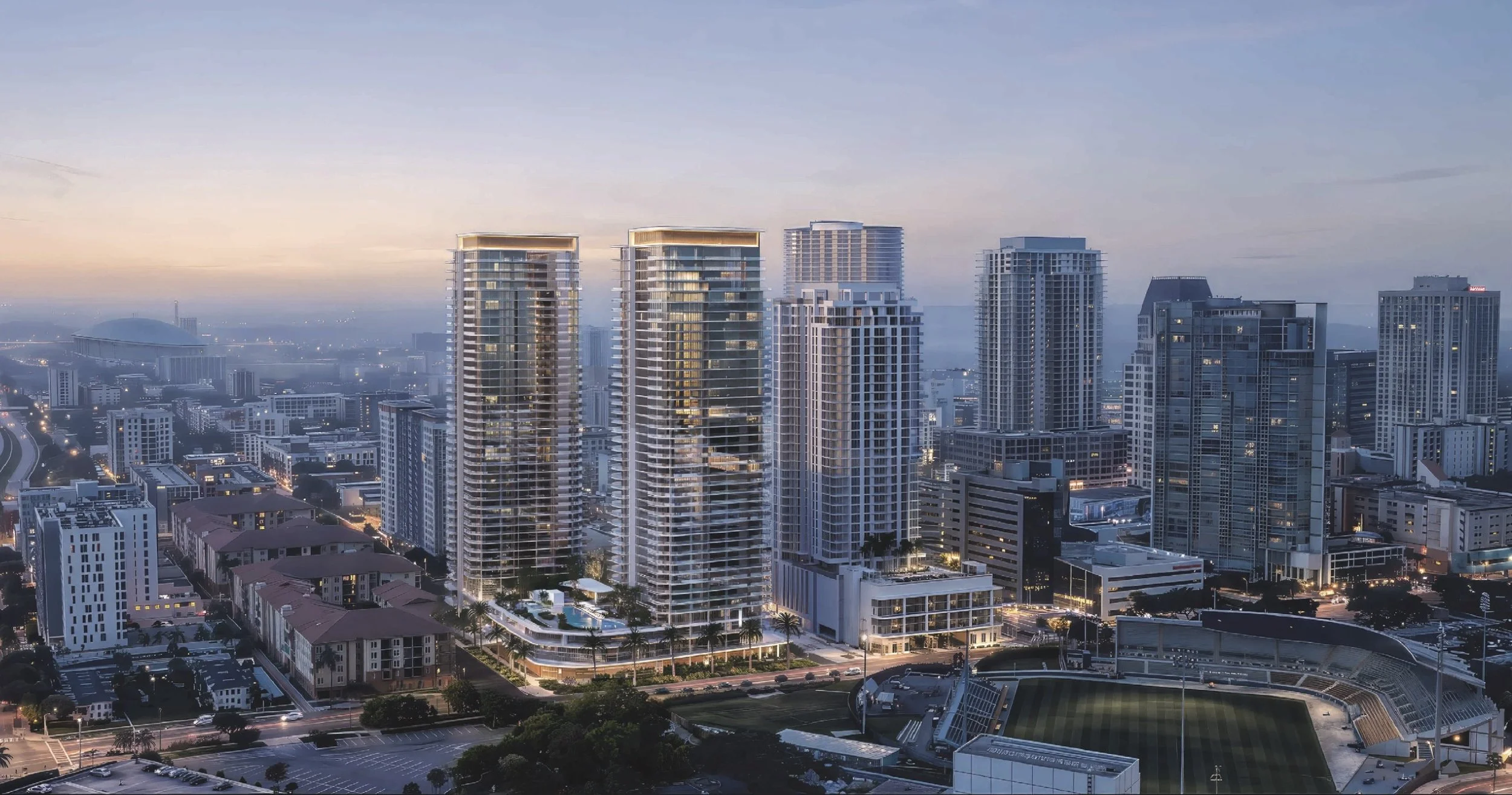
/Foundation Vision Partners’ theoretical full buildout scenario could include over 20 acres of park space in downtown St. Pete | Foundation Vision Partners
A new proposal has entered the mix for the 86-acre Historic Gas Plant District in downtown St. Pete, with a locally led team asking the City to consider a fundamentally different approach to redevelopment.
The current review process was triggered by a January 4th public notice issued after an unsolicited submission from ARK Ellison Horus. In response, the City invited alternative redevelopment concepts for the site, with submissions due this morning.
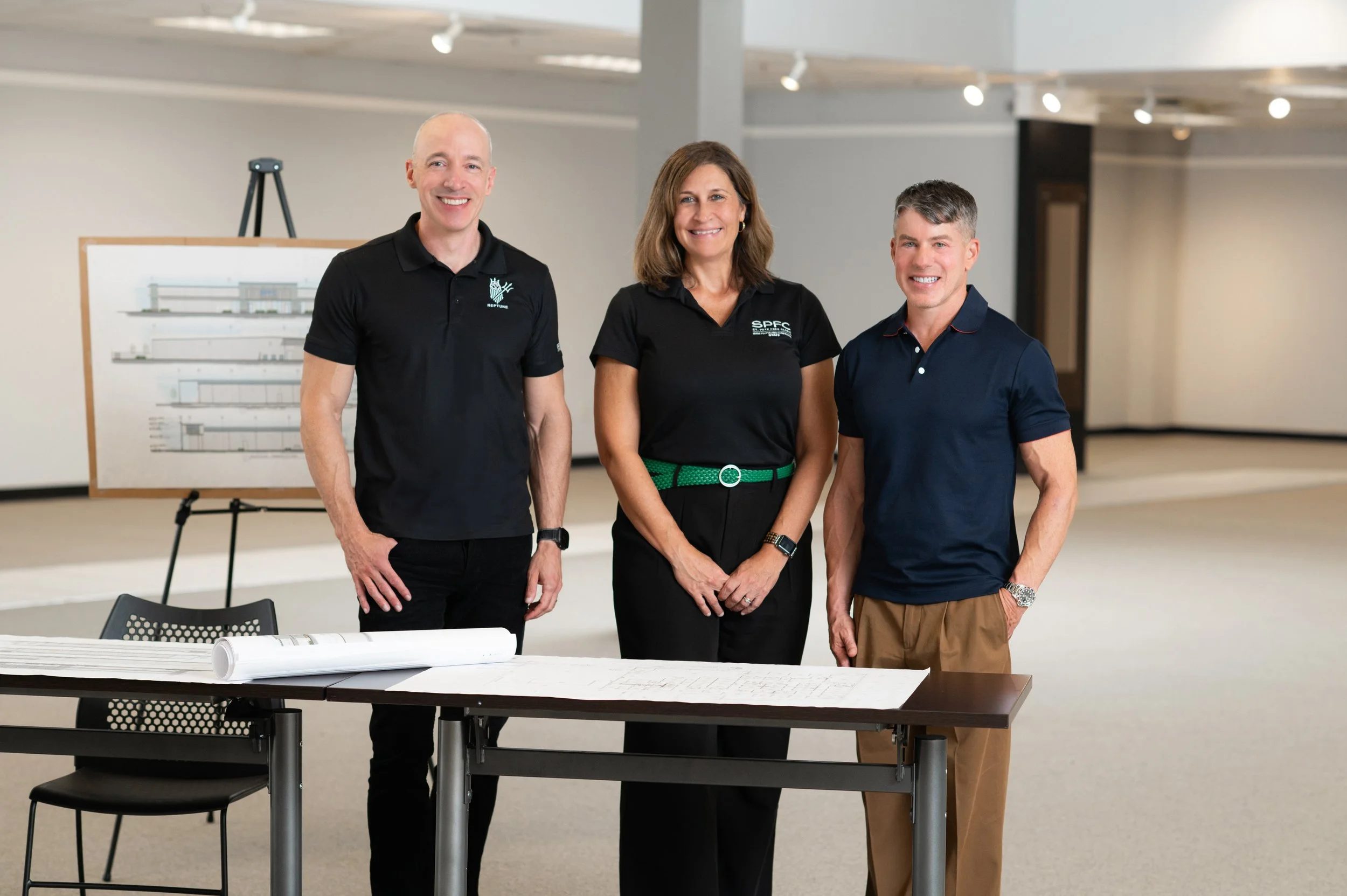
Among those submissions is a plan from Foundation Vision Partners, led by Will Conroy of Backstreets Capital, Alex Schapira (a former Hines Development Parter), and Anddrikk Frazier of Best Source Consulting, in partnership with global master planning firm Gensler and civil engineering firm Stantec.
Conroy’s firm has developed several condominium projects in St. Pete, including The Nolen, The Salvador, and most recently The Cade, a seven-story mid-rise overlooking Mirror Lake in downtown St. Pete. Schapira and Frazier were part of the team behind the previous Rays/Hines proposal.
A theoretical full buildout could deliver 4,700 residential units, millions of square feet of office, retail, civic, and entertainment space, 600 hotel rooms, and 20 acres of parks | Foundation Vision Partners
Foundation Vision Partners’ proposal argues the City should keep full ownership and control of the land while it completes a community co-created master plan and builds public “horizontal” infrastructure, including roads, utilities, stormwater, parks, and remediation, before selecting developers block by block.
In plain terms, the team is proposing the City act as the long-term landowner and curator, rather than handing the entire site to a single master developer in an all-or-nothing deal.
“The Historic Gas Plant District will grow organically—block by block, voice by voice—welcoming local businesses, diverse partners, and St. Petersburg residents as true stakeholders. We do this now, without having to wait years to see if a risky, all-or-nothing, single-developer deal will materialize.”
The proposal arrives after years of starts and stops at the site, and months after the City formally terminated its prior redevelopment agreement with the Tampa Bay Rays and Hines.
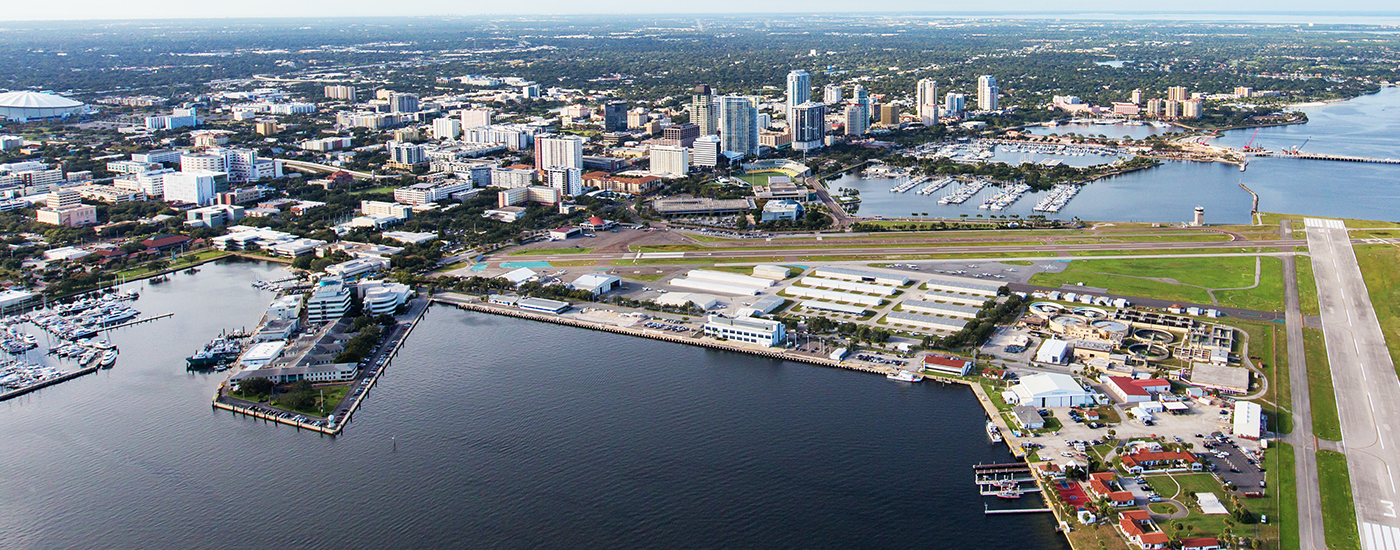
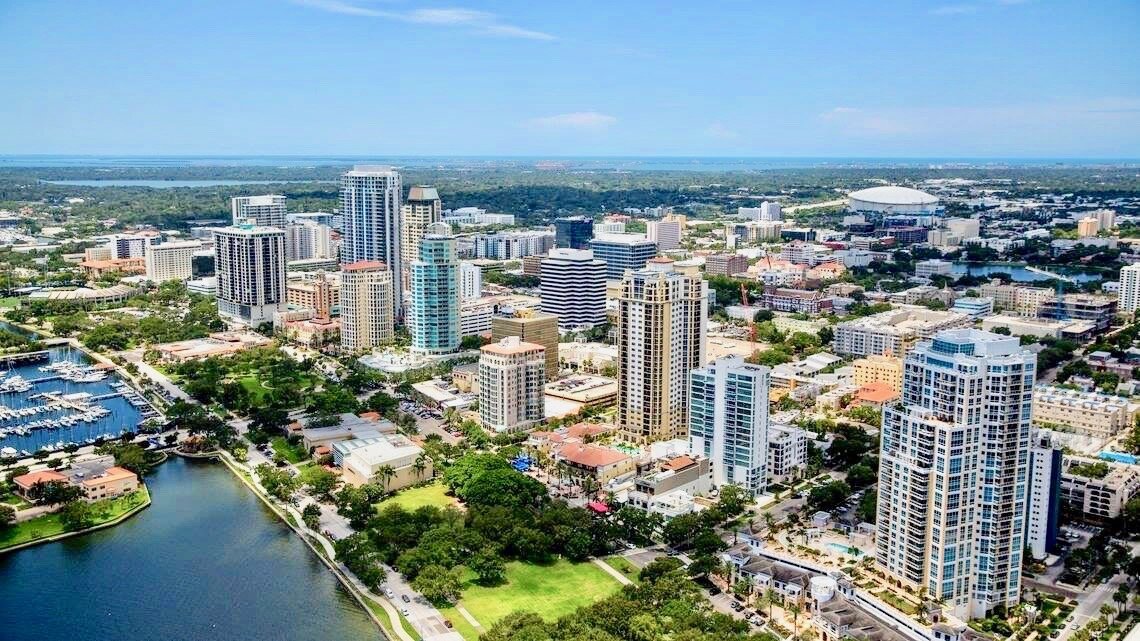
The Gas Plant District is a one-of-a-kind, 86-acre site that comprises nearly 15% of St. Petersburg's downtown core | Foundation Vision Partners
The Rays/Hines plan, selected through the City’s 2022 process, collapsed in early 2025 following long negotiations and shifting market conditions.
Foundation Vision Partners frames its approach as a way to avoid repeating that cycle.
The team says single-developer models can bog down in multi-year negotiations, financing contingencies, and political “re-trades,” leaving the site stalled as market conditions change.
First, the team would lead a community-driven master planning process to establish the site’s long-term vision, land uses, connectivity, public spaces, and design rules.
Next, it would manage the design, permitting, and phased construction of districtwide infrastructure.
Then, it would deliver “development-ready” blocks back to the City.
Finally, the City would run separate solicitations to select multiple vertical developers, block by block, selling parcels over time rather than making one upfront sale.
Foundation Vision Partners is proposing the City act as the long-term landowner and curator, rather than handing the entire site to a single master developer in an all-or-nothing deal | Foundation Vision Partners
Foundation Vision Partners argues this approach creates optionality: if market demand shifts or if the community’s priorities evolve, the City isn’t locked into a single developer’s program for decades.
The proposal also takes direct aim at the scale of what a single master developer could control.
Conroy warns that downtown currently has around 10,000 residential rental units and suggests the City should not “hand the next 4,000…to a single developer,” arguing the district is too transformative to place in the hands of one developer.
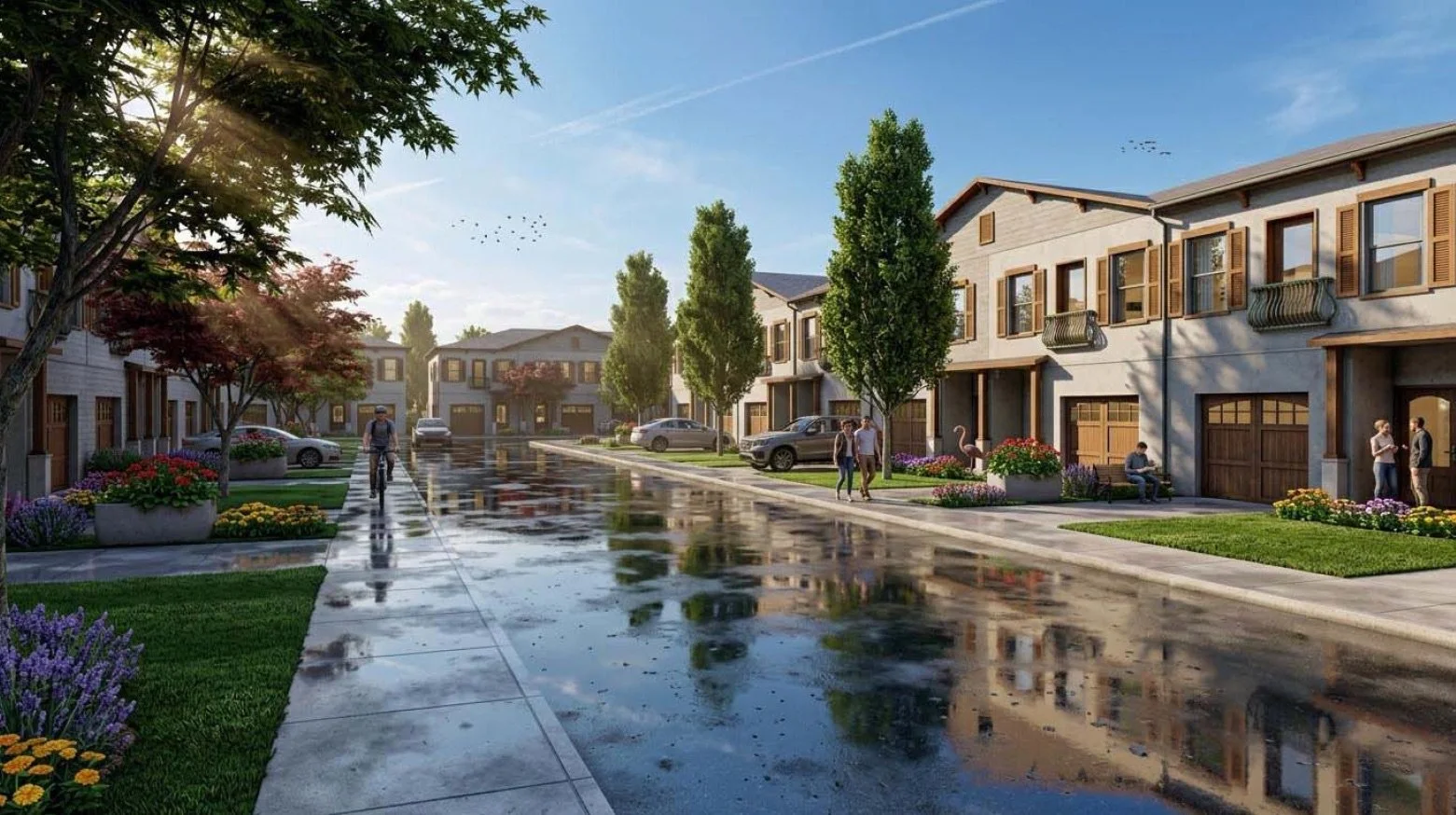
The submission includes a theoretical full buildout scenario that consists of 4,700 residential units (including affordable housing), 825,000+ square feet of office and medical space, 450,000 square feet in retail and restaurant space, 200,000 square feet of civic and cultural space, 150,000 square feet of entertainment space, 20 acres of parks and open space, 600 hotel rooms, and a district anchor, such as a sports stadium or a convention center.
Foundation Vision Partners believes higher density creates walkable, bikeable neighborhoods centered around daily needs, a concept known as the “20-minute city.” | Foundation Vision Partners
On infrastructure, the proposal suggests a four-phase approach over an estimated 20-year horizon, with a total public infrastructure cost estimate of $239 million. Phase 1 alone is projected at $67 million, with subsequent phases estimated at $50 million, $37 million, and $85 million.
To fund early work, the proposal envisions the City using a mix of CRA funds, other municipal sources, and state/federal grants, an approach Stantec would support through grant identification and application assistance, according to the document.
A central selling point is the idea that retaining land ownership allows the City to capture more value over time.
Foundation Vision Partners estimates phased parcel sales could generate north of $510 million in total land value, compared with an estimated $299 million if the City sold the land upfront today.
The proposal also lays out its compensation structure. For ongoing master plan and placemaking advisory services, it proposes a $150,000 monthly fee (terminating at construction commencement per phase).
On infrastructure, the proposal suggests a four-phase approach over an estimated 20-year horizon, with a total public infrastructure cost estimate of $239 million | Foundation Vision Partners
It lists development management at 4% of construction costs, and construction management at 3% of construction costs, plus third-party costs including civil and master planning.
As for timeline, the submission suggests a master plan could be completed this year, while horizontal infrastructure begins mid-2027 and completes in fall 2028, at which point the city will have shovel-ready blocks ready to sell to vertical developers.
The proposal puts a clear question on the table: should St. Petersburg pursue another single master developer plan, or shift to an infrastructure-first model where the City stays in the driver’s seat and sells development opportunities in smaller pieces over time?