Six-story resort with waterpark and rooftop bar denied again on St. Pete Beach
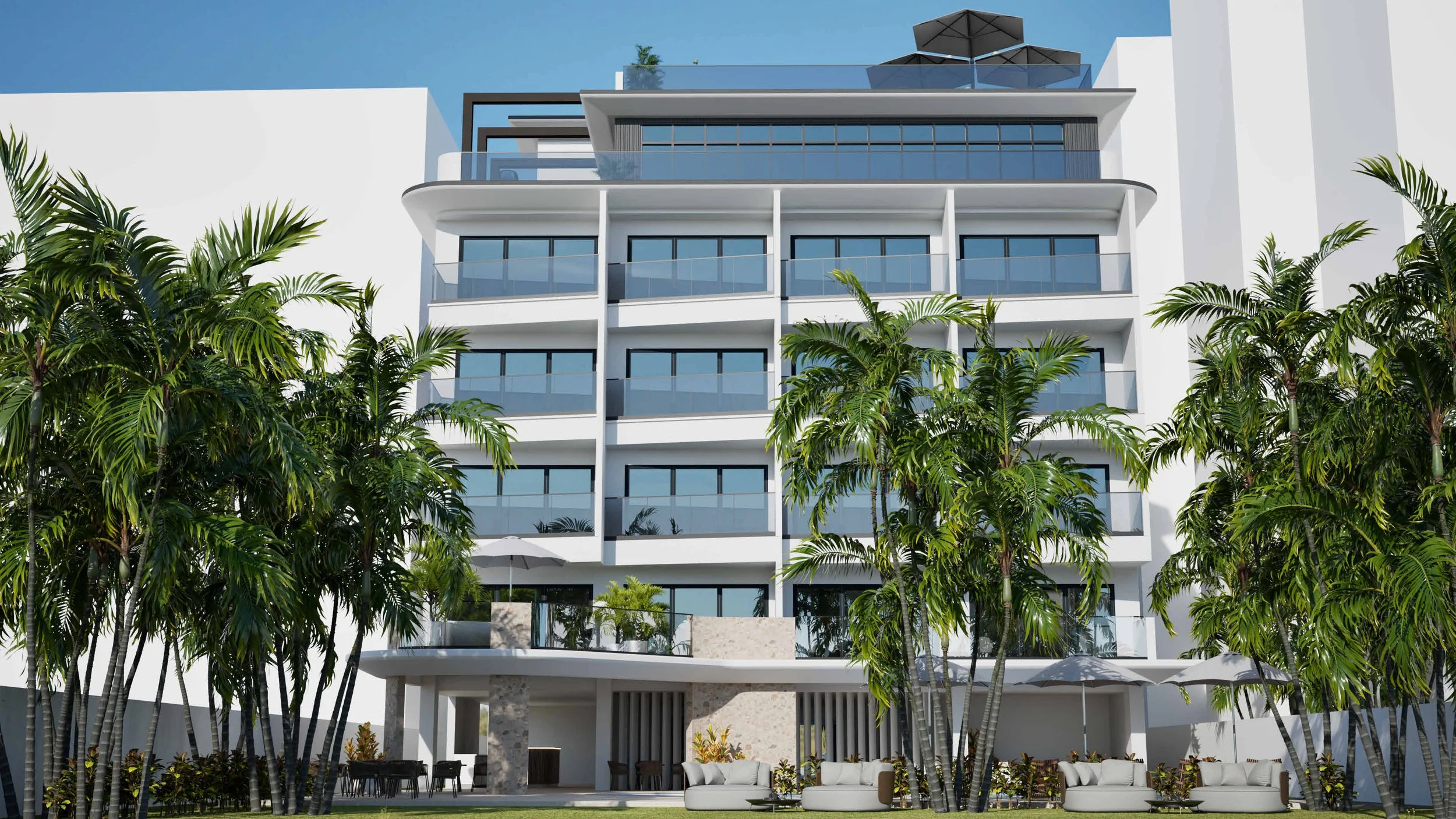
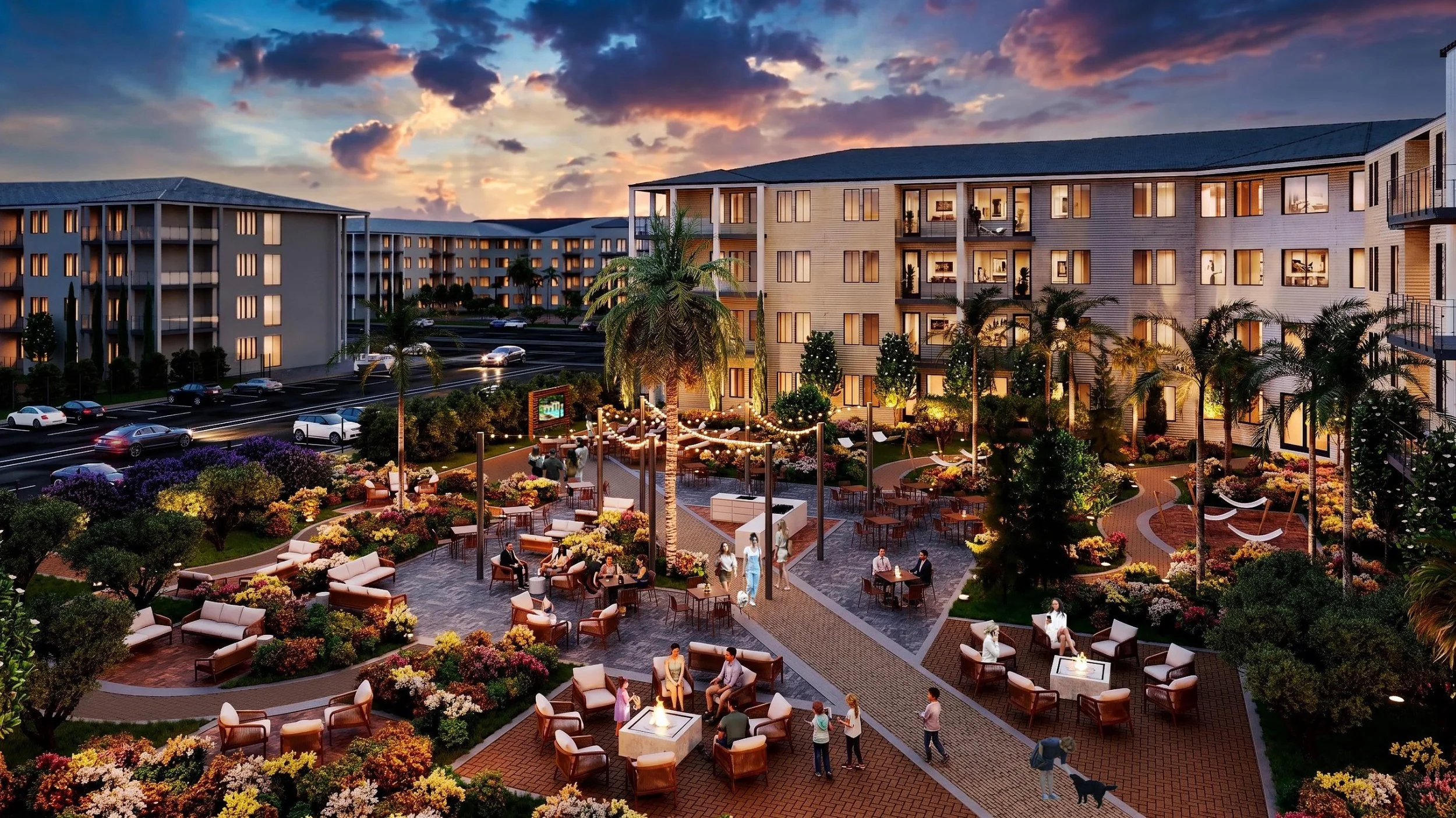
/An aerial rendering of the new revised design for windward pass resort | bodziak architects
After nearly two years of plan revisions, public hearings, and formal dispute resolution, the St. Pete Beach City Commission has again rejected a proposed waterfront resort that would have brought a waterpark, rooftop bar, and 100-room hotel to a vacant stretch of Gulf Boulevard along McPherson Bayou.
At its January 27th meeting, commissioners voted to deny a settlement recommendation stemming from a Florida Land Use and Environmental Dispute Resolution Act proceeding, effectively reaffirming the city’s earlier denial of three requests tied to the proposed Windward Pass Resort.
The project was first announced in March 2024 as a six-story, 104-key hotel planned for a 2.53-acre assemblage at 3815, 3856, 3859 and 3861 Gulf Boulevard, an irregularly shaped site bookended by the Sand Cove Apartments and Sun Harbor Condos.
The 2.53-acre site in St. Pete Beach where the Windward Pass Resort has been proposed | Google Maps
The property is owned by local artist and philanthropist Beth Morean, and the development team is led by St. Petersburg-based architect Jack Bodziak of Bodziak Architects.
The original plan was to build a full-service resort with a lazy river and waterslides, a rooftop tiki bar, on-site restaurants, pools with a swim-up bar, mini-golf, a game room, and a waterfront promenade designed to be accessible down to the bayou.
The project also included a 12-slip boat dock for guest use and rentals such as paddleboards and pedal boats, along with a 190-space parking garage.
An earlier design of the windward pass resort on St. Pete Beach | bodziak architects
But the details of what could be built, and how, were always going to hinge on the site’s zoning and St. Pete Beach’s limited pool of temporary lodging units, which cap how many hotel or short-term rental rooms the city allows.
The property sits in the city’s Bayou Residential District, a small area intended to be a transition between higher-intensity development along Gulf Boulevard and lower-density neighborhoods to the east.
Temporary lodging is not permitted “by right” on the property, meaning a hotel proposal must clear additional hurdles: a conditional use permit and an allocation of lodging units from a density pool established in the city’s comprehensive plan.
That density pool became the main point of concern for city officials.
The original plan called for 104 hotel rooms, an allocation staff later described as significantly depleting the city’s remaining pool.
In May 2025, commissioners unanimously rejected the project’s three core applications: a hardship variance to reduce required setbacks for pools, a conditional use permit to allow the proposed lodging and amenities, and a density pool allocation to make the unit count possible.
At that May hearing, commissioners questioned whether the applicant had demonstrated a true hardship justifying a substantial setback reduction, and whether a resort of that scale fit into Bayou Residential District.
An earlier design of the windward pass resort on St. Pete Beach | bodziak architects
“Wanting a higher ROI is not considered a hardship,” said Mayor Adrian Petrila in May.
Commissioners also questioned whether it made sense to allocate such a large share of the city’s limited temporary lodging units to one project, especially outside the areas where officials believe smaller projects could better support the city’s long-term goals.
Following the denial, Sungold LLC filed a “Request for Relief” under Florida Statute 70.51, arguing the city’s denials imposed “unreasonable or unfair burdens” on the use of the property.
The request triggered a dispute resolution process under state law.
A special magistrate facilitated a mediation in October, which produced a recommendation intended to address the city’s concerns while also allowing a revised version of the project to move forward.
As a result of the mediation, the developer agreed to remove watersports rentals, drop the parking garage in favor of street parking, reduce the number of hotel rooms from 104 to 100, and relocate a pool to eliminate the need for the setback variance.
The recommendation also included “sound governors” to monitor noise from the first floor and roof areas, along with “attractive pavers” for the promenade surrounding the site.
Under the Florida statute, the commission had three options during its January 27th meeting: approve the recommendation, modify it with conditions, or deny it outright.
Commissioners chose denial.
Even with a scaled-back concept, commissioners echoed the same two issues that drove the May 2025 denial: compatibility with the Bayou Residential District’s purpose and committing a major share of the city’s remaining temporary lodging units to a single project.
Site plan showing the revised vision for Windward Pass Resort, with newly added open areas highlighted in yellow | Bodziak Architects
In remarks to commissioners, Bodziak argued the open waterfront views and public walkway were meaningful public benefits and said the team made a “tremendous effort” to shield nearby residential areas while retaining public access around the property.
But commissioners agreed the district is intended to transition to lower-intensity uses and is not a good fit for a project of this size.
“My biggest concern is the same concern from the beginning—to give that large of units from the density pool to one project in this spot, in essence, is removing them from other projects in St. Pete Beach,” Commissioner Karen Marriott said during the discussion.
Mayor Petrila argued that approvals should come with tangible public benefits and pointed to other projects he believes offered more community value.
Under the dispute resolution law, the developer can pursue judicial review of the city’s decisions or return with a new application.
For now, the debate continues over what belongs on one of the last large, vacant waterfront assemblages Gulf Boulevard in St. Pete Beach.