Visioning begins for new 28-acre walkable mixed-use development near Warehouse Arts District in St. Pete
/urban designer Victor Dover, founding principal of Dover, Kohl & Partners (DK&P), presents a conceptual vision for the 28-acre site | st. pete rising
What would you create with 28 acres of land in St Pete? A park? An amphitheater? Attainable housing? Artist studios?
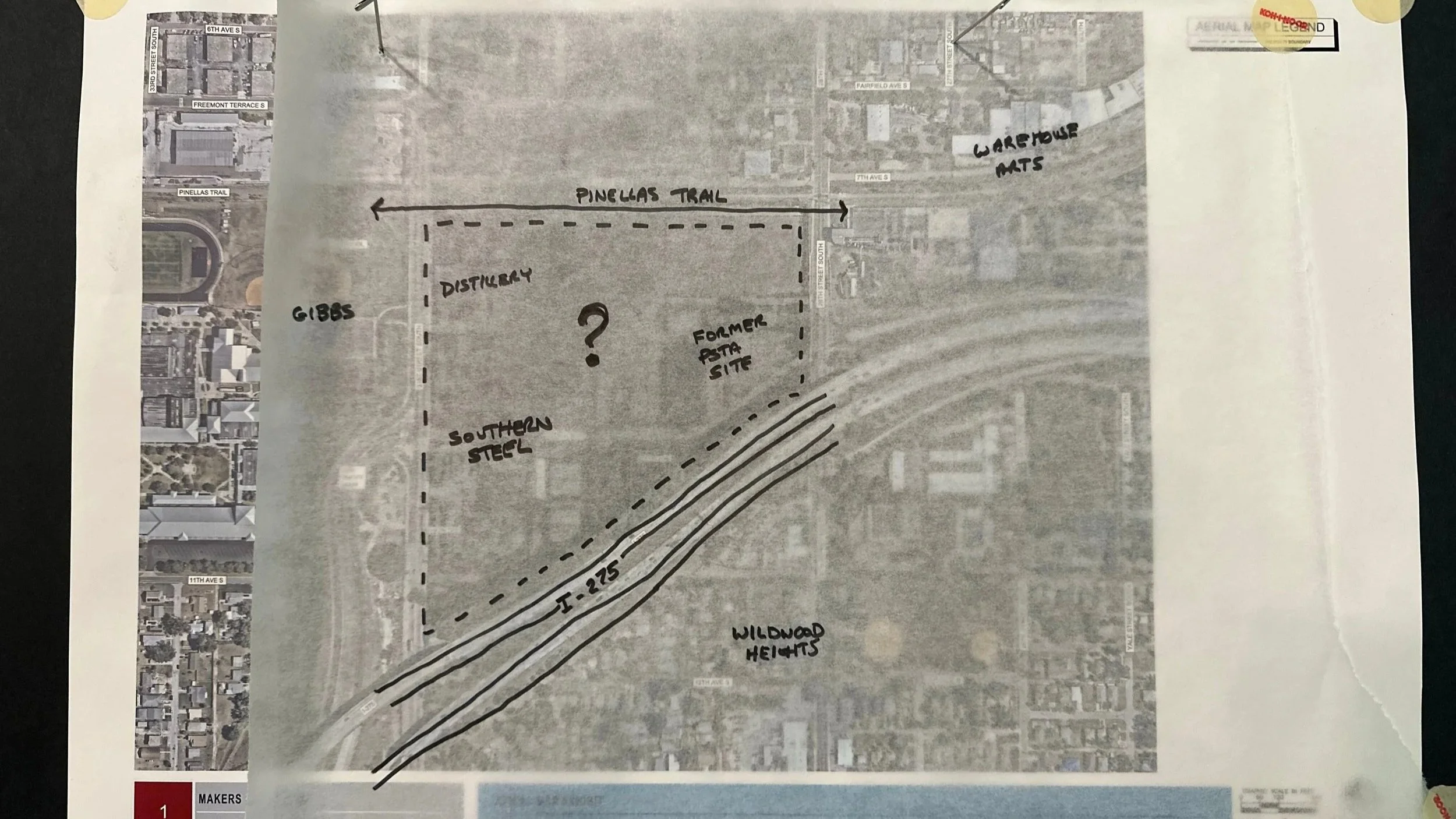
Those questions were at the center of a recent four-day community charrette that began to shape the future of a large industrial property along the Pinellas Trail, home to St. Petersburg Distillery and several vacant buildings.
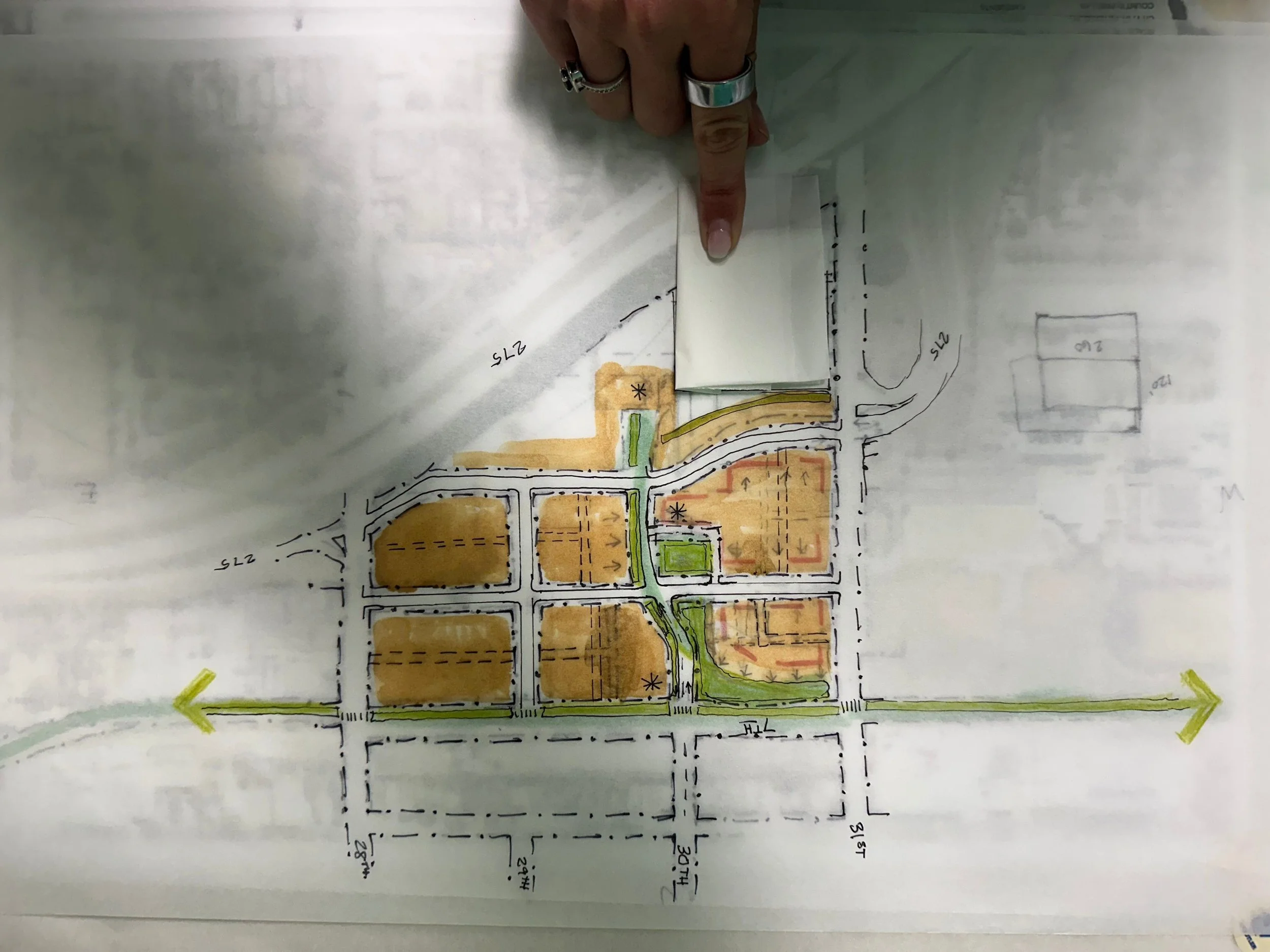
A map of the property | St. Pete Rising
The 28-acre site at 800 31st Street South, located west of the Warehouse Arts District and across from Gibbs High School, is owned by the Iafrate family and is envisioned as a new Creators District.
The concept is for a neighborhood with a soul where artists, makers, entrepreneurs, and residents can live, work, and gather.
To guide the effort, the family has enlisted engineering and planning firm Kimley-Horn and urban design firm Dover Kohl and Partners.
The charrette, held on site, invited residents, artists, small business owners, and city leaders to share what they want this corner of South St. Pete to become.
Stakeholders filled sticky notes with ideas that ranged from art studios and maker spaces to farmers markets, playgrounds, rehydration stations, and business incubators.
What stood out to the team was not a single project idea, but the tone of the response.
“What we heard loud and clear is that this has to be a neighborhood co-created by the community and that is responsive to the community and can evolve with the community,” said Evan Brownstein, CEO of St. Petersburg Distillery, in a conversation with St. Pete Rising. “People were almost surprised they were being listened to and brought into the process this early.”
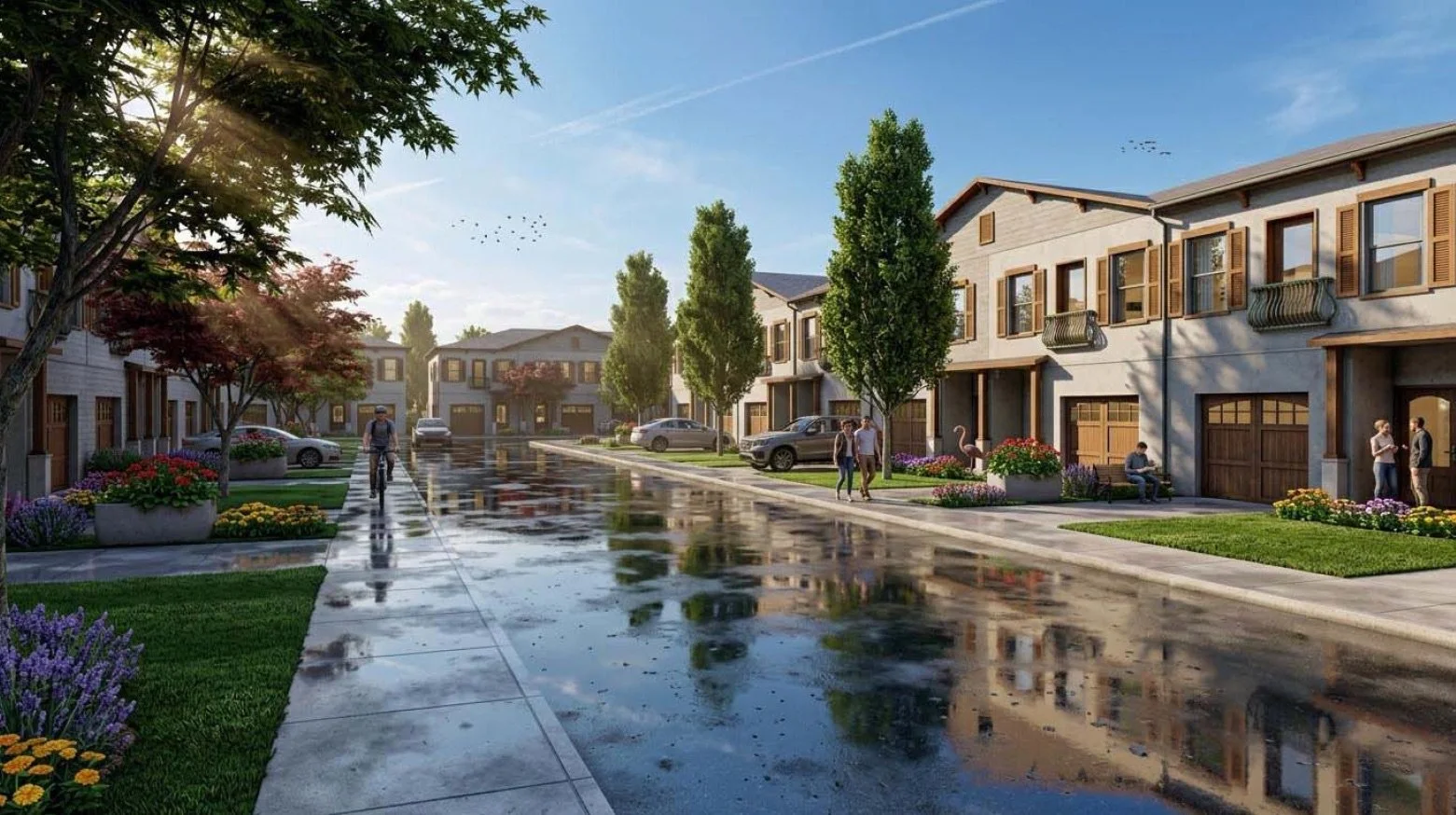
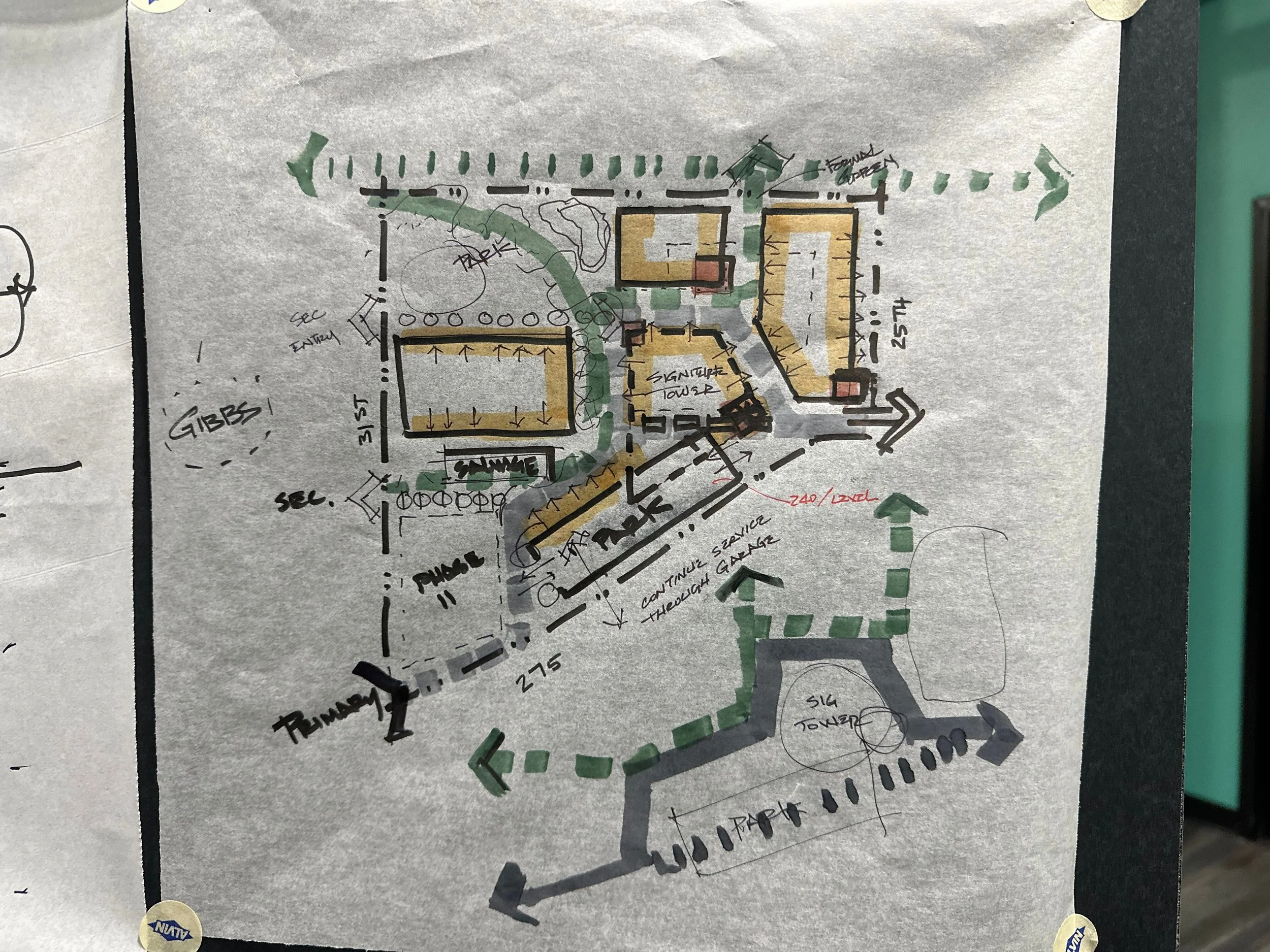
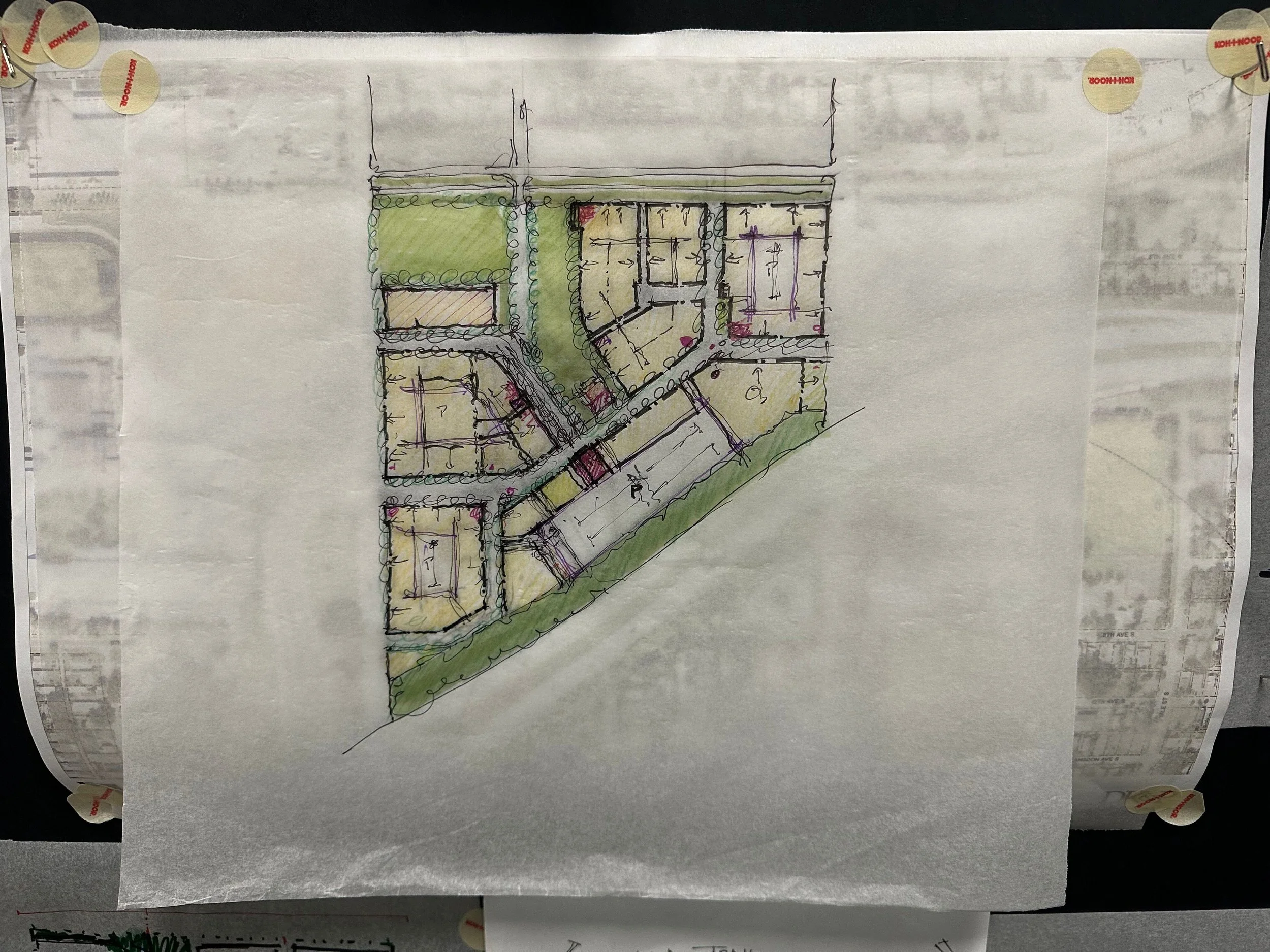
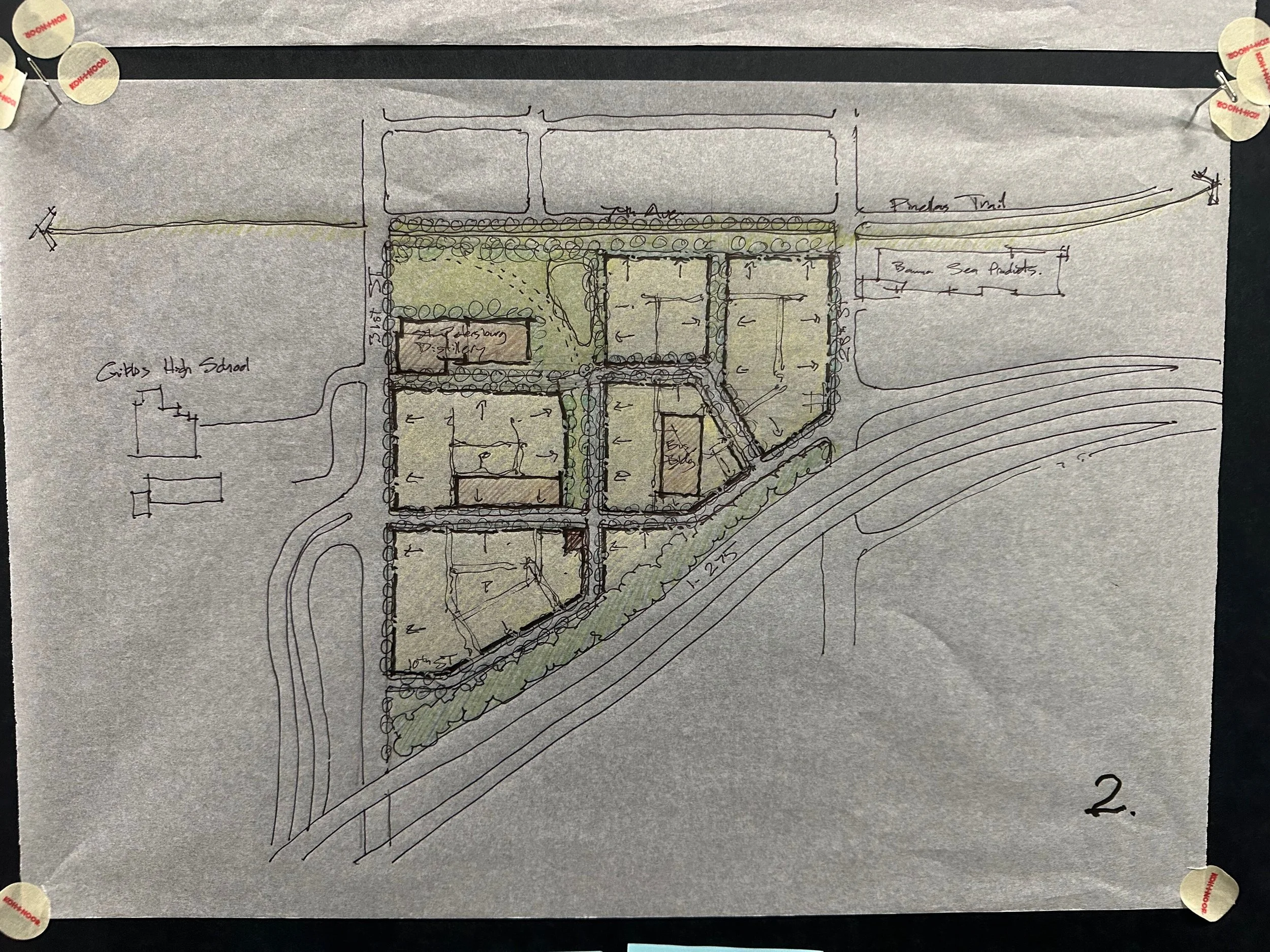
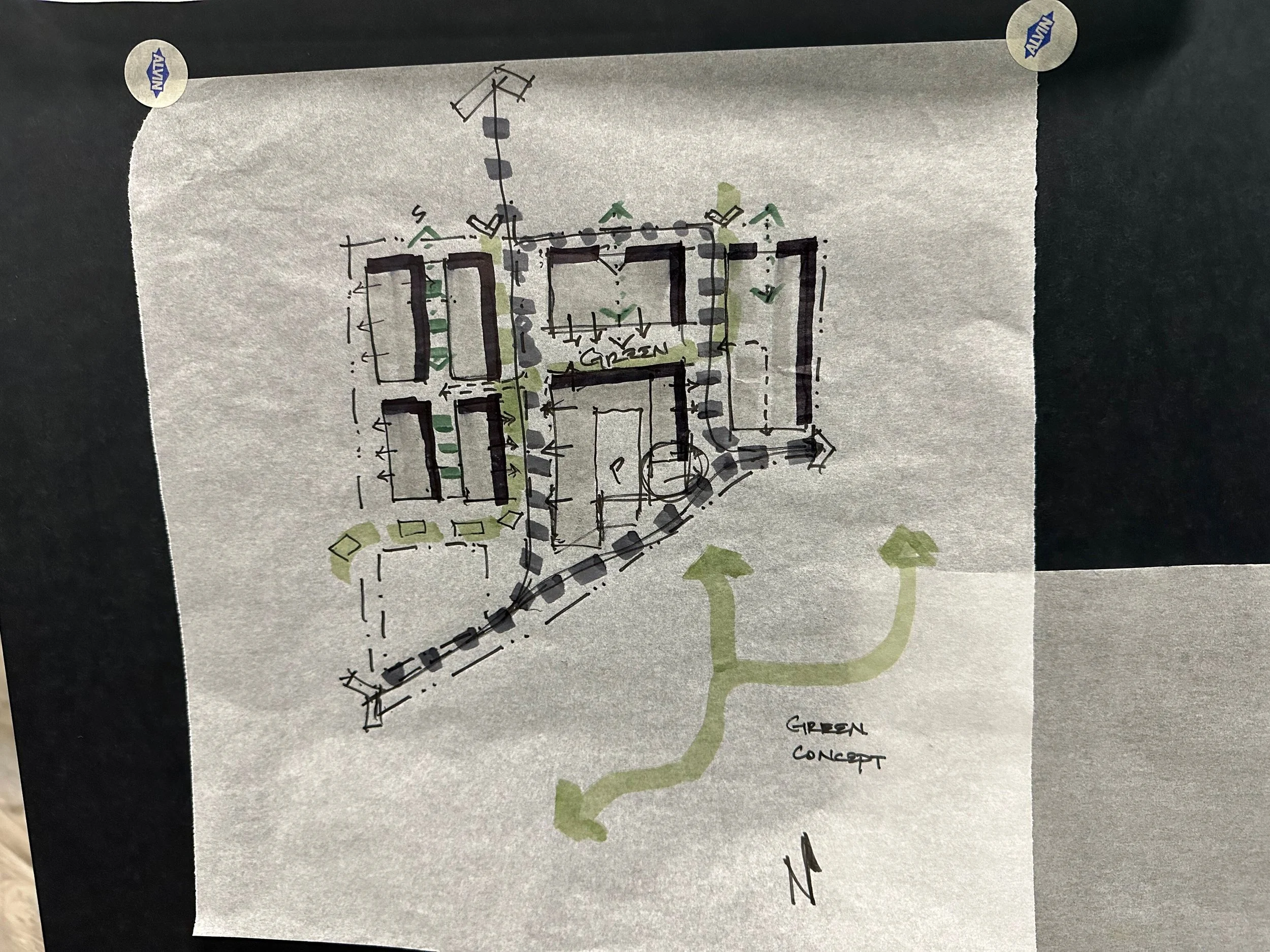
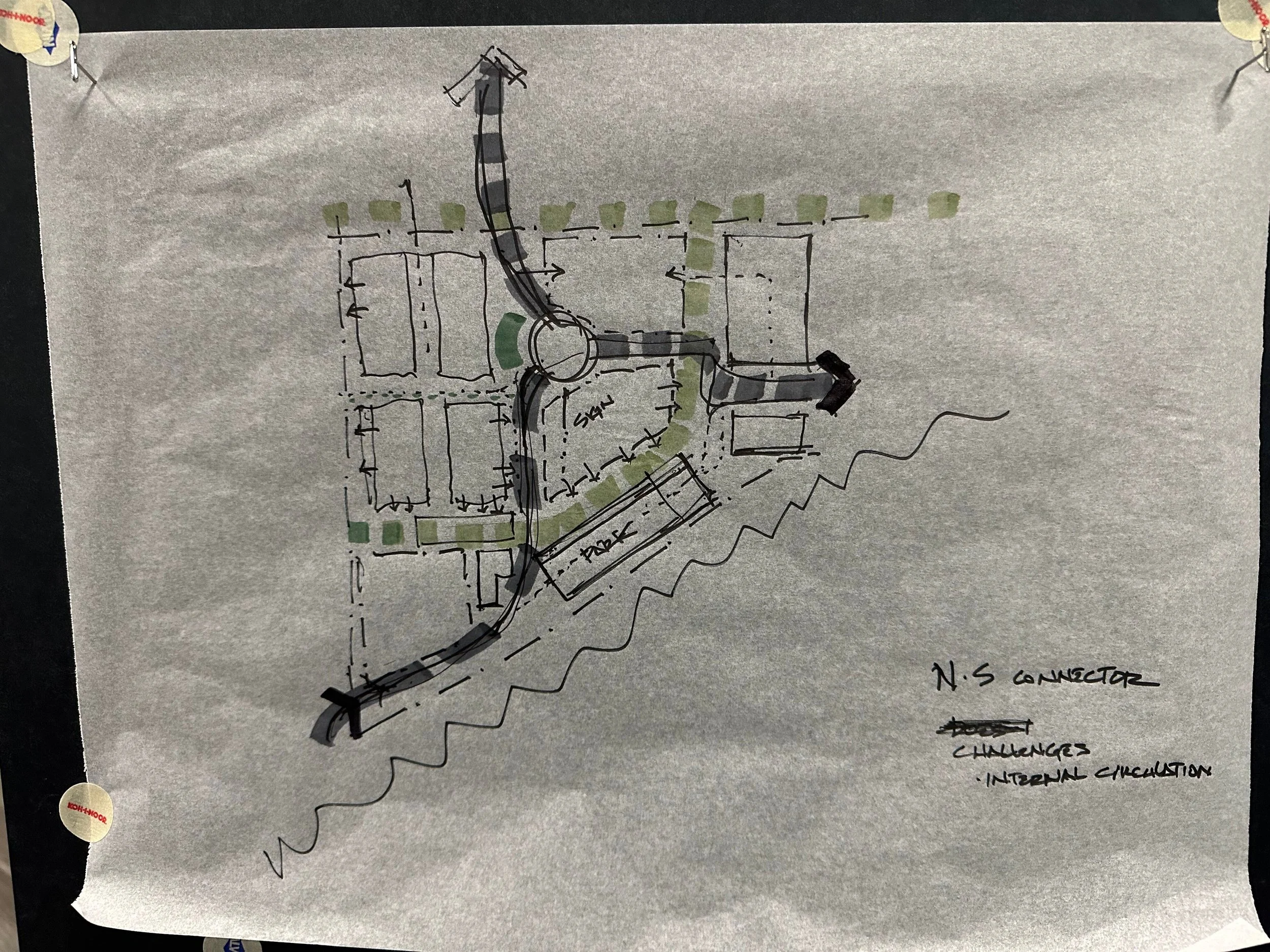
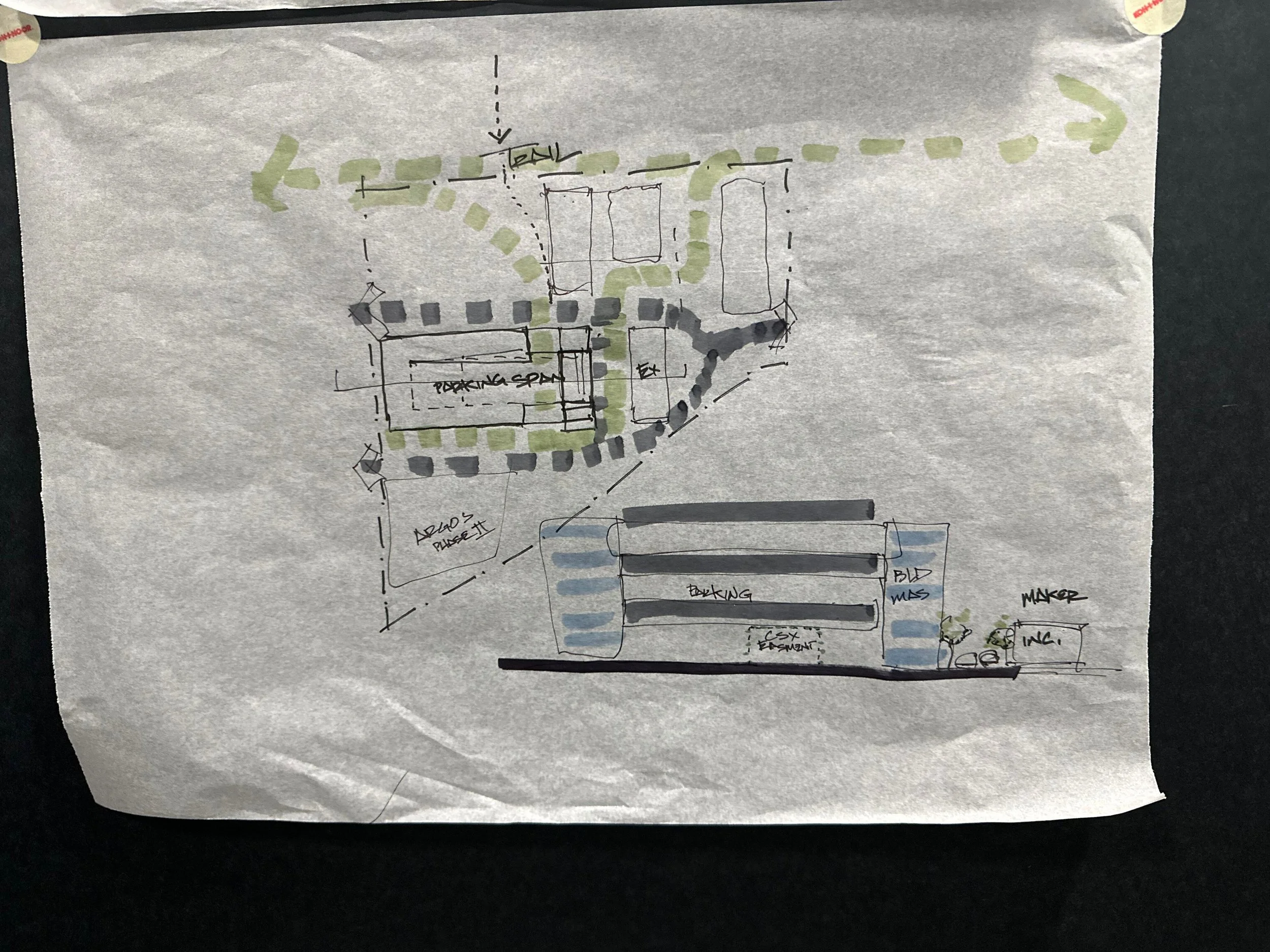
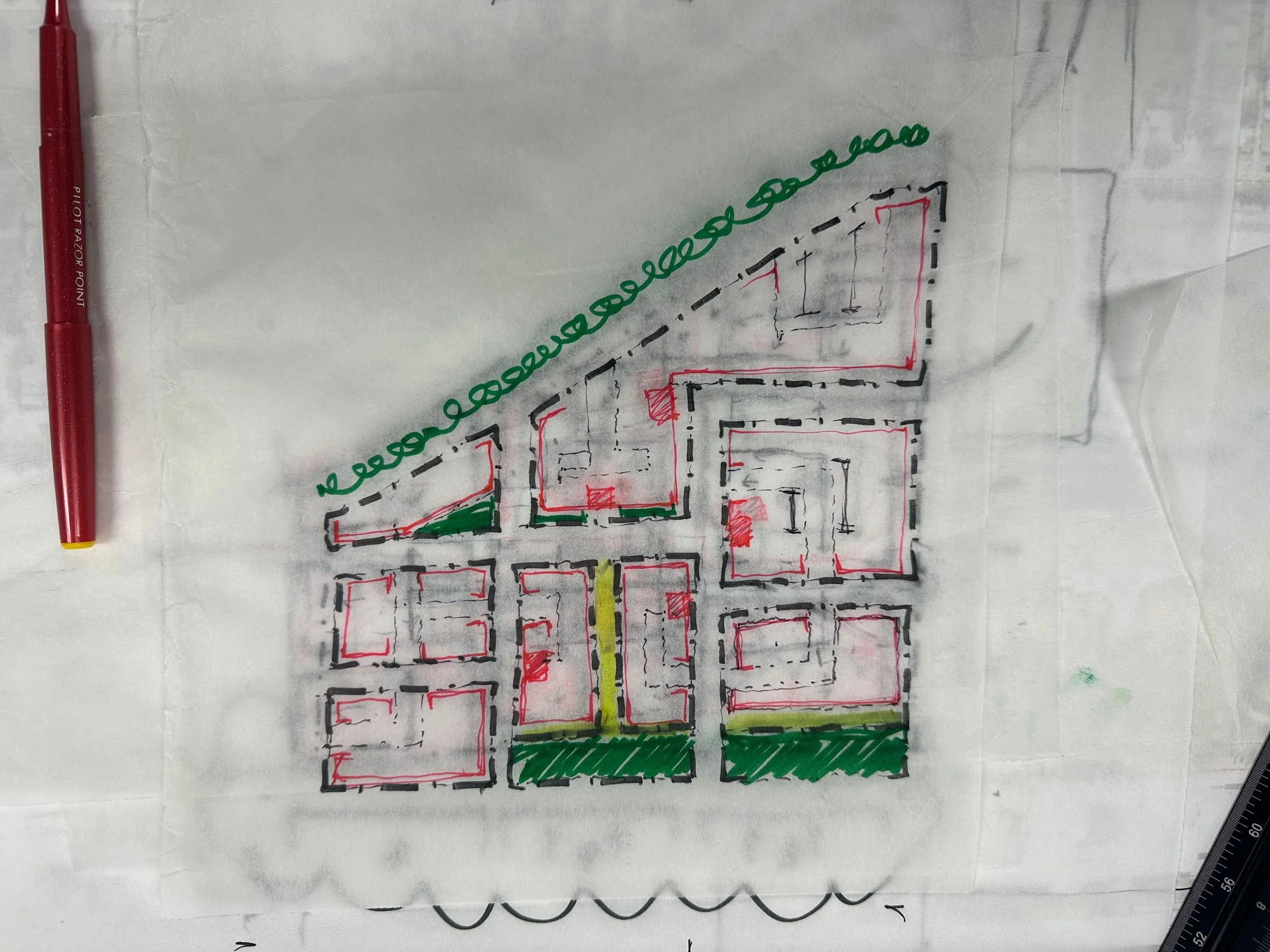
Dover Kohl’s early concepts show a street network with new connections between 31st Street South and 28th Street South, buildings that step up in height toward the interstate and down toward the trail, and a series of public spaces threaded through the district.
Residents and surrounding business owners shared input and opinions about the future redevelopment of the site during the charrette | photo provided
Housing was another major theme. The team heard consistent concern about rising costs and displacement, but they avoided framing the discussion solely around traditional affordable housing.
“We are replacing the term affordable housing with sustainable live-work, because what people are really looking for is a life they can enjoy by living, working, and playing in the same place,” said Matt Armstrong, chief development officer for Angelo’s Florida Properties.
Rather than seeking a subsidy, the group explored a mix of approaches.
“Call it the missing middle, call it whatever name you want. There is never going to be one solution. There is no silver bullet to solving the housing affordability issue,” Brownstein said.
Charrette attendees mingle with the design team as they actively sketched a preliminary vision for the property | st. pete rising
Smaller units paired with market rate and premium homes in the same buildings were discussed as one strategy.
“Let us build it into the DNA from the beginning,” said Brownstein. “If you have a smaller unit that costs less to build, integrated into a larger building with some market rate or premium units, those premium places can help offset the cost.”
The team repeatedly returned to the idea that this should remain a place where things are made, connecting the future of the property to its industrial past.
Participants described a mix of small production spaces, shared loading and back of house facilities, and an innovation center that would support creatives and entrepreneurs who may not fit into traditional technology accelerators.
Early sketches shown during the charrette capture the tree-lined streets and potential mixed uses for the new district | st. pete rising
“There are plenty of innovators who are building with their hands,” Brownstein said. “They have ideas in their heads, but they do not have the space, the resources, or the connected ecosystem to make it. That is what we want to be.”
One example discussed during the charrette was the potential reuse of the former Pinellas Suncoast Transit Authority bus facility on the site.
“Rather than tearing it down and putting green space there, we can program events and have other things inside that space,” said Armstrong.
With the distillery operating elsewhere on the property, he noted that events in the repurposed building could be supported by in house spirits service, which would help keep rents more attainable for artists and small operators.
A former bus terminal at the site could be repurposed into a multi-tenant venue | photo provided
The northern edge of the property runs along the Pinellas Trail, and many comments focused on turning that linear park into an active spine rather than a simple edge.
“I look at things like the Tampa Riverwalk. It is great if you want to go for a long jog or bike ride, but there is nothing to do,” Brownstein said. “There is no vitality. We want to interact with the Pinellas Trail and have this continuous loop of activation.”
Ideas included plazas and porches that face the trail, neighborhood serving businesses along the corridor, and places where trail users could stop for coffee, food, or art before continuing on their way.
Financially, the Iafrate family and its partners say they are not treating this as a conventional real estate deal.
Participants stick dozens of posted notes to a board, sharing ideas for what they would like to see at the site | photo provided
“You can define value as revenue and that is how most banks and investors define it,” Brownstein said. “The Iafrate family defines value as equity, brand value, neighborhood value. It is not about quarterly results. It is about building something that has true equity, and that is how true wealth and value are built.”
That mindset shapes both the phasing and the process. Armstrong described the project as something that will evolve over time rather than a fixed plan presented once and built in a single sequence.
“This is not a four-day charrette and we are done,” Brownstein said. “It is an ongoing conversation with the community so that the place can keep evolving.”
Live-work buildings and flexible maker spaces are likely to be among the first components to move forward.
The owners and design team will continue to host open house events to gather more feedback as they finalize redevelopment plans | st. pete rising
At the same time, Kimley-Horn is studying stormwater, utilities, and street connections to ensure that the underlying infrastructure supports the vision.
There is no firm construction timeline yet.
A more detailed plan is expected to be presented in early 2026, after additional rounds of outreach.
Residents can continue to share ideas through the Makers Charrette website and at future open house events.
“Instead of saying no, we should be asking, how can we make this work,” Armstrong said. “That is the mindset this district needs, and it is the mindset we are committed to.”